Traditional Turkısh Breakfast: A Table Made to Share
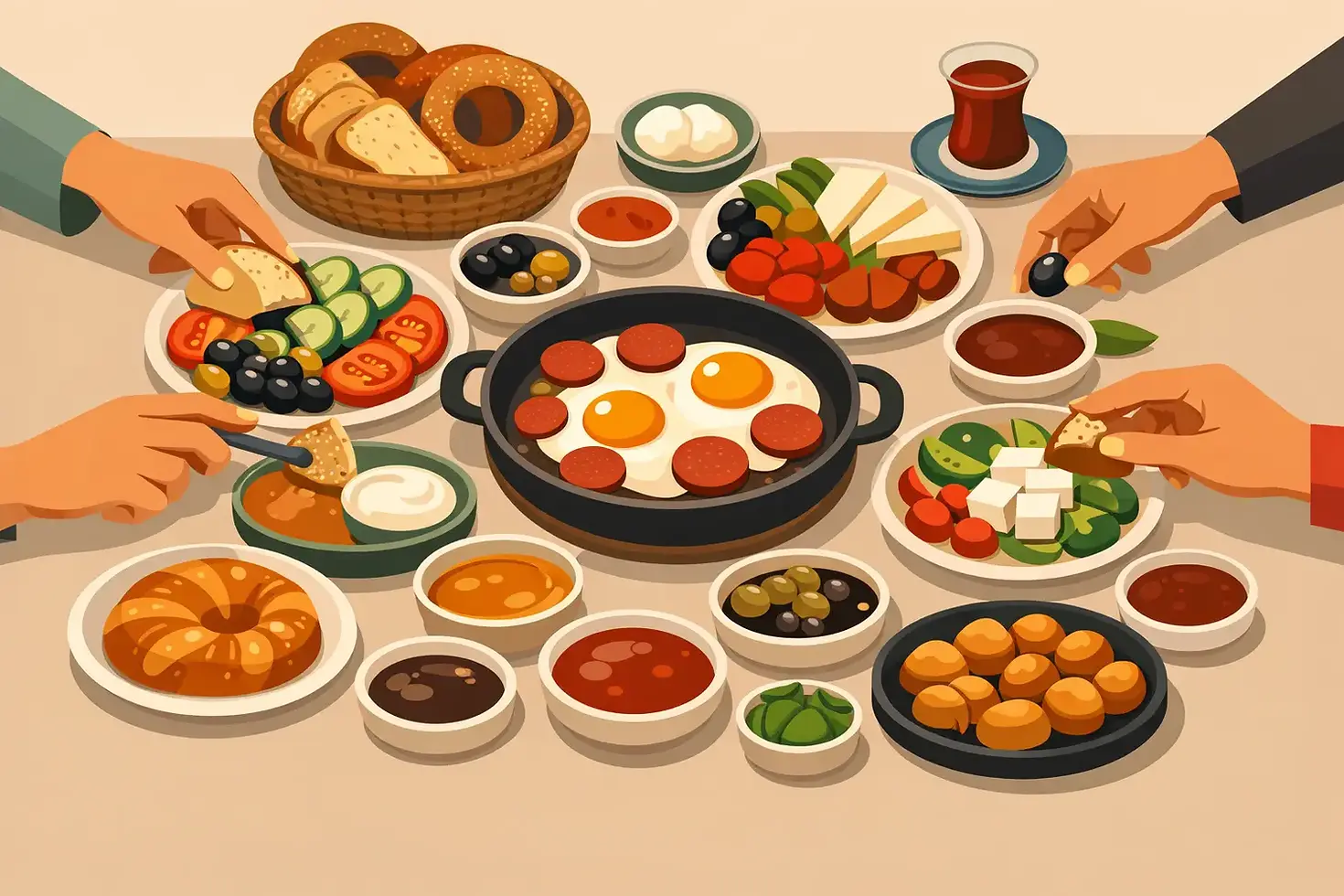
A traditional turkısh breakfast does not arrive as one plate with one purpose. It covers the table in small bowls, warm bread, bright colors, and inviting aromas, asking everyone to slow down for another sip of tea and another piece of bread. This is breakfast as a gathering: generous, unrushed, and full of small stories.
In Turkey, the morning table has long held a special place in family life. It is where weekday plans are shared, visiting relatives are welcomed, and a quiet Sunday becomes an occasion. The pleasure is not found in choosing a single favorite dish. It is in taking a little of everything, passing the honey, tearing bread, and discovering how one simple ingredient changes beside another.
What Makes a Traditional Turkısh Breakfast So Memorable?
The word kahvaltı offers a beautiful clue. It comes from the words for coffee and before: the food eaten before coffee. Yet Turkish breakfast is far more than a prelude to the day. It is often the day’s first act of hospitality, built around abundance without unnecessary formality.
A well-set breakfast table balances salty, creamy, sweet, fresh, and warm elements. White cheese may sit beside aged kashar, black olives beside green ones, sliced tomato beside cucumber, and rich clotted cream beside fragrant honey. Each bowl earns its place. Together, they create a meal that feels both comforting and celebratory.
There is no single breakfast that represents every corner of Turkey. Coastal towns, Anatolian villages, Istanbul homes, and southeastern kitchens all bring their own habits, ingredients, and memories to the table. That variety is part of the tradition. A Turkish breakfast should feel rooted, not rigid.
The Essential Flavors on the Table
Cheese is usually one of the first signs that the table is ready. Salty beyaz peynir, often compared to feta but distinct in character, brings a cool, milky sharpness. Kashar offers a firmer, buttery contrast. Depending on the region and season, guests may also find braided cheeses, tulum cheese with its deeper tang, or local varieties shaped by the milk and pastures of a particular place.
Olives bring another essential note. They may be glossy black olives cured until mellow, green olives seasoned with olive oil and herbs, or cracked olives with a more assertive bite. Tomatoes and cucumbers offer freshness, especially when they are ripe enough to taste like themselves. A sprinkle of oregano, red pepper flakes, or a pour of good olive oil can turn this simple pairing into something quietly extraordinary.
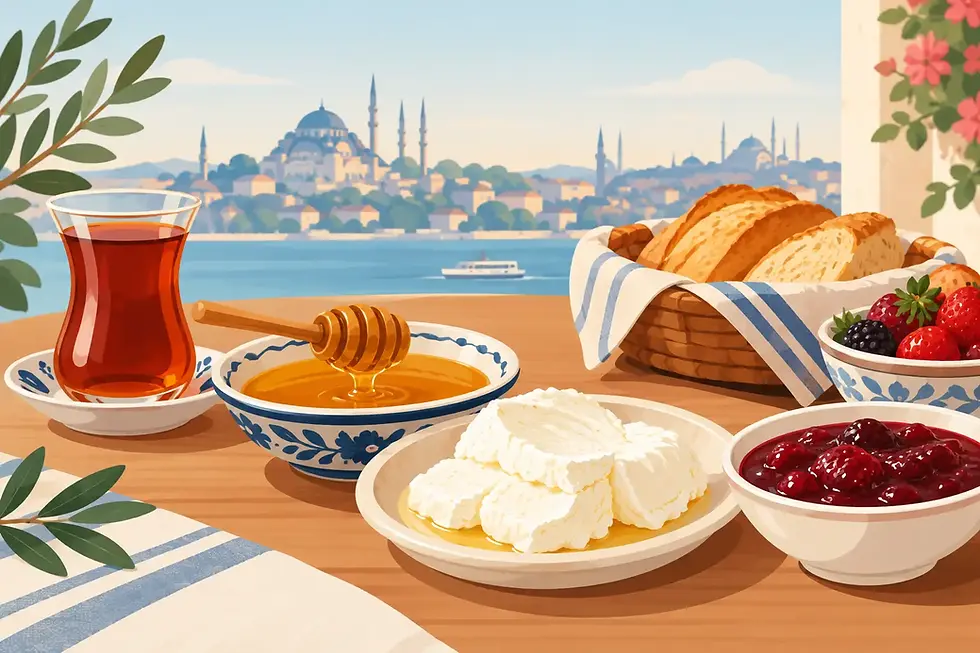
Then come the sweet accompaniments: fruit preserves, grape molasses, tahini, honey, and kaymak. Kaymak is a luxuriously thick cream, often served with honey, that asks for fresh bread and a moment of attention. Jam made from sour cherry, fig, quince, rose, or seasonal fruit carries the patient work of home kitchens into the morning.
Bread is not a side dish. It is the gesture that connects the table. Fresh loaves, sesame-crusted simit, soft bazlama, or flaky pastries are used to scoop, share, layer, and savor. The best choice depends on the spread. Simit is especially welcome with cheese and tea, while warm bread makes a natural home for butter, preserves, and kaymak.
Eggs, Pastries, and the Warm Heart of Breakfast
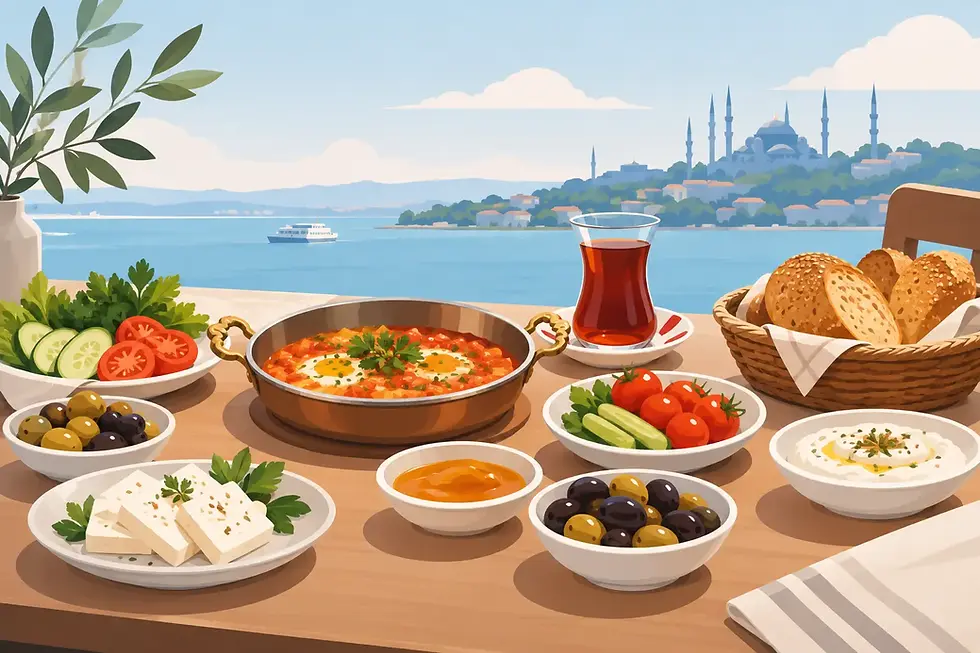
Cold dishes set the scene, but warm dishes give Turkish breakfast its lingering comfort. Menemen is among the most beloved: eggs gently cooked with tomatoes, green peppers, and olive oil or butter. Some cooks keep it soft and spoonable; others prefer it more set. The question of whether onions belong in menemen remains a friendly national debate, proof that even cherished dishes leave room for personal taste.
Sucuklu yumurta, eggs cooked with spiced Turkish sausage, adds a smoky, savory richness. It is especially satisfying when shared with warm bread. Pastries may include börek filled with cheese, herbs, or potato, as well as fried dough specialties that arrive hot and disappear quickly.
Regional breakfast traditions add further depth. In Van, a celebrated breakfast culture can include herb cheese, murtuğa made with flour and butter, and local preserves. In the Black Sea region, corn flour dishes and rich dairy products reflect the landscape. In southeastern Turkey, pepper pastes, walnuts, tahini, and spice-forward flavors can bring a bolder edge to the morning table. Traditional does not mean identical. It means connected to place.
Tea Is the Rhythm of the Meal
No discussion of Turkish breakfast is complete without tea. Served in tulip-shaped glasses, Turkish tea is clear, dark amber, and present from the first bite to the last. It is poured from a double teapot, allowing each guest to choose a lighter or stronger glass and adjust it with hot water.
Tea does more than refresh the palate. It creates the pace of breakfast. A glass is refilled as conversation grows, as new plates arrive, and as someone reaches for one last piece of simit. Coffee may come later, true to the origin of kahvaltı, but tea belongs at the center of the table.
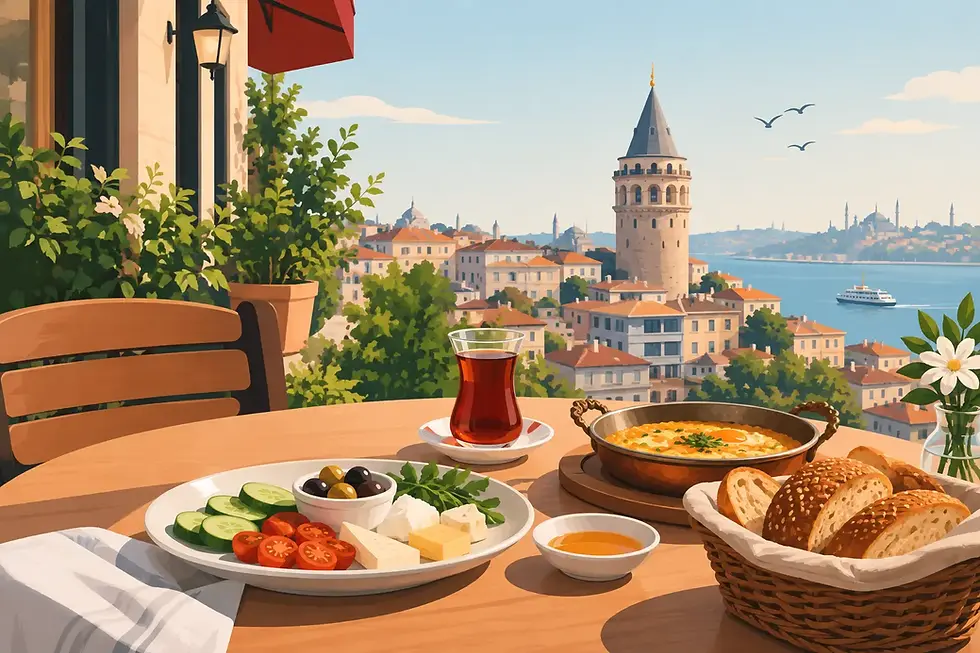
For travelers, this rhythm can be one of the most meaningful parts of the experience. There is no need to rush through the meal in search of the next sight. The table itself becomes a way of seeing Istanbul: its hospitality, its layered history, and its instinct for bringing people together.
How to Eat Turkish Breakfast Like a Guest, Not a Spectator
The best approach is simple: begin slowly. Start with cheese, olives, and vegetables, then try bread with honey and kaymak. Move to the warm dishes while they are fresh. Let a spoonful of menemen meet a torn piece of bread, and allow sweet and savory flavors to alternate rather than compete.
Sharing matters. Turkish breakfast is made for a table of friends, family, or fellow travelers who are willing to taste across the spread. Ordering one large breakfast assortment can be more enjoyable than each person choosing an isolated dish, particularly when the goal is to experience contrast and variety. That said, dietary needs matter too. Vegetarians will find many natural choices, while guests seeking a lighter meal can focus on vegetables, cheeses, olives, eggs, and tea rather than filling every corner of the table with pastries.
It also helps to resist the urge to treat abundance as a challenge. A beautiful breakfast is not measured by how much is finished. It is measured by the pleasure of the table: the lingering conversation, the shared discoveries, and the feeling that the morning has been given proper care.
A Breakfast Table Carries Culture Forward
At Dafne Cafe & Kitchen in Cihangir, breakfast is an invitation to encounter Turkish food culture through warmth, detail, and the pleasure of sharing. The table can hold the familiarity of an aile lokantası and the curiosity of a city shaped by countless culinary paths.
Behind every bowl of olives, every slice of cheese, and every glass of tea is a larger idea of welcome. Food is not merely served; it is offered. A guest is not simply fed; they are included in the rhythm of the table.
When morning leaves room for fresh bread, warm tea, and the people across from us, breakfast becomes more than a meal. It becomes a small, generous memory worth carrying into the rest of the day.
Yorumlar