Turkish Breakfast: Honey, Kaymak, and Jam Culture
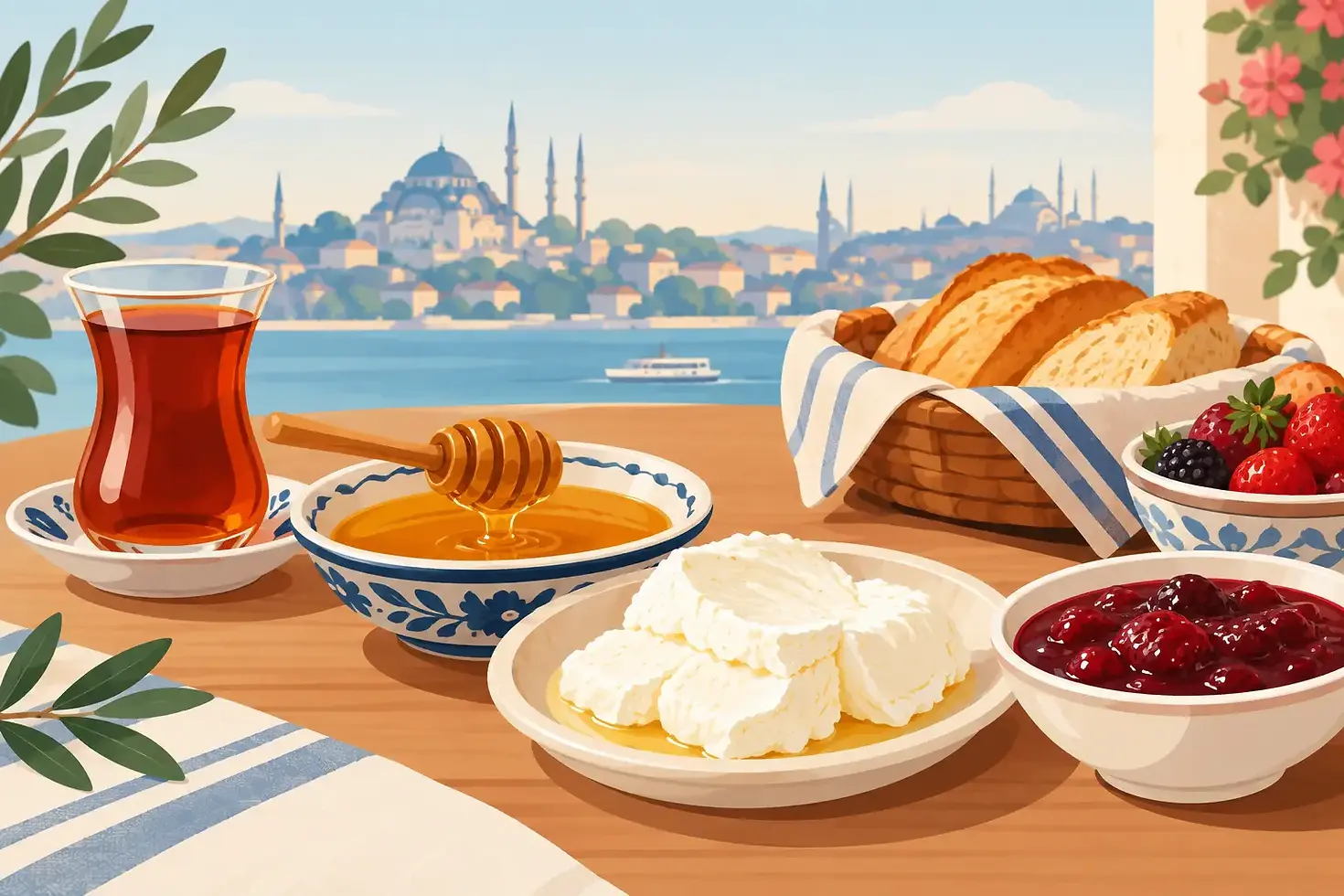
A spoonful of flower honey spilling over cool kaymak, a small dish of sour cherry jam catching the morning light, bread still warm enough to tear by hand: this is where Turkish breakfast becomes more than breakfast. Türk kahvaltısında bal, kaymak ve reçel kültürü carries the quiet language of welcome. It asks no one to hurry, gives every guest something to reach for, and turns a table into a place where memory and appetite meet.
For visitors, honey, clotted cream, and jam may appear to be simple sweet accompaniments. On a Turkish breakfast spread, however, they offer a sense of season, region, family habit, and generosity. Their place beside cheeses, olives, eggs, tomatoes, tea, and fresh bread is deliberate. Sweetness is not an afterthought here. It is one of the table’s invitations.
Why Sweetness Belongs at a Turkish Breakfast Table
A traditional Turkish breakfast is built around contrast. Briny olives meet mild white cheese; peppery arugula meets ripe tomato; savory eggs are followed by something soft, floral, or fruity. Honey, kaymak, and jam bring balance to these flavors, but they also slow the rhythm of the meal. They encourage another slice of bread, another glass of tea, another conversation.
This is especially meaningful in a culture where breakfast is often shared. A small bowl of jam in the center is not portioned for one person. It is passed around. Honey and kaymak are gathered onto bread according to each guest’s taste. Some prefer a generous layer of kaymak with just a thin ribbon of honey. Others seek the brighter tang of berry or citrus jam after a bite of salty cheese.
The details vary from home to home and city to city. In some families, a certain preserve only appears when relatives visit. In others, honey is a daily essential, bought from a trusted producer and kept close to the tea glasses. The ritual has room for both the ordinary and the celebratory.
Honey: A Taste of Place
Turkish honey is never only sweet. Its character is shaped by the landscape around the hive: mountain herbs, wildflowers, pine forests, chestnut groves, and highland air. That is why a breakfast table can offer a surprising range of honey flavors, from light and fragrant to dark, resinous, and deeply earthy.
Flower honey is often the familiar choice, easy to pair with kaymak and bread. Pine honey, associated with Turkey’s southwestern coast, has a darker color and a more distinctive woody profile. Chestnut honey can be bold and slightly bitter, a choice for diners who enjoy complexity rather than pure sweetness. The preference is personal, and that is part of the pleasure.
Honey also holds an old association with care and abundance. Serving it at breakfast says that the table has been prepared with attention. It is a small luxury, but not a distant one. It belongs to the generous logic of Turkish hospitality: offer the best you have, then insist that your guest take one more bite.
The honey and kaymak pairing
Honey becomes most beloved when it meets kaymak. The combination is often called bal kaymak, and its appeal is immediate: floral sweetness against rich, cool creaminess. But the best version is not merely sugary. Good kaymak has a gentle dairy flavor and a texture that feels thick yet delicate, almost like a soft fold rather than a heavy spread.
A piece of fresh bread is the classic vehicle. Simit can also bring a satisfying sesame crunch, while warm pide makes the pairing feel especially indulgent. The key is restraint. Too much honey can hide the subtle flavor of the cream; too little may leave the pairing flat. A well-set breakfast table lets each diner find their own balance.
Kaymak: The Quiet Luxury of the Morning
Kaymak is sometimes translated as clotted cream, but the translation only tells part of the story. Traditionally made by slowly heating milk and collecting its rich top layer, kaymak has a texture and aroma that deserve to be experienced rather than reduced to a definition. It is luxurious, certainly, yet it remains deeply connected to domestic kitchens, dairy traditions, and the comfort of a long morning meal.
Regional styles differ. Buffalo milk kaymak is particularly prized for its richness and depth, while cow’s milk versions may be lighter and more delicate. Freshness matters greatly. Kaymak should taste clean and dairy-forward, not overly sweet or weighed down by additions.
Its richness also explains why it works best as part of a varied spread. A table full of salty cheese, crisp vegetables, eggs, preserves, and tea gives kaymak its proper context. On its own, it can feel intense. Between savory bites, it becomes a moment of softness.
For a visitor encountering it for the first time, the instinct may be to treat kaymak like dessert. That is understandable, but Turkish breakfast offers a different lesson: pleasure does not need to wait until the end of a meal. It can be woven into the meal itself, one bite at a time.
Jam Culture at Turkish Breakfast
If honey speaks of landscape and kaymak speaks of dairy craft, jam speaks of the pantry. Turkish preserves, known as reçel, reflect the practical and imaginative traditions of making fruit last beyond its season. A jar can hold the brightness of spring strawberries, summer apricots, autumn quince, or the fragrant peel of bitter orange.
The range is wider than many first-time diners expect. Sour cherry jam brings a vivid tartness. Fig jam is dark, soft, and almost caramel-like. Rose petal jam can be perfumed and elegant, while bergamot or orange peel preserves add a gentle bitterness that works beautifully with tea. There are even vegetable and flower-based preserves that reveal how creative the tradition can be.
The finest jams preserve the identity of their main ingredient. They should not taste like sugar alone. A good sour cherry jam still has a sharp edge; a good quince preserve retains its floral fruitiness; a citrus jam should offer brightness beneath its sweetness. This balance is what makes jam feel at home beside cheese and bread rather than confined to a dessert plate.
Homemade memories, seasonal rhythms
For many Turkish households, making jam has long been a seasonal ritual. Fruit is selected at its peak, cooked with patience, and stored for colder months or unexpected guests. The work can be practical, but it is also emotional. A particular jar may recall a grandmother’s kitchen, a family garden, or a summer spent in a coastal town.
Not every breakfast needs homemade preserves to feel meaningful. A carefully chosen local jam can carry the same respect for fruit and season. What matters is the spirit behind it: ingredients with character, served in a way that invites sharing.
How to Enjoy the Trio Like a Local
There is no strict order for eating honey, kaymak, and jam at Turkish breakfast. The table is designed for discovery, not rules. Start with a small piece of bread topped with kaymak and honey, then follow it with salty cheese or an olive. Try a spoonful of sour cherry jam beside a mild cheese. Let hot tea refresh the palate between bites.
The pleasure comes from moving between flavors rather than committing to one. Sweetness becomes brighter after cheese; honey feels more fragrant after tea; a tart jam can make a rich bite of kaymak feel lighter. This is why a broad breakfast spread feels so complete without needing large portions of any single dish.
For travelers in Istanbul, this ritual is also a gentle way to understand the city. At a table in Cihangir, breakfast can hold traces of Anatolian farms, Ottoman-era pantry traditions, neighborhood bakeries, and contemporary cafe culture at once. Dafne Cafe & Kitchen honors that layered feeling: familiar enough to feel welcoming, thoughtful enough to make each shared plate feel like a story.
The next time honey glows beside kaymak and a row of jewel-toned jams, give the moment its due. Tear the bread, pour the tea, and leave room at the table. The sweetest part of Turkish breakfast has always been the invitation to linger.


Yorumlar