Is Turkish Breakfast Vegetarian? What to Expect
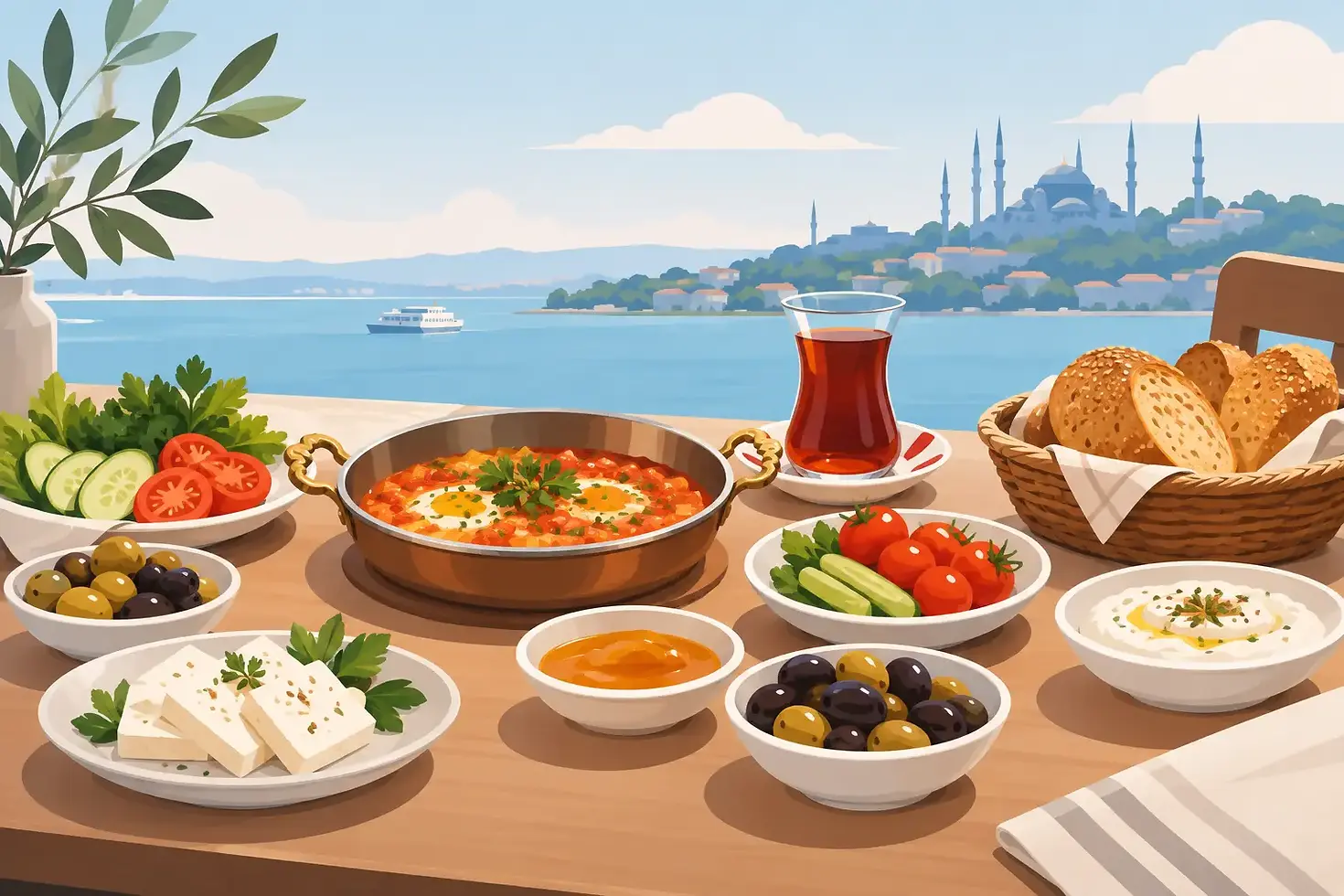
The table arrives in small, gleaming plates: creamy white cheese, ruby-red tomatoes, green olives shining with olive oil, golden honey, warm bread, and tea in tulip-shaped glasses. For many travelers, the first thought is simple: is Turkish breakfast vegetarian? Usually, yes. But the fullest answer lies in the details of the table, the kitchen, and the kind of breakfast you choose.
A traditional Turkish breakfast, or kahvaltı, is built around abundance rather than a single main dish. Its heart is often naturally vegetarian: cheeses, eggs, vegetables, olives, jams, honey, bread, and pastries. Still, meat dishes can appear beside them, and a few seemingly meatless recipes may be prepared with animal-based ingredients. Knowing what to expect helps vegetarians enjoy the ritual with ease, without losing the pleasure of discovery.
Is Turkish Breakfast Vegetarian by Tradition?
Turkish breakfast is not strictly vegetarian by definition, but it is remarkably vegetarian-friendly. Across Türkiye, breakfast developed around what families had close at hand: fresh dairy from nearby villages, seasonal produce, olive oil, preserves prepared at home, and bread brought warm from the bakery. Meat was never required to make the table feel generous.
That is why a classic breakfast spread can be deeply satisfying without sausage, cured meat, or any other meat-based dish. A plate of feta-style white cheese, aged kaşar, black and green olives, sliced cucumber, tomatoes, walnut-studded jam, clotted cream, honey, and fresh bread is not a compromise. It is one of the most recognizable expressions of Turkish morning hospitality.
The question becomes more nuanced when breakfast includes hot dishes. Eggs are central to many menus, while regional specialties may bring sucuk, pastırma, or other meats to the table. For vegetarians who eat eggs and dairy, there is usually a rich range of choices. For vegans, the experience calls for a little more care, since cheese, butter, yogurt, honey, and eggs are woven into many beloved breakfast traditions.
The Vegetarian Stars of a Turkish Breakfast Table
The cold plates alone can create a beautiful meal. Turkish cheeses vary in texture and character, from salty white cheese to buttery kaşar and crumbly village cheeses. They are often served with olives, tomato, cucumber, fresh herbs, walnuts, and preserves. The contrast is part of the pleasure: briny olives beside sweet fig jam, cool cucumber beside peppery arugula, rich cheese lifted by a squeeze of lemon.
Bread has its own place in the story. Fresh village bread, sesame-crusted simit, flatbread, and soft rolls are used to gather flavors rather than simply fill the plate. Bread with olive oil and thyme, bread with honey and cream, bread with tomato and cheese - each bite invites a different combination.
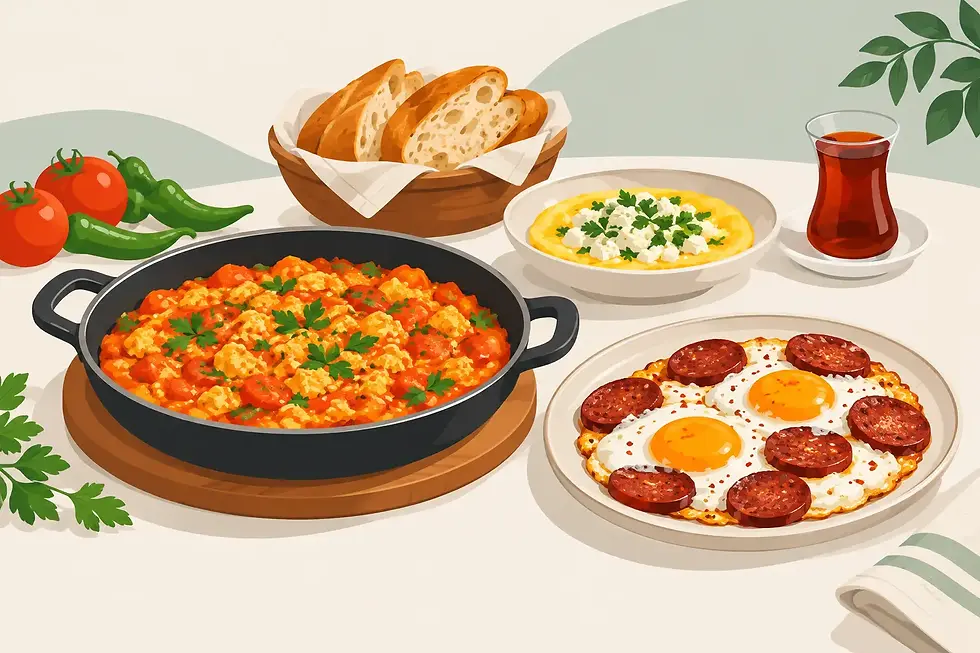
Egg dishes are another dependable choice for lacto-ovo vegetarians. *Menemen*, a soft scramble of eggs with tomatoes, green peppers, and spices, is one of the country’s most comforting breakfasts. Its texture and heat vary from kitchen to kitchen: some make it silky and spoonable, while others cook it until it is more set. Ask whether it is made with butter or olive oil if that matters to your diet.
*Çılbır*, poached eggs with garlicky yogurt and a warm pepper-butter sauce, is equally memorable, though not vegan. It carries echoes of Ottoman kitchens in its balance of cool yogurt, warm spice, and soft egg yolk. A vegetarian breakfast in Istanbul can feel especially generous because such dishes are treated as traditions in their own right, not as side options.
There are also pastries and breads to consider. *Gözleme* filled with cheese, potato, spinach, or herbs can be vegetarian, and savory pastries such as börek may be filled with cheese or greens. The filling is what matters, so it is always worth asking. One tray may hold cheese börek beside another made with minced meat.
Where Meat Can Quietly Enter the Meal
The most obvious non-vegetarian breakfast addition is sucuk, a spiced cured beef sausage. It is often cooked with eggs and is especially popular on large weekend breakfast tables. Pastırma, air-dried cured beef with a distinctive spiced coating, may also appear in eggs, pastries, or toasted sandwiches.
Less obvious are cooking fats and shared preparation. A vegetable dish may be sautéed in butter, an omelet may be cooked in the same pan used for sausage, and a cheese pastry may sit alongside meat-filled pastries. These details will not concern every vegetarian, but they can matter greatly to diners who avoid cross-contact or animal rennet.
For strict vegetarians, it is useful to ask whether a dish contains meat, chicken stock, gelatin, or animal rennet. This is particularly relevant beyond the breakfast table, where soups, rice dishes, and stuffed vegetables can vary by recipe. In a thoughtful restaurant kitchen, a clear question is never an inconvenience. It is simply part of welcoming someone properly.
How to Order a Vegetarian Turkish Breakfast
The easiest approach is to begin with the traditional breakfast spread and add one or two hot vegetarian dishes. You might choose a mixed cheese plate, olives, seasonal greens, tomatoes and cucumbers, jams, honey, and warm bread, then add menemen or a cheese-filled gözleme. This gives you the color, texture, and abundance that make Turkish breakfast feel like an occasion.
When ordering, say that you are vegetarian and ask for no meat, including no sucuk or pastırma. If you do not eat eggs, dairy, or honey, say so clearly rather than relying on the word vegetarian alone. Turkish hospitality is generous, but dietary terms can mean different things in different places. A brief, specific request creates the best experience for everyone.
At Dafne Cafe & Kitchen in Cihangir, breakfast is approached as a shared table and a living cultural memory. That spirit matters for vegetarian diners: the aim is not to remove the soul from the meal, but to shape a table where every guest can take part in its warmth. A well-chosen vegetarian spread still carries the essential pleasures of kahvaltı - conversation that lingers, bread passed across the table, and a second glass of tea before the morning moves on.
Vegetarian, Vegan, and the Turkish Breakfast Difference
Vegetarian diners who eat dairy and eggs will find Turkish breakfast one of the most welcoming meals in the cuisine. Cheese and eggs are not afterthoughts here. They are central flavors, presented with the same pride as any meat dish. A vegetarian can often eat expansively, not cautiously.
Vegan diners have more variables to navigate, though there is still much to enjoy. Olives, vegetables, greens, fruit, bread made without dairy or eggs, jams, tahini-grape molasses, nuts, and olive-oil-based dishes can form a flavorful table. The key is checking bread, pastries, cooking oils, and spreads. Honey and the classic cream-and-honey pairing are not vegan, and butter appears frequently in hot dishes.
Those avoiding gluten should be equally direct. Bread is deeply woven into the breakfast ritual, and cross-contact is common in bakery-centered kitchens. A breakfast can still be built around cheese, vegetables, olives, eggs, and fruit, but it requires an informed conversation before ordering.
Can vegetarians eat menemen?
Yes, menemen is typically vegetarian because it is made with eggs, tomatoes, peppers, and seasoning. Some kitchens use butter, while others use olive oil. Ask for it without sucuk, since sausage is a common optional addition.
Is Turkish cheese vegetarian?
It depends on the rennet used to make it. Many cheeses are suitable for vegetarians, but traditional cheeses can sometimes use animal rennet. If this is important to you, ask the restaurant which cheese is being served and how it is made.
Is simit vegetarian?
Simit, the sesame-coated bread ring sold throughout Istanbul, is often vegetarian and commonly vegan as well. Recipes differ, however, so confirm if you avoid eggs, dairy, or honey. It is particularly lovely with olives, tomato, and tea on a slow morning.
A Turkish breakfast is an invitation to eat generously and linger a little longer. Let the table guide your curiosity, ask the kitchen the questions that matter to you, and make room for the small pleasures: a ripe olive, a spoonful of jam, and a warm piece of bread shared in good company.


Yorumlar