Breakfast Eggs: Menemen, Sucuklu Yumurta & More
A Turkish breakfast table is rarely built around haste. Bread is torn, tea is poured, small plates travel from hand to hand, and the eggs arrive at the center still warm from the pan. Kahvaltıda yumurta: menemen, sucuklu yumurta ve diğer çeşitler is more than a list of dishes. It is a way of understanding how a simple ingredient can gather people around the table.
In Turkey, eggs are not confined to one breakfast identity. They can be soft and tomato-rich, boldly spiced with cured beef sausage, folded with cheese, or served with yogurt and butter. Each version changes the mood of the morning. Some call for a long, leisurely spread; others are made for the first bite of a busy day. What they share is generosity: a hot skillet, good bread, and the pleasure of eating together.
Why Eggs Belong at the Turkish Breakfast Table
The beauty of a Turkish breakfast is its rhythm of contrast. Salty white cheese meets sweet jam. Crisp cucumber refreshes rich olives. Strong black tea follows a bite of warm bread. Eggs give this table its comforting center, bringing softness, warmth, and enough substance to make breakfast feel like a proper meal rather than a quick stop between sleep and the day ahead.
Egg dishes also carry the character of the cook. One home makes menemen loose and saucy, another prefers it almost scrambled. Some families add onions without hesitation; others consider that an argument waiting to happen. Sucuk may be cut into thin rounds, thick half-moons, or tiny cubes that season the oil as they cook. These details are personal, regional, and deeply familiar.
For guests discovering Turkish food for the first time, breakfast eggs offer an easy and memorable introduction. The ingredients are recognizable, yet the flavors tell a distinctly Anatolian story through ripe tomatoes, peppers, pepper paste, fragrant butter, and the savory richness of sucuk.
Kahvaltıda Yumurta: Menemen and Its Many Moods
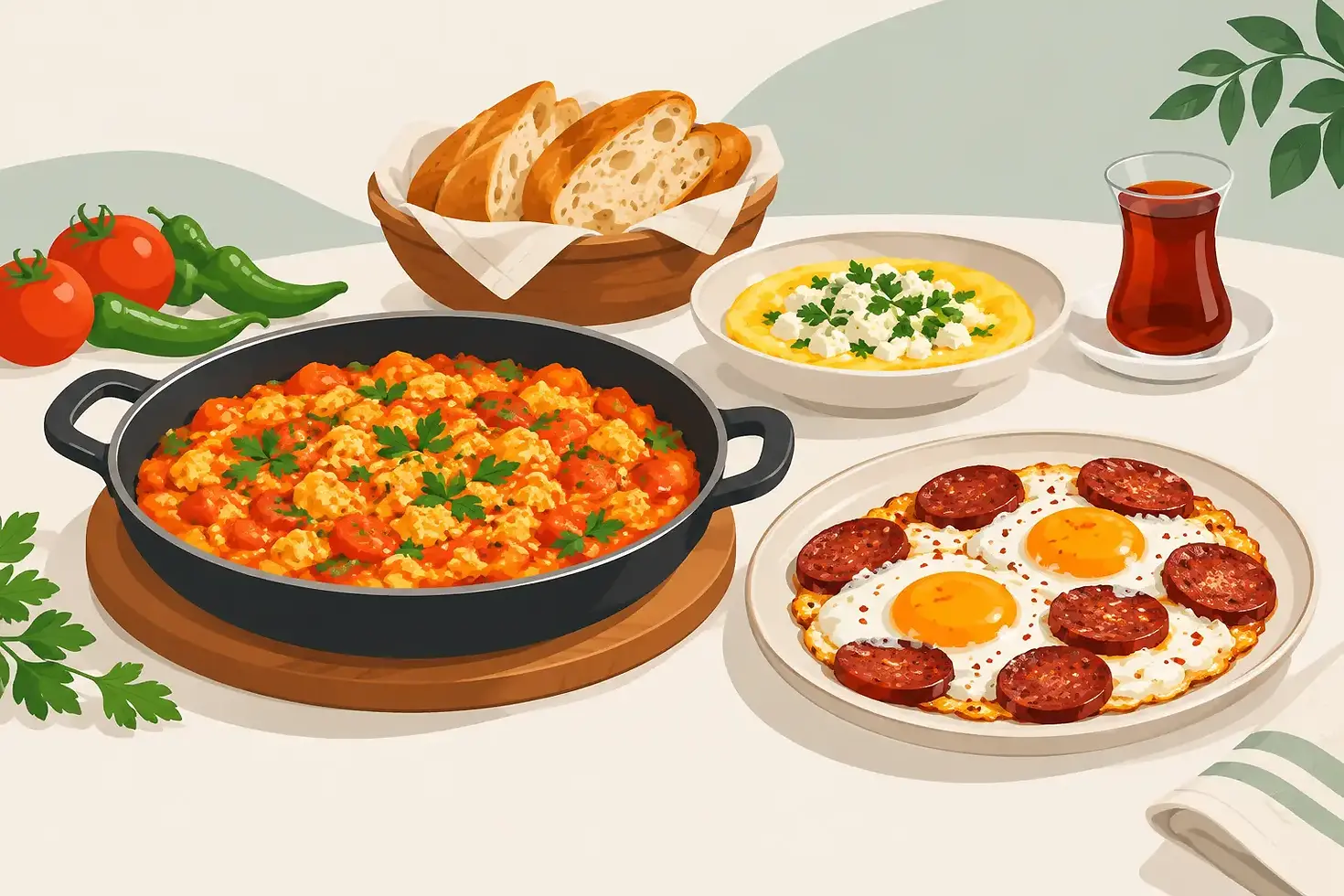
Menemen is often the dish people remember long after breakfast is over. At its heart are tomatoes, green peppers, eggs, and a little oil or butter. But that short ingredient list leaves room for endless interpretation.
A good menemen begins with patience. Peppers soften first, releasing their grassy sweetness. Tomatoes cook down until they become bright, jammy, and fragrant. Then the eggs are added, gently stirred or barely touched depending on the desired texture. The goal is not a dry scramble. It is a warm, spoonable meeting of egg and tomato that begs for fresh bread.
The question of onions
Ask whether onions belong in menemen and you may start the most passionate conversation at the table. For some, onions add depth and sweetness, especially when breakfast stretches into brunch. For others, they overpower the clean partnership of tomatoes, peppers, and eggs.
Neither approach is wrong. Onion-free menemen feels lighter and more immediate, especially in summer when tomatoes are at their best. An onion version has a slower, rounder flavor and can be especially satisfying on cooler mornings. The same is true of heat: a mild pepper keeps the dish gentle, while a touch of hot pepper wakes up the palate and makes tea taste even more refreshing.
Bread is part of the recipe
Menemen is not meant to be eaten with a fork alone. The right bread is an essential companion, whether it is crusty village bread, a soft simit, or a warm slice of sourdough. Tear off a piece, gather the sauce, and let the bread carry the flavors without rushing them. This shared, hands-on style is part of what makes the dish feel like home.
Sucuklu Yumurta: A Bolder Morning Plate
If menemen is soft-spoken and sunlit, sucuklu yumurta arrives with confidence. Sucuk is a dry, spiced Turkish sausage, traditionally prepared with garlic and warming spices such as cumin, paprika, and fenugreek. When it hits a hot pan, its aromatic fat becomes the foundation for the eggs that follow.
The simplest version is also one of the best: slices of sucuk are briefly cooked until their edges curl and deepen in color, then eggs are cracked directly into the pan. The whites set around the sausage while the yolks remain golden and ready for bread. A pinch of black pepper or pul biber can be enough to finish it.
This is a richer breakfast choice, and that is precisely its appeal. It works beautifully on a slow weekend, after a late night, or whenever the morning calls for something savory and sustaining. Because sucuk is naturally salty and intensely flavored, the rest of the table can stay simple: tomatoes, cucumbers, a few olives, bread, and tea. Balance matters more than abundance.
For travelers in Istanbul, sucuklu yumurta is also a reminder that breakfast can be both familiar and culturally specific. Eggs and sausage may sound universal, but the scent of Turkish spices rising from the skillet creates an entirely different experience.
Other Turkish Egg Varieties Worth Sharing
Menemen and sucuklu yumurta may be the most recognizable choices, but the Turkish breakfast table has room for many more egg dishes. Each brings a different texture and occasion to the meal.
Sahanda yumurta refers to eggs cooked and served in a small pan, often in butter. The yolk is usually left runny, making it ideal for dipping. It is understated, but when made with fresh eggs and good butter, it has a quiet elegance.
Peynirli yumurta, or eggs with cheese, offers creamy saltiness without the richness of sucuk. White cheese is often added near the end so it softens but does not disappear completely. A little parsley, dill, or scallion can brighten the dish and make it feel especially suited to spring.
Pastırmalı yumurta is a more intensely savory option. Pastırma, the air-dried and spice-coated cured beef of Anatolian culinary tradition, has a silky, concentrated flavor. It needs only a brief moment of heat before the eggs are added. Because it is so distinctive, a small portion can feel luxurious.
[Çılbır](https://www.dafnecafekitchen.com/post/what-is-cılbır-dish-turkey-s-poached-eggs) takes eggs in a different direction. Poached eggs are placed over cool, garlicky yogurt and finished with melted butter infused with pepper. The contrast of warm yolk, tangy yogurt, and fragrant butter is remarkable. It is often enjoyed beyond breakfast, proving that Turkish egg dishes belong wherever comfort is needed.
Choosing the Right Egg Dish for the Table
There is no single best choice because breakfast changes with the season, the company, and the appetite. Menemen suits a table where conversation lingers and several people are ready to share from one pan. Sucuklu yumurta is ideal when the flavors should be more direct and filling. Cheese eggs feel gentle and versatile, while çılbır is the choice for those who enjoy a little contrast and ceremony.
The ingredients should guide the decision too. In late summer, when tomatoes are juicy and peppers are sweet, menemen deserves its place at the center. When the weather turns cool, the deep spice of sucuk or pastırma feels especially inviting. And on mornings when simplicity is the luxury, butter-fried eggs with warm bread can say everything that needs to be said.
At Dafne Cafe & Kitchen in Cihangir, this philosophy belongs naturally to the breakfast table: heritage does not need to be kept behind glass. It can be served warm, shared generously, and made new each time a skillet reaches the table.
A Small Ritual With a Lasting Flavor
The most memorable Turkish breakfasts are not necessarily the largest. They are the ones where the eggs arrive hot, the bread is within reach, and nobody feels the need to hurry. A skillet of menemen can invite a second cup of tea. Sucuklu yumurta can turn an ordinary morning into a reason to gather. Even the simplest egg can hold a sense of welcome when it is made with care.
The next time you set a breakfast table, let the pan stay at the center a little longer. Choose the egg dish that suits the moment, bring out good bread, and make room for the stories that always seem to arrive with the first warm bite.



Yorumlar