
Turkish Breakfast for Tourists in Istanbul
You notice it before the first bite. The table arrives full - small plates spreading outward, tea glasses catching the light, warm bread still breathing steam. For many first-time visitors, turkish breakfast for tourists is not just a morning meal. It is the moment Istanbul stops feeling like a postcard and starts feeling personal.
What makes Turkish breakfast for tourists so memorable
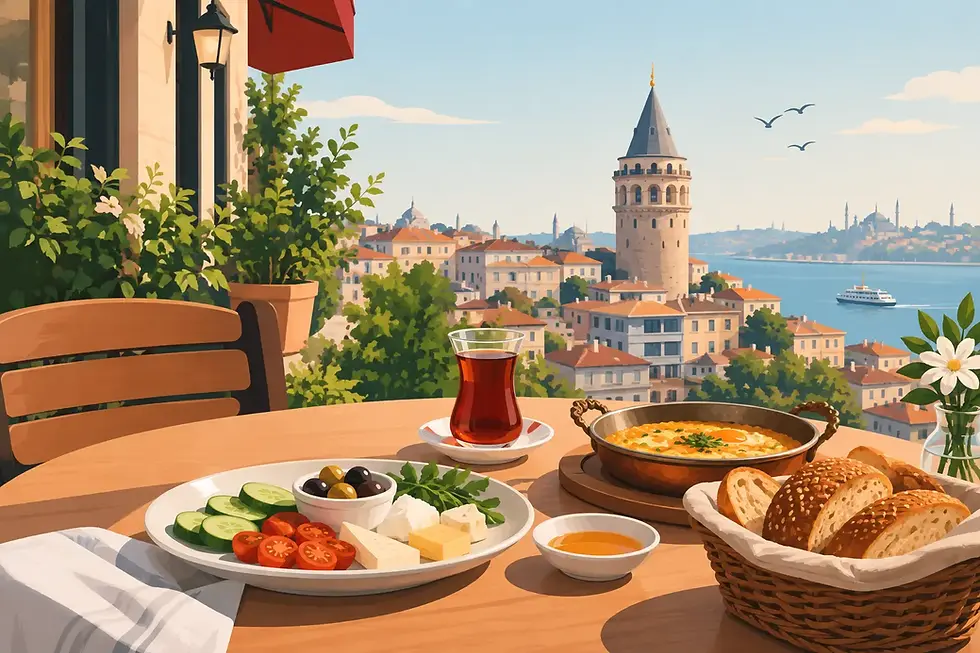
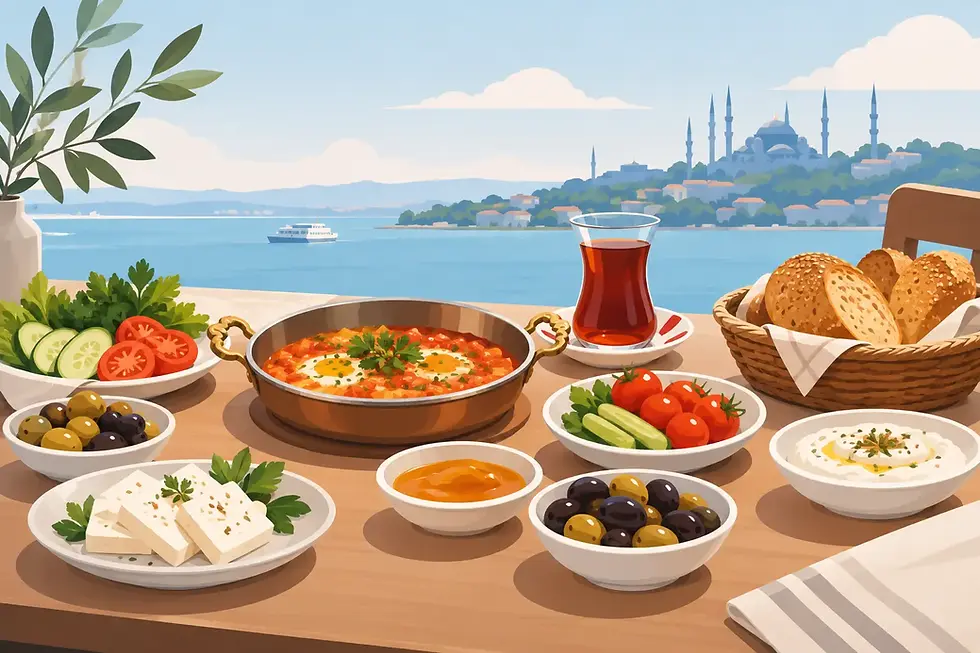
A Turkish breakfast is generous by nature. It is built for conversation, for lingering, for reaching across the table and sharing. Instead of one plate per person, breakfast often arrives as a collection of tastes - olives, cheeses, tomatoes, cucumbers, jams, honey, clotted cream, eggs, bread, and tea. Each item may seem simple on its own, yet together they create a rhythm that feels distinctly Turkish.
That is why visitors remember it so vividly. It offers more than variety. It offers a sense of household abundance, the kind of hospitality that says there is always room for one more person at the table. In Turkey, breakfast carries the warmth of home, the pleasure of slow company, and the pride of regional ingredients. When travelers experience it well, they are not just eating local food. They are stepping into a living tradition.
What is usually on a Turkish breakfast table?
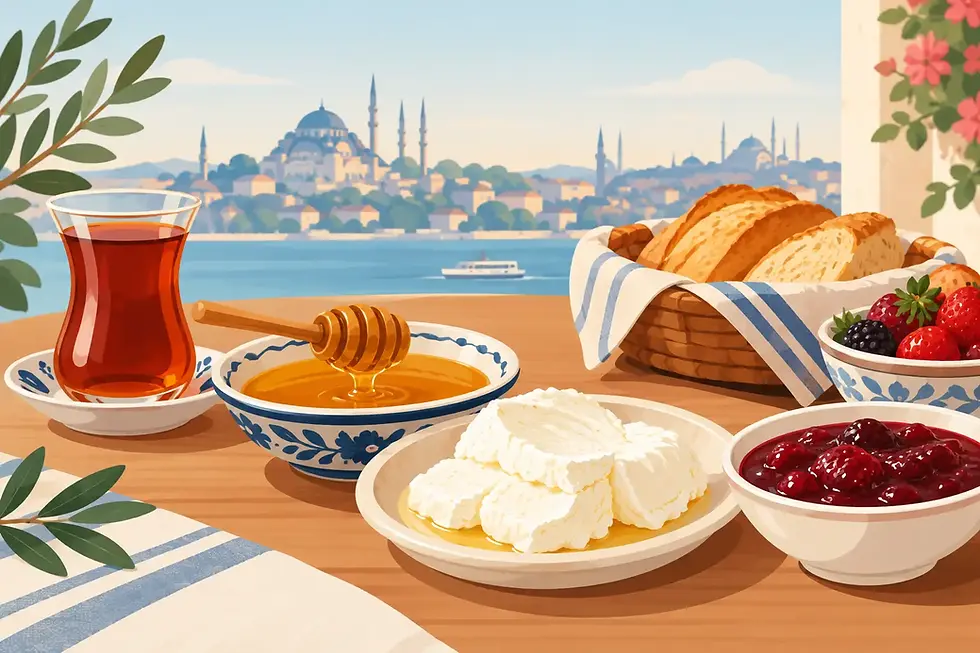
The classic spread changes from place to place, but a few elements appear again and again. Fresh bread is essential, because breakfast here is built around gathering, dipping, spreading, and sharing. White cheese and kasar cheese are common, sometimes joined by local varieties with stronger character. Olives bring salt and depth. Tomatoes and cucumbers add freshness. Jams and honey soften the plate, often paired with kaymak, that rich clotted cream that turns a simple bite into something unforgettable.
Eggs matter too, though they appear in different forms. Menemen, with eggs gently cooked with tomatoes and peppers, is one of the dishes many tourists seek out first. Sucuklu yumurta, eggs with Turkish spiced sausage, brings a deeper, smokier flavor. Some tables include börek, simit, or small hot dishes that reflect the kitchen's style and the region's habits.
And then there is tea. Not coffee, at least not at the beginning. Turkish tea anchors the meal. It is poured steadily, often without ceremony, because ceremony is already built into the act itself. A glass is emptied, another appears, and breakfast continues.
Turkish breakfast for tourists: what to expect
If you are used to a quick coffee and a pastry, a Turkish breakfast can feel almost theatrical at first. The table fills quickly, and there may be more food than you expected before 10 a.m. That abundance is part of the experience, but it also helps to know that you are not meant to rush through everything. This is a slow meal.
The best approach is to let the table unfold. Start with cheese, olives, and bread. Move to eggs while they are hot. Return to the sweeter side later, with honey, jam, and kaymak. Sip tea throughout. There is no strict order, and that is part of the charm. You eat according to appetite, conversation, and curiosity.
Tourists sometimes wonder whether they should order individually or choose a breakfast spread for the table. It depends on the setting. In many cafes and restaurants, a shared breakfast service is the most satisfying choice for two or more people because it gives you the full picture. If you are dining alone, it may make more sense to order a few essentials rather than commit to a large spread. A good breakfast should feel generous, not wasteful.
The difference between a good breakfast and a forgettable one
Not every Turkish breakfast leaves the same impression. Some places rely on quantity alone, filling the table but not offering much care in sourcing, preparation, or balance. For visitors, that can lead to a common misunderstanding - that Turkish breakfast is simply a lot of food.
A memorable breakfast is about quality and feeling. The bread should be fresh, the tomatoes sweet, the cheese properly stored and served at the right temperature. The tea should be strong but not bitter. Hot dishes should arrive hot. The room itself matters too. Breakfast in Istanbul is emotional. You remember the view, the music, the pace of service, the welcome at the door.
This is especially true in neighborhoods where the city's daily life still feels close at hand. In places like Cihangir, breakfast can feel less like a performance for visitors and more like a shared ritual you have been lucky enough to join. That difference stays with people.
How to order without feeling lost
For most US travelers, the easiest mistake is over-ordering. Turkish breakfast looks inviting because everything sounds appealing, and it usually is. But a full village-style breakfast for two can be substantial. If you are unsure, ask whether the spread is meant for sharing and how many people it suits.
It also helps to think about balance. If your table already includes cheeses, olives, jams, and bread, you may only need one hot egg dish and one pastry. If you want to explore more deeply, choose one item you know and one you do not. Menemen may feel familiar enough to anchor the meal, while a regional cheese, house-made jam, or handmade börek gives you something more local to remember.
There are also dietary questions to consider. Vegetarians usually find Turkish breakfast easy to enjoy, but those avoiding dairy or gluten may need to ask more carefully. A thoughtful kitchen will guide you honestly. Breakfast should feel welcoming, not complicated.
Why breakfast says so much about Turkish culture
Breakfast in Turkey reflects the country's larger food culture - regional, generous, social, and deeply tied to memory. Even the word for breakfast, kahvaltı, carries history, referring to what comes before coffee. That small detail reveals something important: meals here are part of a sequence of life, not just fuel between appointments.
The breakfast table also carries traces of Anatolia's breadth. Olive culture from the Aegean, dairy traditions from village kitchens, breads shaped by local flour and ovens, preserves made from seasonal fruit - these are not random items placed together for effect. They are pieces of a wider culinary inheritance.
For tourists, this is where breakfast becomes especially meaningful. You may arrive expecting famous landmarks to explain Istanbul. Yet one morning meal can reveal just as much. It shows how Turkish hospitality works, how flavor is layered without fuss, and how food can hold both everyday comfort and cultural pride.
That is why places that treat breakfast as storytelling stand apart. At its best, every plate carries a little history, and every bite feels connected to a region, a family habit, or a kitchen memory. Her Tabakta Bir Hikaye, Her Lokmada Bir Kültürdür is not just a beautiful sentiment. It is exactly how a great Turkish breakfast should feel.
Where tourists should have breakfast in Istanbul
The answer depends on what kind of morning you want. Some travelers want a Bosphorus view, others want a neighborhood table where the atmosphere feels lived-in and local. Some want a traditional spread with no surprises. Others want a more curated experience that respects the classics while presenting them with elegance and care.
The best choice is rarely the loudest or most viral. Look for places where the menu shows intention, where breakfast is treated as a signature rather than an afterthought, and where the room invites you to stay. In a city as layered as Istanbul, location matters less than sincerity. A beautiful breakfast should not feel manufactured for tourists, even when tourists are warmly welcomed.
That is one reason many visitors are drawn to neighborhood restaurants with a strong sense of identity. In Beyoğlu, for example, a breakfast in Cihangir offers a different mood from the grand hotel buffet. It is more intimate, more textured, and often closer to the Istanbul people hope to find.
A few small customs worth knowing
Tea will likely be refilled often, and yes, it is normal to drink several glasses. Bread is central, so do not be shy about using it generously. Sharing is expected, even if everyone ordered together with different preferences in mind.
It is also perfectly acceptable to linger. In fact, rushing through a Turkish breakfast misses the point. If your day includes museums, ferries, or steep streets, breakfast is where you set the pace. Let it be slow.
And if the table seems abundant, receive that abundance with appreciation. In Turkey, hospitality often appears in the form of one more pour of tea, one more basket of bread, one more small gesture that says you are welcome here.
A good Turkish breakfast stays with you long after the plates are cleared. Not because it was large, but because it made room for you - at the table, in the conversation, and for a little while, in the city's daily life.
Yorumlar