
Cihangir Food Guide for Slow, Memorable Meals
Cihangir is best tasted slowly. Its steep streets, old apartment facades, bookshops, and window-side tables invite the kind of day that begins with tea and somehow turns into dinner. This Cihangir food guide is for travelers and locals who want more than a convenient meal: it is for those looking for the flavors, rituals, and generous pauses that make Istanbul feel personal.
The neighborhood does not reward rushing. A good table here can become a small stage for people-watching, long conversations, and plates designed for sharing. Come hungry, but also come curious. The most memorable meals in Cihangir often carry a story of a region, a family kitchen, or a recipe kept alive by repetition.
A Cihangir Food Guide Begins at Breakfast
Turkish breakfast is not simply the first meal of the day. It is an invitation to linger. In Cihangir, a proper breakfast table is especially welcome after a morning walk toward the Bosphorus or a late wake-up after an evening in Beyoğlu.
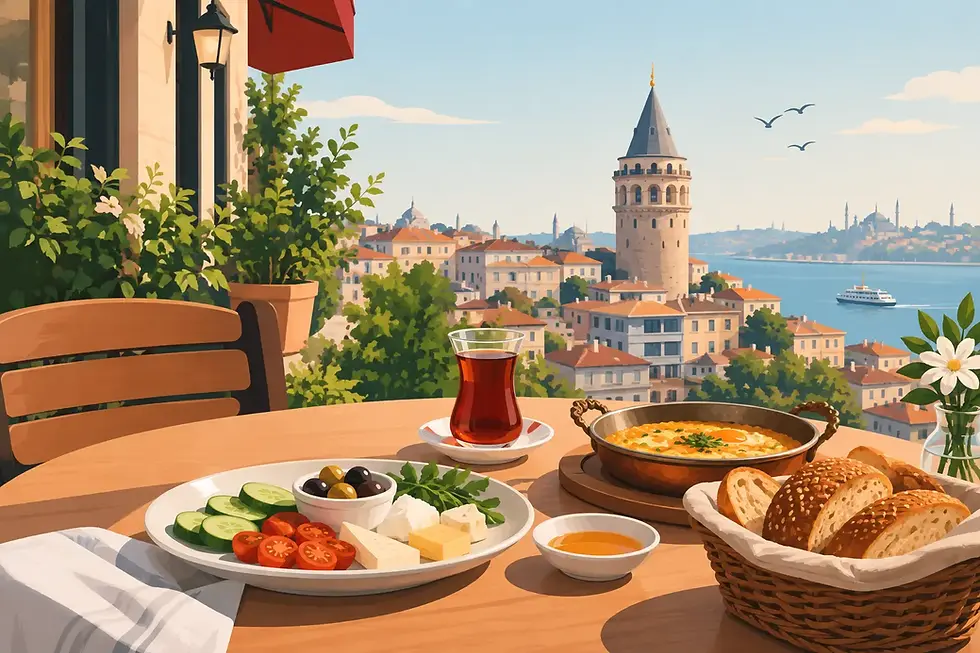
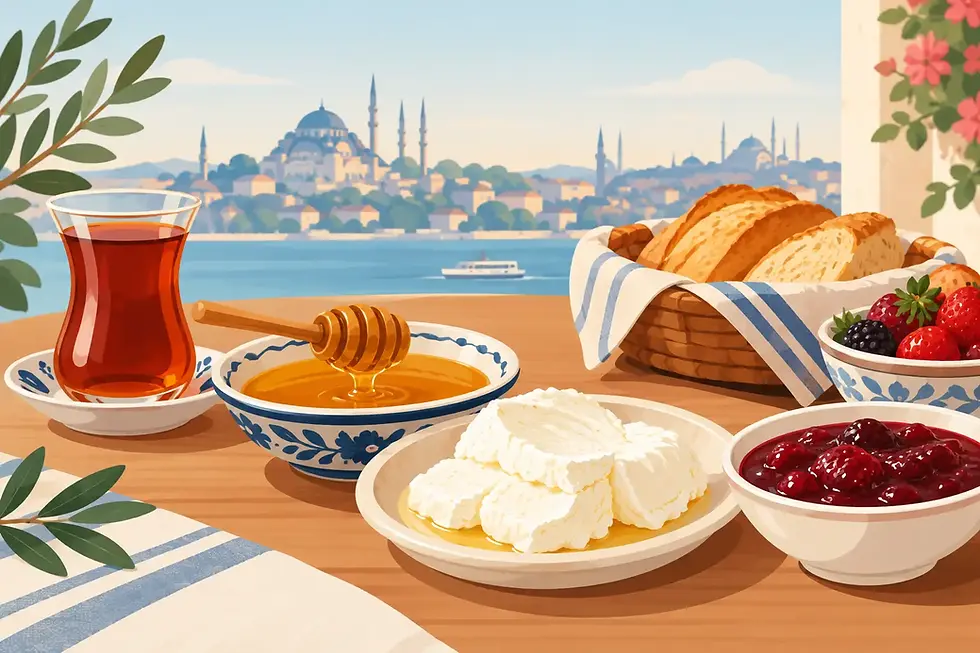
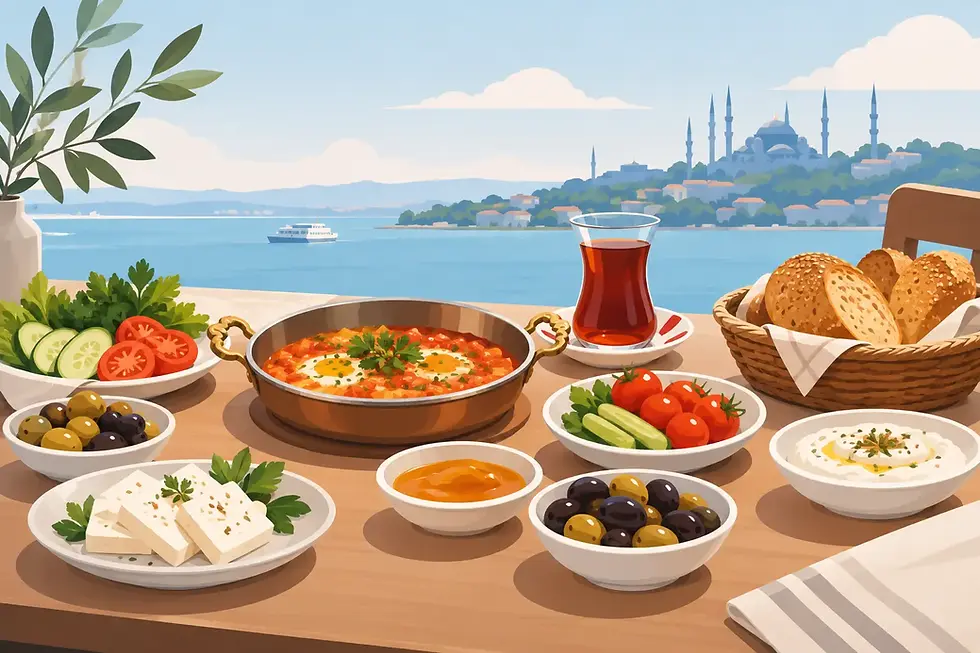
Look for a spread that gives each element its place: white cheese and aged kasar, black and green olives, tomatoes, cucumbers, jams, honey with kaymak, eggs, warm bread, and unlimited tea served in slim tulip-shaped glasses. Menemen, with softly cooked eggs, tomatoes, peppers, and olive oil, is a natural choice when you want something warm. Sucuklu eggs offer a richer, more savory start.
The pleasure is in the contrasts. Salty cheese meets sweet preserves. A crisp simit or warm bread meets creamy kaymak. Tea keeps arriving, and nobody expects you to finish quickly. If you are dining with friends, order a table breakfast rather than individual plates. It creates the easy abundance that makes Turkish breakfast feel complete.
At Dafne Cafe & Kitchen, this sense of shared morning hospitality sits at the center of the experience: a table filled with familiar flavors, presented with the care they deserve. For visitors, it is also a gentle introduction to how Turkish food brings people together before the day has fully begun.
Follow the Day Through Cihangir’s Tables
Cihangir is a neighborhood where timing changes the meal. Breakfast can stretch toward noon, lunch may be light and vegetable-forward, and dinner often asks for a little more ceremony. Planning around that rhythm will make your food day feel less like a checklist and more like life in the neighborhood.
Late morning: pastries, coffee, and tea
If a full breakfast feels too ambitious, choose a lighter stop. A freshly baked poğaça, a savory pastry often filled with cheese or potato, makes an easy companion to Turkish tea. Simit, the sesame-crusted bread ring sold across Istanbul, is another classic. It is simple food, but it belongs to the city’s daily rhythm.
Coffee drinkers have plenty of choices in Cihangir, but do not skip Turkish coffee just because it comes in a small cup. Its thick, aromatic character is meant to be sipped, not rushed. Order it sade for plain, az şekerli for lightly sweetened, or şekerli for sweet. Let the grounds settle before the last sip.
Lunch: the comfort of home-style cooking
For lunch, seek out dishes that resemble the food of an attentive family kitchen. Turkish cuisine is far broader than kebab, and Cihangir is a fine place to taste that range. Vegetable dishes cooked in olive oil, soups, stuffed vegetables, rice, beans, and yogurt-based sides can be as satisfying as a grilled main course.
Mantı deserves special attention. These tiny handmade dumplings, commonly filled with seasoned meat and served with garlicky yogurt and a warm pepper-butter sauce, are a dish of patience. Their beauty lies in balance: tangy yogurt, gentle spice, soft dough, and a savory center. A good plate feels both delicate and deeply comforting.
Anatolian cooking also brings generous use of legumes, grains, herbs, and slow-cooked meats. If you are eating on a warm afternoon, choose olive-oil dishes or a bowl built around seasonal vegetables. On a cool or rainy day, soup, mantı, or a richly seasoned casserole offers a more fitting kind of warmth.
Afternoon: make room for something sweet
The afternoon is made for a pause rather than a large meal. Baklava is the well-known choice, but it is only one expression of Turkish sweets. Depending on the season and menu, you may find milk puddings, syrup-soaked pastries, fruit desserts, or sweets made with tahini, nuts, and dried fruits.
The best approach is to share. Turkish desserts can be wonderfully rich, and sharing lets you taste without turning the rest of the day into a sugar-heavy detour. Pair a sweet with tea if you want something gentle, or Turkish coffee if you enjoy a stronger finish.
What to Order for a More Local Meal
A meal in Cihangir can be as casual or as expansive as you choose. The difference comes from ordering with some intention. Instead of selecting only familiar items, build a table with textures and temperatures that belong together.
Start with two or three cold dishes, perhaps a seasonal salad, a yogurt-based meze, or a vegetable dish dressed in olive oil. Add warm bread to the table, then choose a central dish such as mantı, a grilled specialty, or an Ottoman-inspired recipe with slow-cooked meat and fragrant spices. This gives the meal the feeling of a shared Turkish table rather than a series of separate orders.
Meze is often misunderstood as just an appetizer. It can certainly begin a meal, but it also sets the pace. A table of small plates encourages conversation because no one is finished at the same moment. Taste a little, pass the plate, return to it later. That rhythm is part of the pleasure.
If you have dietary preferences, ask clearly but stay open-minded. Turkish cooking offers many vegetarian-friendly choices, especially vegetables, grains, soups, and dairy-based dishes, yet some recipes use meat stock or butter. Vegan diners may need more guidance, while gluten-free diners should ask about bread, dough, bulgur, and cross-contact. A thoughtful restaurant will help you find the right path through the menu.
Cihangir Food Guide Etiquette: Eat With Time
The most useful rule in this Cihangir food guide is simple: do not schedule your meal too tightly. In a neighborhood known for cafe culture, the table is not merely a place to refuel. It is a place to read, talk, watch the street, and let a second glass of tea arrive.
Reservations are wise for weekend breakfast, evening meals, and larger groups. If you are visiting Istanbul for the first time, aim for an early dinner when you can see the neighborhood shift from afternoon calm to evening energy. Couples may prefer a quieter weekday table; groups will enjoy the shared nature of breakfast and meze, especially when everyone orders for the center.
Service styles vary. Some places are designed for a quick coffee, while others invite a longer meal. Neither is better. It depends on whether you need a brief stop between museums or want the meal itself to be your plan for the day. Cihangir does both well, but the deeper rewards come when you leave room for the unplanned.
Let the Neighborhood Shape Your Appetite
Cihangir sits close to the energy of central Istanbul, yet it keeps an intimate, lived-in feeling. That contrast should shape what you eat. Choose a breakfast worth lingering over before a day of walking. Choose comforting Anatolian food when the streets are cool. Choose a shared dinner when the lights come on and conversation becomes the evening’s real itinerary.
Food here is not about finding one perfect plate and moving on. It is about noticing how bread is broken, how tea is poured, how a family recipe can travel from one generation to another without losing its warmth. Her tabakta bir hikaye, her lokmada bir kültürdür: every plate holds a story, and every bite carries a culture.
When you sit down in Cihangir, order one thing you recognize and one thing you do not. Ask how it is traditionally served, share it with the table, and give the meal enough time to answer.
Yorumlar