
A Guide to Turkish Breakfast Spreads
Some breakfasts are built for speed. A Turkish breakfast spread is built for staying. The tea keeps coming, small plates gather across the table, and what begins as a meal slowly becomes conversation, memory, and ritual. This guide to Turkish breakfast spreads is for anyone who wants to understand not only what appears on the table, but why it feels so generous, so social, and so deeply tied to home.
What makes a guide to Turkish breakfast spreads different?
A Turkish breakfast is rarely about one centerpiece. It is a collection of carefully chosen tastes and textures that balance one another - salty, creamy, fresh, rich, bright, and sweet. The beauty of the spread is in the rhythm of the table. A bite of white cheese meets tomato, then cucumber, then a piece of bread dipped into honey or jam, followed by hot tea that resets the palate.
That is why the word spread matters. In Turkey, breakfast is not plated as a fixed personal portion in the way many American diners expect. It is arranged for sharing. Everyone reaches, tears, pours, and passes. Even in a refined setting, the spirit remains close to an aile lokantası table, where hospitality is measured by abundance and ease rather than formality.
The heart of a Turkish breakfast spread
Most Turkish breakfast spreads begin with the cold essentials. These are the plates that create the table's foundation and invite you to build each bite as you like.
Cheese, olives, tomatoes, and cucumbers
Cheese is non-negotiable. You will often see beyaz peynir, a brined white cheese with a clean, tangy profile that sits somewhere between feta and a softer breakfast cheese. Depending on the house, there may also be aged kaşar, village cheeses, or herb-coated regional varieties. The point is contrast. A softer salty cheese wakes up the palate, while a firmer aged cheese brings depth.
Olives usually come in both black and green, sometimes lightly dressed, sometimes left simple. They are not decoration. They bring bitterness, fruitiness, and salt, giving the table a sharper edge against milder items.
Tomatoes and cucumbers might look modest, but they are essential. A proper Turkish breakfast relies on freshness. Cold slices of ripe tomato and crisp cucumber keep the spread from feeling heavy. They also act as a bridge between richer bites like eggs, butter, and pastry.
Bread is part of the language
Bread is how the table speaks. Without it, the small plates remain separate. With it, everything comes together. Crusty village bread, warm rolls, and simit all have a place. Simit, with its sesame crust and gentle chew, is especially beloved because it can move between savory and sweet so effortlessly.
Not every bread serves the same role. Simit pairs beautifully with cheese, olives, and preserves. Softer bread is better for scooping kaymak or dipping into egg yolk. If you are building a breakfast at home, this is where texture matters more than volume. Better bread changes the whole experience.
Eggs and warm dishes bring comfort
The cold spread sets the scene, but warm dishes give the table its sense of comfort. These are often the items that make breakfast linger.
Menemen, eggs, and regional favorites
Menemen is one of the most beloved breakfast dishes in Turkey for good reason. Eggs are gently cooked with tomatoes and green peppers, sometimes with onions, though that detail can spark strong opinions. The result should be soft and spoonable, never dry. Good menemen feels informal in the best way, like something made in a family kitchen and brought to the table the moment it is ready.
Then there are fried eggs or omelets with sucuk, the boldly spiced Turkish sausage that perfumes the pan with garlic and paprika. This is the richer side of the breakfast table. It pairs especially well with simple bread and fresh vegetables, which keep each bite from becoming too heavy.
In some regions or more expansive breakfasts, you may also find börek, fried dough, gözleme, or small pastries. These additions can make the spread feel more festive, but they should be chosen with some restraint. Too many dough-heavy items can overwhelm the balance that makes Turkish breakfast so appealing.
Sweet elements are never an afterthought
One of the quiet pleasures of a Turkish breakfast spread is the way sweetness enters softly rather than all at once. It is not dessert at the end. It is woven into the meal.
Honey, kaymak, jams, and tahini molasses
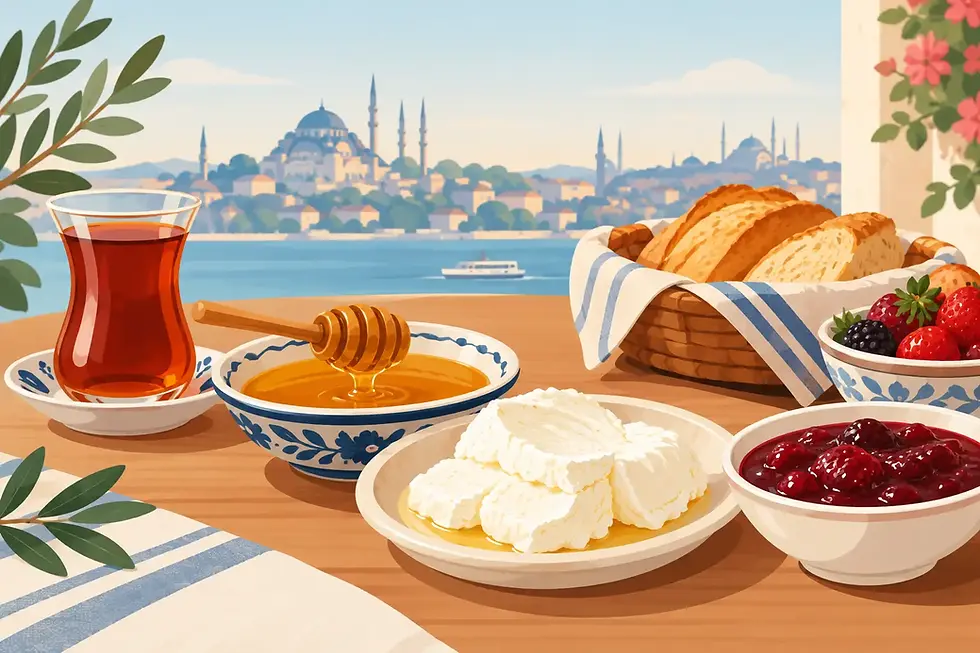
Honey and kaymak are perhaps the most luxurious pairing on the breakfast table. Kaymak is thick, rich, and gently cultured, almost like a cross between clotted cream and fresh dairy cream. With good honey, it becomes one of the most memorable bites in Turkish breakfast - lush, floral, and delicate at the same time.
Jams add another kind of intimacy. Rose, sour cherry, fig, apricot, and strawberry are all common, and each says something different about the season and the household. A breakfast table with several jams feels personal, as if the host is offering not just sweetness but preference, memory, and care.
Tahini mixed with molasses is earthier and deeper. It appeals to those who prefer a less floral sweetness. Its nutty bitterness can be especially satisfying with bread and tea. For some guests, it is the most nostalgic taste on the table.
Tea is not a side note
You cannot really understand a guide to Turkish breakfast spreads without understanding tea. Turkish black tea, served hot in tulip-shaped glasses, is the pulse of the table. It begins the meal, carries it forward, and often extends it long after the plates have been emptied.
Tea matters because it keeps the breakfast from becoming static. Every refill renews the pace. It gives people a reason to stay seated a little longer, to return to a last piece of simit or one more spoonful of jam. Coffee may come later, but tea belongs to breakfast itself.
How to build the table with balance
The most common mistake people make when recreating a Turkish breakfast spread is assuming more is always better. Abundance matters, but so does balance. A strong table has variety without clutter.
Start with a few cold anchors - cheese, olives, tomatoes, cucumbers, and bread. Add one or two warm dishes such as menemen or eggs with sucuk. Then bring in sweetness through honey and kaymak or a selection of jams. Tea ties everything together.
It also helps to think in contrasts. If your cheeses are very salty, keep the olives simple. If you are serving rich eggs with sausage, let the vegetables stay crisp and plain. If you already have pastries, you may not need several breads. Turkish breakfast is generous, but it is not random.
Regional and house variations matter
No single table tells the whole story of Turkish breakfast. The Black Sea region may lean more heavily into butter, corn-based breads, and anchovy traditions. Aegean tables may feel greener and lighter, with herbs and vegetables playing a bigger role. Southeastern breakfasts often bring stronger spices, richer dairy, and heartier cooked dishes.
That is part of the charm. A Turkish breakfast spread is a tradition, but it is not rigid. Homes, cities, and restaurants shape it according to region, season, and personality. A more curated table in Cihangir might present the classics with polished detail, while still holding onto the same spirit of sharing and warmth that defines breakfast across the country.
Why travelers remember it
For many visitors, Turkish breakfast is the meal that changes their understanding of Turkish food. Dinner may impress them with technique or depth, but breakfast wins the heart because it feels lived in. It carries the intimacy of daily life.
There is also something unmistakably generous about being offered ten small plates instead of one large one. You are invited to choose your own sequence, make your own combinations, and stay at your own pace. That freedom is part of the pleasure. At a good table, no one rushes you toward the check or the next event. Breakfast is the event.
At Dafne Cafe & Kitchen, that feeling is part of the philosophy behind the table - her tabakta bir hikaye, her lokmada bir kültürdür. Every plate carries a story, and breakfast may be where that story feels most welcoming.
A guide to Turkish breakfast spreads for your first order
If you are facing a full Turkish breakfast for the first time, begin simply. Start with tea, bread, cheese, olives, tomato, and cucumber. Then try a warm dish like menemen. After that, move toward honey with kaymak or a favorite jam. There is no wrong order, but easing from savory to sweet often lets you notice more.
What matters most is not finishing every dish. It is joining the rhythm of the table. Tear bread. Share plates. Let the tea glass empty and fill again. Ask what is homemade, what is regional, what the house is proud of. Turkish breakfast rewards curiosity.
The best breakfast spreads do more than feed you. They slow you down just enough to taste where you are, who you are with, and why some meals stay with you long after the table is cleared.


Yorumlar