Serpme Türk Kahvaltısı Nedir? The Shared Table
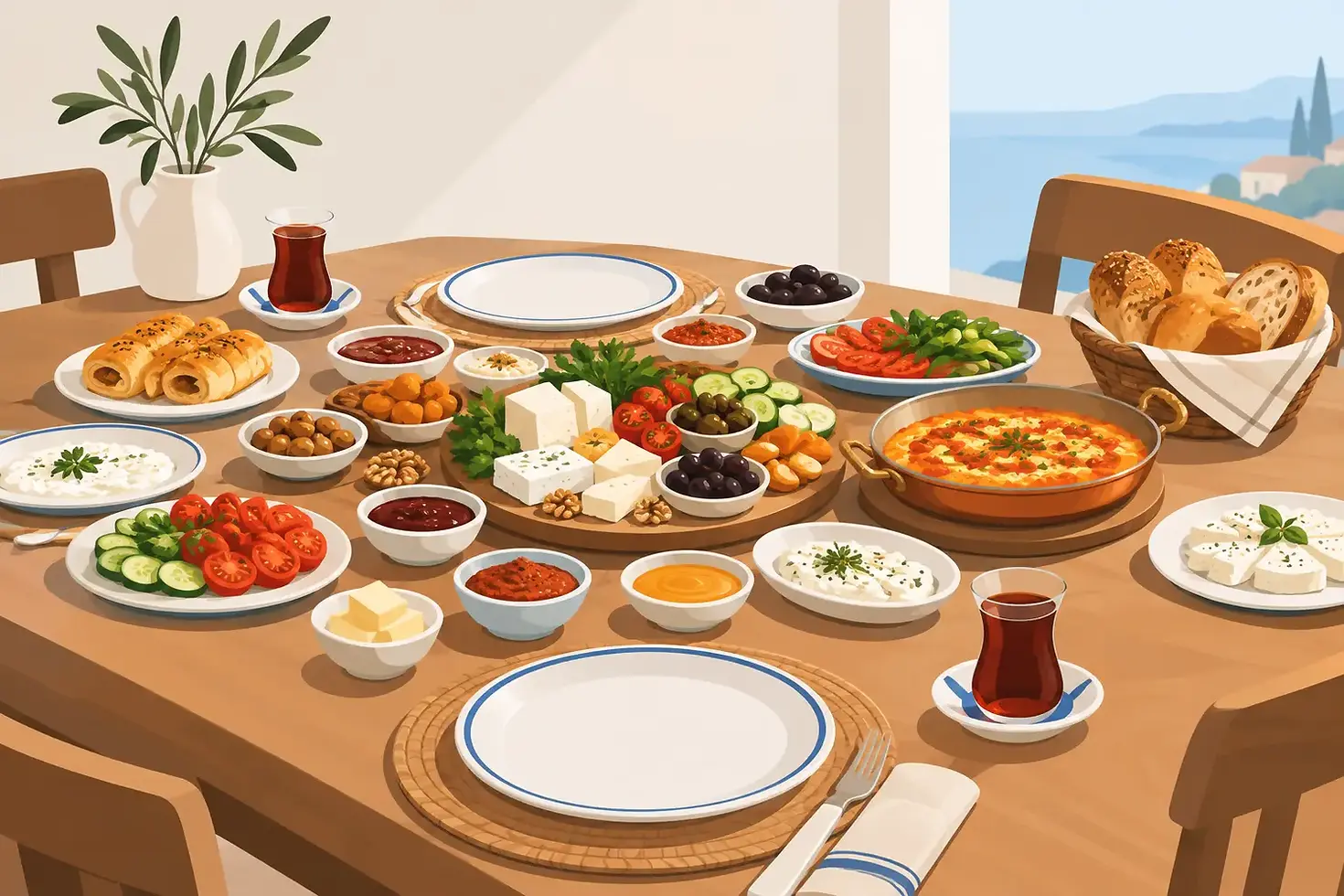
A Turkish breakfast does not arrive as a single, hurried plate. It unfolds across the table: a small bowl of olives, creamy cheeses, jewel-toned jams, warm bread, eggs cooked to order, and tea that is refilled before the glass is empty. So, serpme türk kahvaltısı nedir? It is Turkey’s generous, shareable breakfast tradition, designed less as a quick morning meal and more as an invitation to sit, taste, talk, and stay awhile.
The word serpme can be understood as “spread out” or “laid out.” That description captures the experience perfectly. Instead of choosing one dish, the table becomes a gathering of many small tastes. Every person reaches, passes, compares, returns for another bite, and creates a breakfast that changes from moment to moment.
What Makes Serpme Türk Kahvaltısı Different?
A serpme breakfast is not defined by one fixed list of foods. Its heart is abundance with intention. The table brings together cold and warm dishes, sweet and savory flavors, familiar staples and regional specialties. It is a format shaped by the idea that breakfast should make room for everyone.
At its most traditional, a serpme breakfast includes several cheeses, black and green olives, tomatoes, cucumbers, butter, honey, clotted cream, preserves, eggs, bread, and Turkish tea. Yet the real character lies in the details: the sharpness of a village cheese, the fruit chosen for a homemade preserve, the olive oil poured over a seasonal salad, or the warmth of a pastry brought to the table just after baking.
This is why two serpme breakfasts can look different while both feeling deeply Turkish. Along the Black Sea, corn-based breads, local cheeses, and hazelnut-rich flavors may appear. In the southeast, spicy spreads, tahini-molasses combinations, and richly seasoned eggs can take center stage. In the Aegean, herbs, olive oil, and lighter cheeses speak of the coast. Each table carries a little geography.
More Than a Plate of Small Dishes
For many American visitors, the first comparison may be brunch. The comparison is useful, but incomplete. Brunch often centers on individual entrées: pancakes for one person, eggs Benedict for another. Serpme breakfast begins with a shared table. The food is communal from the start, and no single item is expected to carry the entire meal.
There is also a different rhythm. A Turkish breakfast is often unhurried, especially on weekends. Tea flows continuously. Conversation has room to wander. One bite may pair feta-like white cheese with tomato and bread; the next may be honey and clotted cream on warm simit or toasted bread. The pleasure comes from contrast and choice, not from finishing one composed dish in a particular order.
The Essential Flavors on a Serpme Breakfast Table
While menus vary by region and kitchen, certain flavors create the familiar language of a classic spread. Think of them as a conversation among textures: briny, creamy, crisp, buttery, sweet, and warm.
Cheese is often the starting point. White cheese, aged kaşar, braided cheese, tulum, or a local farm cheese may share the plate. Olives add salt and depth, while sliced tomatoes and cucumbers bring freshness. Fresh herbs such as parsley, dill, arugula, or mint brighten the table and make even a simple bite feel alive.
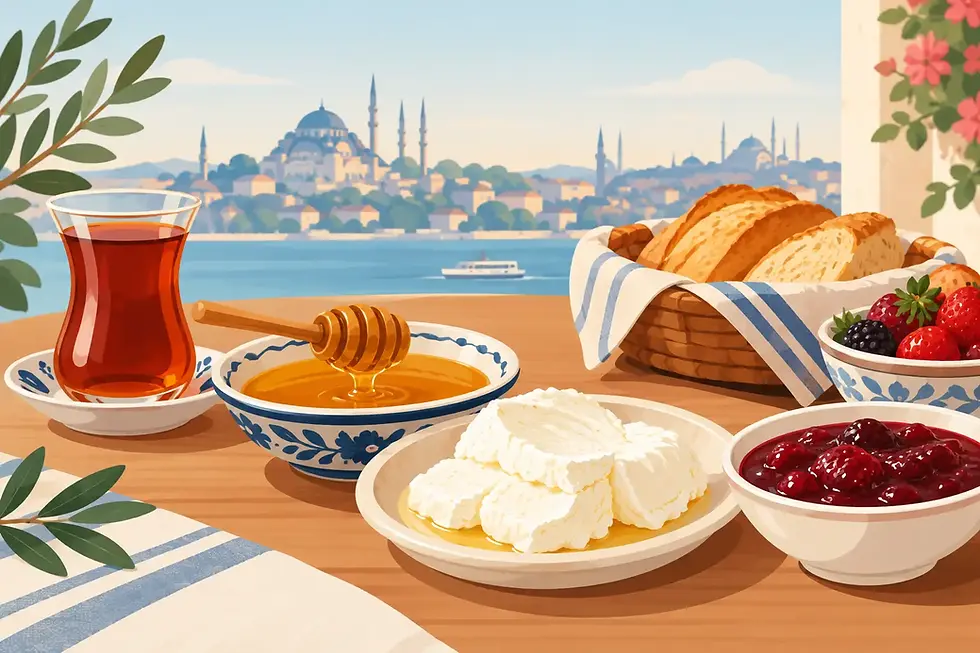
Then come the sweet elements. Honey is often paired with kaymak, a lush clotted cream whose gentle richness is best appreciated slowly. Fruit preserves may be made from sour cherry, quince, fig, rose, or citrus. Tahini and grape molasses offer a darker, nutty sweetness that is especially beloved in colder months.
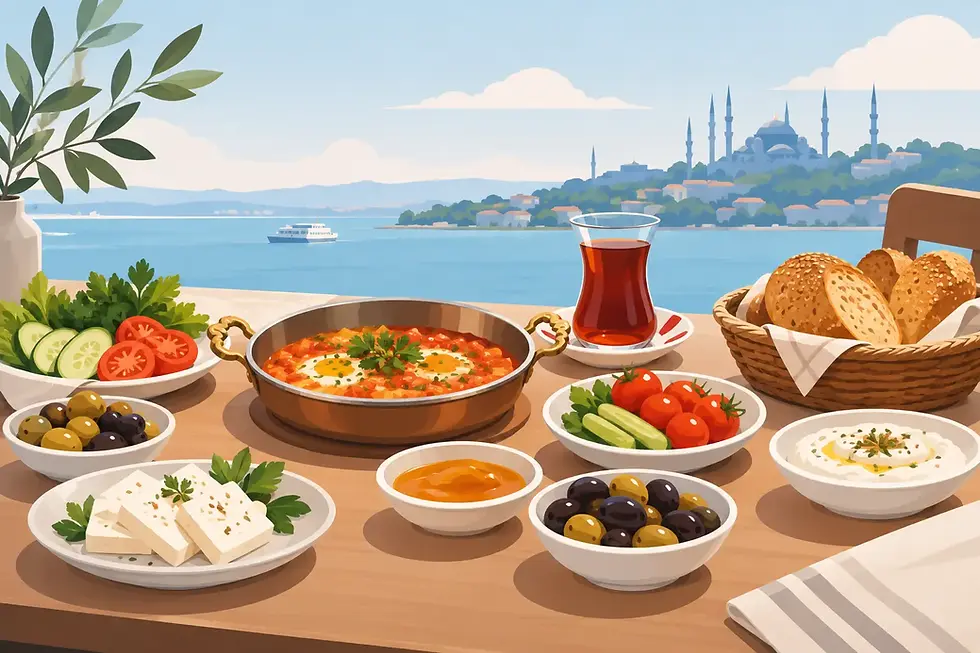
Warm dishes give the spread its comforting center. Menemen, soft scrambled eggs cooked with tomatoes and peppers, is a beloved choice. Sucuklu yumurta brings eggs together with spicy Turkish sausage. Börek adds flaky pastry and savory filling, while pişi offers pillowy fried dough for those who prefer a more indulgent table. Not every breakfast needs all of these. A good spread feels generous, not crowded for the sake of spectacle.
Bread, Simit, and the Importance of Tea
Bread is not merely a side. It is the bridge between nearly every element on the table. Use it to gather eggs, carry cheese and preserves, or dip into olive oil. Depending on the setting, it may be crusty village bread, soft rolls, toasted slices, or sesame-crusted simit.
And then there is tea. Turkish tea is served in tulip-shaped glasses, strong in color but balanced to taste with hot water. It arrives again and again because it is part of the table’s tempo. Coffee may follow later, but tea belongs to the breakfast itself. For a first-time guest, accepting a refill is often the easiest way to understand that this meal is not asking you to rush.
How to Enjoy a Serpme Turkish Breakfast
There is no strict etiquette manual, which is part of its charm. Begin with what draws you in. Try an olive and a piece of cheese. Add tomato, cucumber, and bread. Taste the honey and kaymak together, then shift back to savory eggs. The table is built for small experiments.
If you are sharing with friends, avoid treating every dish as a personal portion. Pass plates easily, leave room for others, and order additional warm dishes as a group when the menu allows it. A serpme breakfast works best when it feels like a common table rather than a collection of separate meals.
It also helps to pace yourself. The first few plates may make the table seem endless, but the joy is not in sampling everything at once. Start with fresh items, enjoy warm dishes while they are hot, and save a little room for a sweet finish with tea. If you have dietary preferences, ask what is included before ordering. Vegetarian diners will often find plenty to enjoy, while vegan, gluten-free, and dairy-free choices depend on the kitchen and should not be assumed.
Why This Breakfast Tradition Matters
Serpme breakfast reflects a wider Turkish idea of hospitality: a guest should feel cared for through detail. The extra slice of bread, the bowl of jam brought to the table, the question of whether anyone would like more tea - these gestures are small, but they create a feeling of welcome.
It also preserves memory. A jar of sour cherry preserve can recall a grandmother’s kitchen. A particular cheese can evoke a hometown market. A pan of menemen can turn an ordinary Sunday into a family ritual. Food traditions endure not because they are displayed behind glass, but because people keep gathering around them.
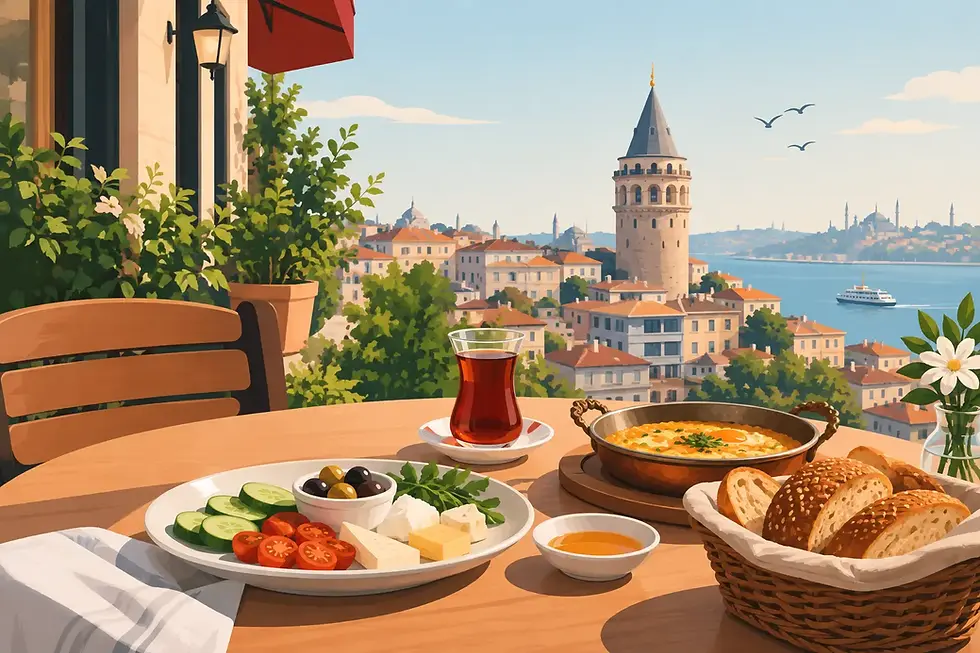
In Istanbul, this tradition takes on another layer. The city brings together flavors and families from every corner of Türkiye, while its cafés make space for locals, travelers, old friends, and newly arrived neighbors. In Cihangir, a leisurely breakfast can feel like a pause between the city’s many stories. At Dafne Cafe & Kitchen, that spirit is expressed in the belief that every plate holds a story and every bite carries a culture.
A Table That Invites You to Linger
A serpme Turkish breakfast can be modest or lavish, regional or contemporary, quiet or celebratory. What stays constant is its generosity. It asks you to share the center of the table, to notice the flavor of a good olive beside fresh bread, and to give the morning a little more time than usual.
If you are trying one for the first time, arrive hungry, order tea, and let the table guide you. The best bite may not be the one you expected - it may be a spoonful of fig preserve beside a salty cheese, enjoyed between stories that last longer than breakfast.
Yorumlar