
A Turkish Breakfast Sharing Example to Savor
A proper breakfast table should make people linger. That is the spirit behind a Turkish breakfast sharing example: not a single plate prepared for one person, but a colorful spread placed at the center so everyone can reach, taste, offer, and return for another bite. The meal begins with hunger, certainly, but it is remembered for conversation, warm tea, and the small generosity of passing the honey a little closer.
In Türkiye, kahvaltı is often treated as a pause from the pace of the day. It can be simple on a weekday or wonderfully abundant on a slow morning with family and friends. What matters is not how many dishes appear on the table. What matters is that the table feels open, welcoming, and made to be enjoyed together.
Why Turkish Breakfast Is Meant for Sharing
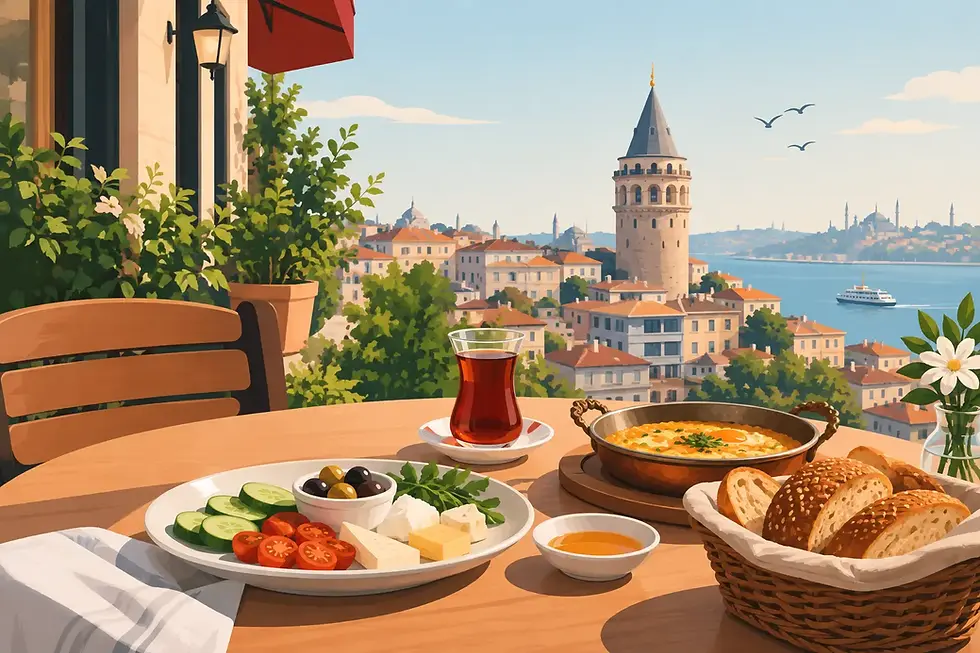
The pleasure of Turkish breakfast comes from contrast. A briny olive follows a spoonful of fruit preserve. Creamy cheese meets crisp cucumber. Fresh bread gathers melted butter, then reaches for menemen still warm from the pan. Each person builds a bite differently, which gives the meal its unhurried rhythm.
Sharing also lets the table tell a wider story. The ingredients may be familiar - tomatoes, eggs, cheese, bread, tea - yet their combination carries traces of Anatolian kitchens, neighborhood markets, family weekends, and long mornings that do not need a reason. A breakfast spread is not meant to be rushed through. It asks guests to stay with it.
A Turkish Breakfast Sharing Example for Four
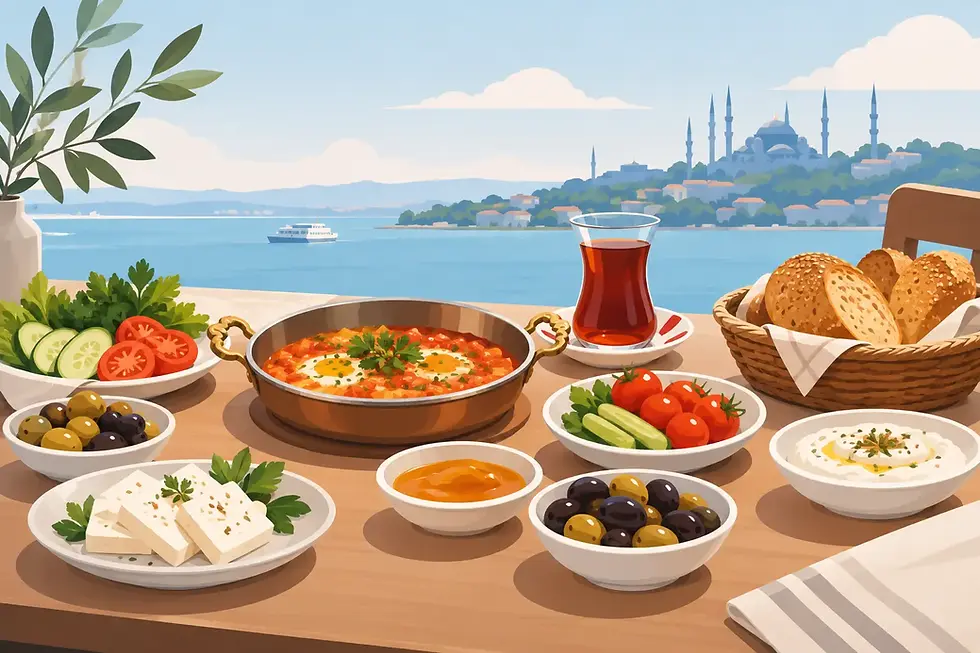
For four guests, begin with one large central board or several small plates arranged within easy reach. The goal is fullness without excess. Every item should have a purpose, and every guest should be able to take what they love without feeling they must finish a personal portion.
Bread at the Center
Place a basket of warm sliced village bread on the table, along with simit if available. Bread is more than an accompaniment here. It is the gentle bridge between dishes, ready for cheese, olive oil, honey, tomato, or the last rich spoonful of eggs. Offer enough for everyone to return to the basket, but keep it warm and replenish it rather than crowding the table all at once.
Cheese, Olives, and Fresh Produce
Arrange two or three cheeses with distinct personalities. White cheese brings salty brightness, kaşar offers a mild, buttery note, and a local aged cheese can add depth. Beside them, serve black and green olives dressed simply with olive oil, thyme, or a touch of red pepper.
Add ripe tomatoes, cucumbers, and a handful of greens. These cool, fresh elements are essential because they balance the richer foods around them. In summer, the tomatoes can carry much of the plate. In colder months, a little extra cheese, tahini, or roasted pepper can bring a comforting weight to the table.
One Warm Dish That Brings Everyone Together
A skillet of menemen is an ideal centerpiece. Eggs are gently cooked with tomatoes, green peppers, and olive oil until soft enough to scoop with bread. It should arrive warm, but not so hot that the table has to wait before beginning.
For a heartier version, add sucuk on the side or fold it into eggs. This choice depends on the group. Some guests prefer the freshness of a vegetable-forward menemen, while others look for the smoky richness of sausage. A thoughtful shared breakfast makes room for both preferences without turning the table into a competition of portions.
Sweet Finishes With Character
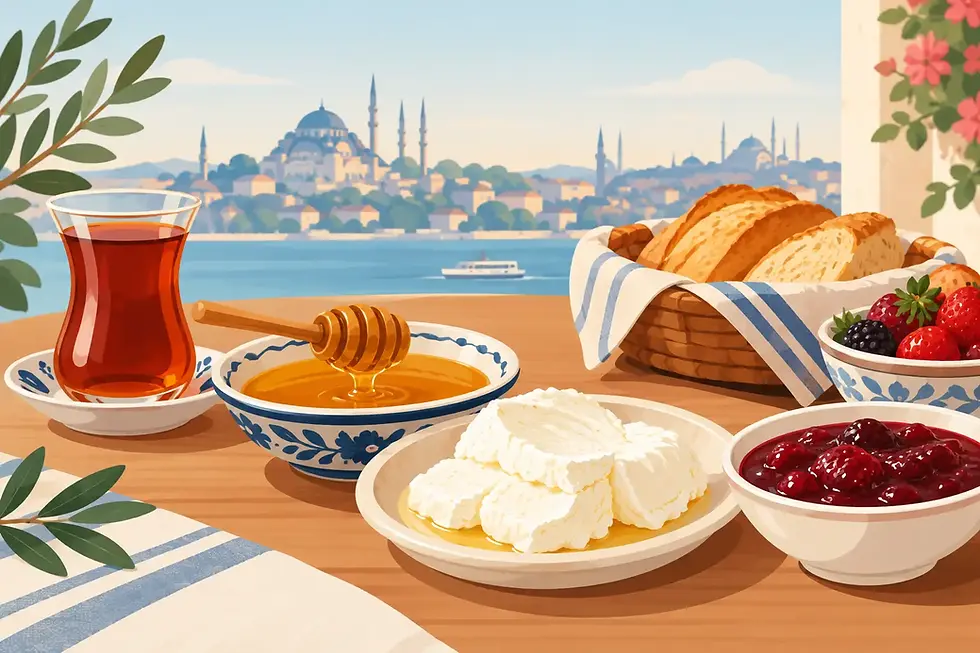
No Turkish breakfast table feels complete without something sweet. Serve honey with clotted cream, known as kaymak, in a small bowl. Add a seasonal fruit preserve, such as sour cherry, fig, or quince, and place tahini with grape molasses nearby for those who enjoy a deeper, nutty sweetness.
These are not desserts saved for the end. They belong in the conversation of the meal, appearing between savory bites and often returning with the final glass of tea. A spoonful of honey and kaymak on warm bread can be wonderfully indulgent, so smaller portions are wise. The pleasure comes from tasting, not from overwhelming the palate.
The Tea Is Part of the Welcome
Tea should arrive early and continue throughout the meal. Served in tulip-shaped glasses, Turkish black tea gives the table a familiar warmth and helps draw out the time spent together. A full pot is more inviting than four pre-poured glasses because it gives the breakfast its own rhythm: pour, sip, talk, refill.
Strong tea suits salty cheese and rich egg dishes especially well. If someone prefers a lighter cup, offer hot water alongside the pot. This is a small gesture, but Turkish hospitality lives in such details. The best host notices what makes each guest comfortable without making the moment feel formal.
How to Set the Table Without Making It Feel Staged
A beautiful breakfast does not require an overly decorated table. Choose plates and bowls that let the food show its color: ruby tomatoes, glossy olives, golden honey, white cheese, and green herbs already create their own composition. Put shared dishes in the center and leave enough room for tea glasses, bread plates, and hands reaching across the table.
Bring warm foods out last. Cheese, olives, preserves, and vegetables can be arranged before guests arrive, while menemen, toasted bread, and fresh tea should come close to serving time. This balance keeps the gathering relaxed. The food looks cared for, yet no one feels they have entered a museum display.
There is also no single correct size for a Turkish breakfast. A couple may prefer one warm egg dish, two cheeses, and a jar of good jam. A lively group may add börek, roasted potatoes, herbs, and a second skillet. The guiding idea remains the same: variety should create pleasure, not waste.
Make Space for Stories at the Table
The most memorable shared meals have a little room around them. Ask a friend which preserve they remember from home. Let a traveler try simit with white cheese for the first time. Explain why tea is poured in small glasses, then refill one before it is empty. Food becomes more meaningful when it carries a memory, a question, or an invitation.
At Dafne Cafe & Kitchen in Cihangir, this feeling is at the heart of a generous table: every plate holds a story, and every bite carries culture. Whether breakfast is served for visitors seeing Istanbul through fresh eyes or friends making a weekend ritual of meeting, the table can offer both comfort and discovery.
Set out what is fresh, serve what is warm, and let the tea keep flowing. The finest part of a Turkish breakfast is often not the last bite, but the moment nobody is ready to leave yet.
Yorumlar