
Best Handmade Turkish Pastries Worth Seeking
The best handmade Turkish pastries announce themselves before the first bite: the buttery scent of dough meeting heat, the quiet crackle of a crisp top, and the steam that rises when a fresh börek is cut at the table. They are not simply snacks or sweets. They are breakfast rituals, afternoon pauses, family recipes, and the kind of generous food that makes a table feel complete.
In Turkey, pastry is a broad and beautiful category. It can mean paper-thin yufka folded around cheese, a spiraled sesame bread carried down a busy street, or layers of filo brushed with butter and filled with pistachios. What connects them is care. Good pastry asks for practiced hands, fresh ingredients, and enough patience to let texture speak for itself.
What Makes the Best Handmade Turkish Pastries Different?
The difference begins with dough. Handmade yufka should be rolled thin enough to feel delicate, yet strong enough to hold its filling without becoming heavy or gummy. A skilled cook learns this balance by touch, not by measurement alone. The dough is rested, stretched, folded, and handled with a confidence that comes from repetition across many mornings and family kitchens.
Butter or good-quality oil matters just as much. In layered pastries, it creates separation between sheets of dough, producing a surface that shatters lightly rather than collapsing into grease. Fillings should be clear and generous, but never excessive. Cheese needs brightness and salt; spinach needs careful draining; minced meat needs seasoning that supports rather than overwhelms the pastry.
Freshness is the final test. A handmade pastry has a short, glorious window. Börek is at its best when the crust is hot and brittle, while the center remains tender. Simit should have a toasted sesame fragrance and a pleasant chew. Syrup-soaked sweets need time to absorb their syrup, but not so much that their layers lose definition. The most memorable versions respect that timing.
Savory Turkish Pastries That Belong on the Table
Su Böreği: The Celebration of Tender Layers
Su böreği is one of the most beloved examples of Turkish pastry craft. Its name means “water börek,” referring to the way broad sheets of dough are briefly boiled before being layered with butter and filling. The result is softer than the crisp, rolled börek many visitors expect. Each slice has a gentle, almost silky texture beneath its golden top.
Traditional fillings often include white cheese and parsley, though minced meat versions are also cherished. A well-made su böreği is substantial enough for breakfast or lunch, yet it never feels blunt or dense. It is the sort of dish that encourages a second serving because each layer is so quietly balanced.
Sigara Böreği: Small, Crisp, and Made for Sharing
Slim and neatly rolled, sigara böreği is usually filled with cheese, herbs, or sometimes potato. Its familiar cigar-like shape gives it its name, although its real appeal lies in contrast: a crisp exterior giving way to a warm, creamy center.
Because it is small, sigara böreği is often treated as an appetizer. But that understates its place at the table. Served alongside tea, breakfast spreads, or a long conversation with friends, it becomes part of the rhythm of hospitality. The best ones are fried or baked just before serving, with no trace of stale oil and no sogginess at the seam.
Kol Böreği: The Spiraled Classic
Kol böreği takes its name from its long, arm-like rolls of filled yufka. The dough is stretched, filled, rolled into long lengths, and often arranged in a coil before baking. Spinach and cheese are a classic pairing, as are ground beef, onion, and pepper.
This is pastry with presence. It cuts into generous wedges, making it especially welcome on a table built for sharing. Look for a crust with a deep golden color and visible, flaky layers. If the filling tastes fresh and distinct, rather than wet or over-seasoned, you have found a careful version.
Poğaça and Açma: Morning Comfort in Your Hand
Not every Turkish pastry is layered with yufka. Poğaça and açma belong to the softer side of the tradition. Poğaça is a tender, often round baked pastry that may hold cheese, potato, olives, or minced meat. Açma is its more elastic, buttery cousin, usually twisted into a ring and prized for its pull-apart texture.
These are everyday pleasures, ideally enjoyed warm with Turkish tea. They can be simple, but simplicity leaves nowhere to hide. Dry dough, overly sweetened dough, or a skimpy filling quickly disappoints. A beautiful poğaça should feel light in the hand and soft at its center, carrying the warmth of a neighborhood bakery into the day.
Sweet Pastries Where Technique Becomes Memory
Baklava: More Than a Sweet Finish
Baklava may be Turkey’s most recognized pastry, but great baklava is still easy to distinguish from merely sweet baklava. The finest versions have sharply defined layers, fragrant butter, and syrup that adds shine without drowning the pastry. Pistachio baklava, especially when made with vivid green, aromatic nuts, offers a rich but clean finish.
The question is not whether baklava is sweet. Of course it is. The question is whether the sweetness allows the roasted nuts, butter, and delicate filo to remain present. When it does, a small piece can feel complete rather than overwhelming.
Katmer: A Breakfast Worth Sitting Down For
Katmer is a pastry of contrast and generosity. Thin dough is layered with butter, pistachios, and kaymak, a clotted cream with a deep, luxurious character. It is folded, cooked until crisp, and served warm, often with a dusting of pistachio.
Its roots are closely tied to Gaziantep, where it has a special place in celebratory breakfasts. Katmer is rich, so it is best approached slowly and shared. With strong Turkish tea or a plain coffee, its buttery layers and creamy filling become even more expressive. This is not a pastry to rush through while walking. It asks for a seat, a plate, and a little attention.
Şöbiyet: The Creamy Side of Filo
Şöbiyet is a close relative of baklava, often shaped into small triangles and filled with cream as well as nuts. The cream softens the intensity of the syrup and adds a tender richness to the crisp layers. A good şöbiyet should taste fresh, with a filling that is smooth rather than floury and a pastry that retains its structure.
It is a reminder that Turkish pastry traditions are not fixed in one texture or one flavor. They move between crispness and softness, between nutty intensity and dairy richness, always returning to balance.
How to Choose Turkish Pastries Like a Local
Start with timing. Morning is ideal for poğaça, açma, simit, and breakfast börek, while freshly baked börek can also be a satisfying midday meal. For baklava and other syrup pastries, ask what has been prepared recently rather than assuming that a display case tells the full story.
Then pay attention to texture. Crisp pastries should sound faintly brittle when cut. Soft pastries should spring back gently rather than feel dry. Cheese fillings should taste of cheese, herbs, and warm dough, not just salt. Sweet pastries should have aroma - pistachio, walnut, butter, milk, or a whisper of citrus - beyond sugar alone.
There is also no single “best” choice for every appetite. Choose su böreği when you want something comforting and substantial. Choose sigara böreği for a table that will be shared. Choose katmer when the meal itself is an occasion. Choose baklava when you want a small, precise sweetness after a savory meal.
A Pastry Table Is a Form of Welcome
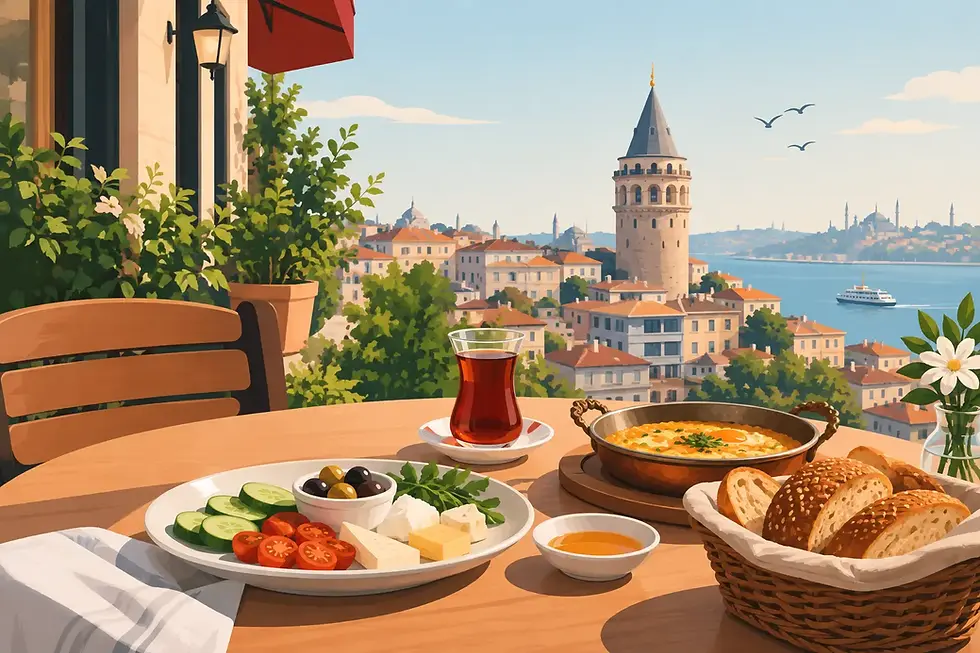
In Cihangir, where a slow breakfast can easily become an afternoon conversation, handmade pastries feel especially at home. They invite people to linger, to pour another glass of tea, and to reach across the table for one more piece. At Dafne Cafe & Kitchen, that sense of shared abundance is part of the pleasure: every plate carries a story, and every bite carries a little culture.
The next time a golden slice of börek or a warm square of katmer arrives before you, give it the time it deserves. Notice the layers, ask about the filling, share it with someone nearby, and let a handmade pastry turn an ordinary meal into a remembered one.
Yorumlar