What Is a Traditional Turkish Breakfast? Kopyası
A real Turkish breakfast does not arrive as a rushed plate eaten between emails. It comes to the table slowly, generously, and with the feeling that the morning deserves your full attention. If you have ever wondered what is a traditional Turkish breakfast, the answer is not just a list of foods. It is a style of gathering, a rhythm of hospitality, and one of the most beloved ways Turkish culture turns an ordinary hour into something memorable.
In Turkey, breakfast is called kahvaltı, a word often explained as “before coffee.” That small detail says a lot. Breakfast is not a quick prelude to the day. It is its own ceremony. Tea arrives first, conversation follows, and the table begins to fill with small plates that invite sharing rather than possession. No one guards their dish. No one eats in a hurry. The beauty is in abundance, variety, and the pleasure of tasting a little of everything.
What is a traditional Turkish breakfast made of?
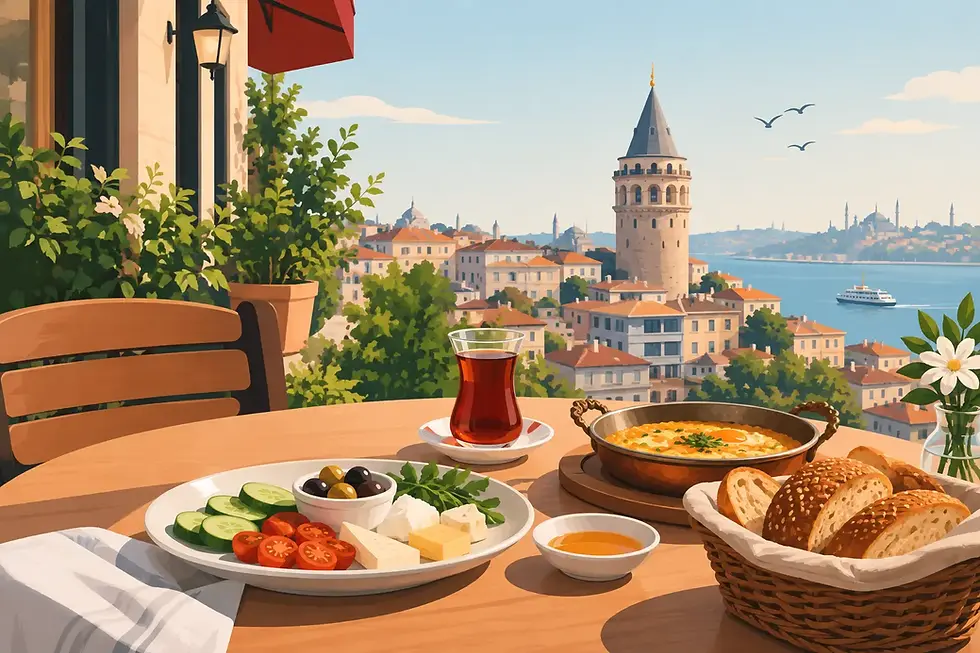
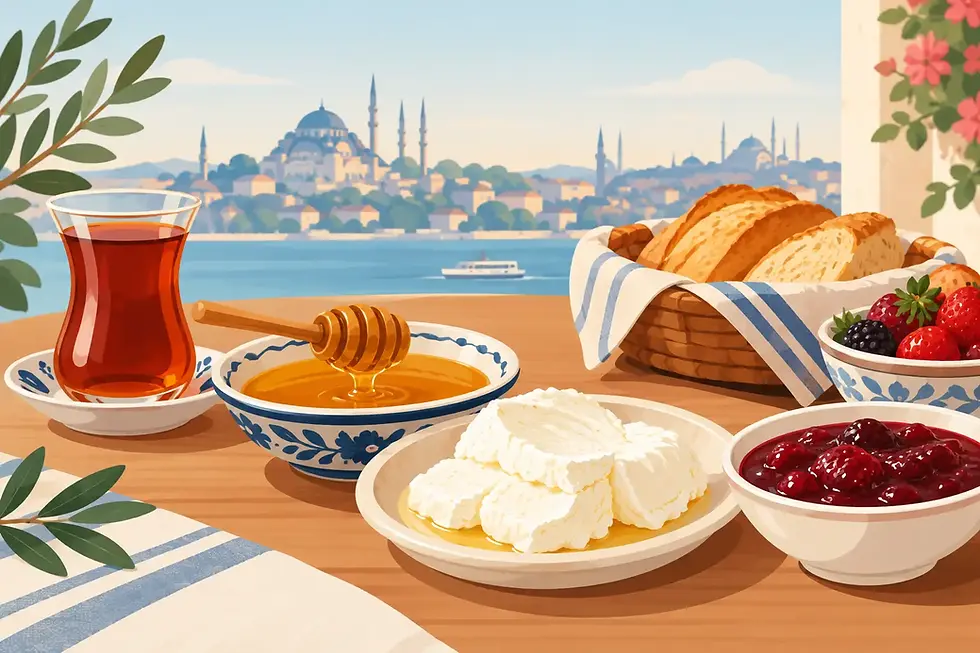
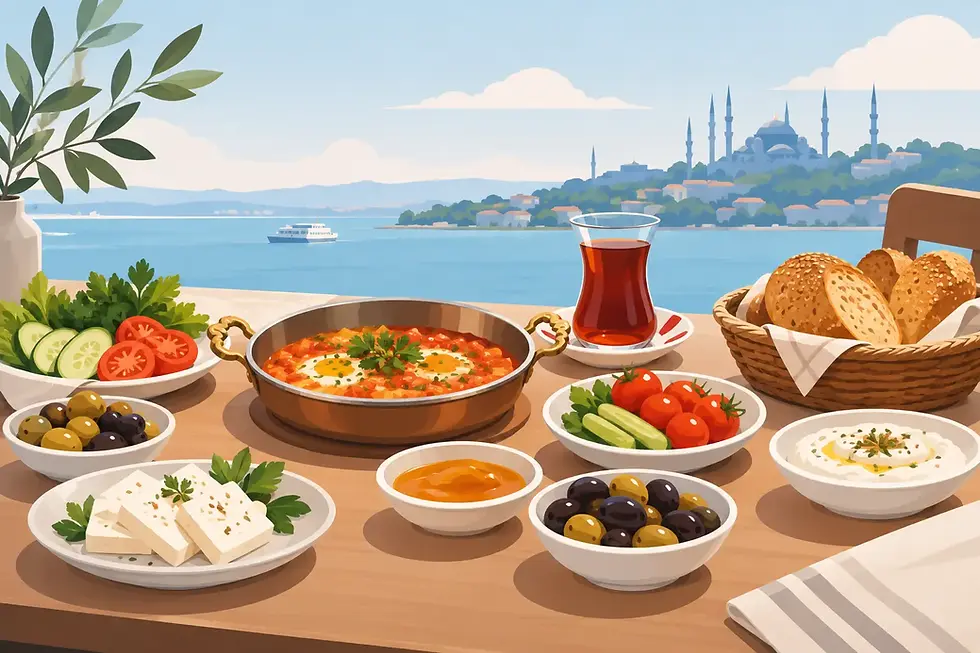
At its heart, a traditional Turkish breakfast is a spread of fresh, savory, and lightly sweet elements served at the same time. The table usually includes cheeses, olives, sliced tomatoes, cucumbers, eggs, bread, jams, honey, and butter. Tea is constant. Depending on the home, region, or restaurant, you may also see kaymak, sucuklu yumurta, börek, simit, menemen, fresh herbs, tahini with grape molasses, or seasonal fruit.
What makes the meal feel distinctly Turkish is not any single item but the harmony between them. Salty white cheese next to ripe tomatoes. Briny olives balanced by floral honey. Warm bread torn by hand and passed across the table. Strong black tea softening the richness of eggs and butter. It is a breakfast built on contrast, and that contrast is exactly what makes it satisfying.
Cheese is one of the anchors of the spread. Often there will be beyaz peynir, similar in spirit to feta but with its own local character, along with kaşar or regional village cheeses. Olives matter just as much, especially black olives cured with depth and patience, though green olives are common too. These are not decorative side notes. They carry the flavor memory of the Turkish breakfast table.
Vegetables bring freshness and balance. Thick slices of tomato and cucumber appear almost without fail, especially in warmer months when they are sweetest. Fresh greens, parsley, dill, arugula, or mint, may join them. This is part of what surprises many first-time visitors. Turkish breakfast can feel abundant without feeling heavy because so much of it is bright, raw, and alive.
Eggs often become the warm center of the table. Menemen, with eggs gently cooked in tomatoes and peppers, is perhaps the most famous example internationally. Sucuklu yumurta, eggs with Turkish spiced sausage, is richer and deeper. Some tables prefer simply boiled eggs, especially in home settings where breakfast leans more classic than restaurant-style. There is no single rule here. It depends on the household, the region, and the mood of the morning.
The spirit of a traditional Turkish breakfast
To understand what is a traditional Turkish breakfast, you have to look beyond ingredients. This meal carries the emotional language of Turkish hospitality. It says stay longer. Have another glass of tea. Tear one more piece of bread. Taste this too.
The meal is deeply social. It is designed for couples, families, visiting friends, weekend reunions, and long conversations that wander naturally from everyday matters to old memories. In many homes, breakfast on weekdays may be simple, but Sunday breakfast expands. It becomes slower, fuller, and more ceremonial. Restaurants throughout Istanbul reflect that same feeling, especially in neighborhoods where breakfast is part of the local lifestyle rather than a tourist performance.
There is also a quiet pride in the table. Each plate reflects regional agriculture, preserved traditions, and the idea that ordinary foods deserve care. A good olive, a properly made jam, fresh village butter, bread still warm from the oven - none of these are extravagant on their own. Together, they create a kind of abundance that feels both humble and elegant.
Why Turkish breakfast feels different from many others
In much of the world, breakfast leans sweet, portable, or highly individualized. A Turkish breakfast moves in the opposite direction. It is savory first, shared by design, and built around sitting down together.
That does not mean every Turkish breakfast is large. Some mornings are as simple as bread, cheese, olives, and tea. But even a modest breakfast often preserves the same logic: multiple small components, balanced flavors, and a table meant for lingering. It is less about one main dish and more about a chorus of plates.
Bread plays a central role in that experience. Fresh bread is not just accompaniment. It is the thread that ties everything together. You use it to gather honey and kaymak, scoop menemen, or enjoy a piece of cheese with tomato. Simit may appear on the side, especially in city life, but softer village-style bread often shapes the more traditional table.
Tea deserves its own respect. Served in tulip-shaped glasses, Turkish black tea is poured deep in color and refreshed constantly. It is not there for caffeine alone. Tea gives breakfast its rhythm. It punctuates conversation, fills pauses, and keeps the table warm long after the first plates have been tasted.
Regional touches and family variations
No honest answer to what is a traditional Turkish breakfast can pretend there is only one version. Turkey’s breakfast culture changes from region to region, and that variety is part of its beauty.
In the Aegean, you may find more herbs, lighter cheeses, and a brighter olive oil influence. In the Black Sea region, corn bread, local cheeses, and preparations with butter may feel more prominent. In southeastern Turkey, breakfast can become spicier, richer, and more elaborate, with stronger cheeses, pepper pastes, and regional specialties that turn the morning table into a feast. In central Anatolia, pastries, eggs, and preserved goods often carry the comfort of home cooking.
Family habits shape the table just as much as geography. Some households always serve homemade jams. Others believe breakfast is incomplete without börek. Some want menemen soft and juicy, while others insist eggs should hold their form. This is one reason Turkish breakfast remains so loved - it is traditional without being rigid.
What to expect at a Turkish breakfast in Istanbul
In Istanbul, breakfast can range from wonderfully simple to famously generous. A neighborhood cafe may present a compact spread for two, while a more expansive breakfast service can arrive in waves, with plate after plate covering the table in color and texture. The best versions still feel grounded in sincerity. They do not overwhelm just for spectacle. They balance quality, freshness, and hospitality.
For travelers, the temptation is often to search for the biggest breakfast. In practice, the more memorable experience is usually the one that feels cared for. Fresh ingredients matter more than sheer quantity. Good cheese, well-brewed tea, ripe vegetables, proper bread, and a sense of welcome create a stronger impression than ten extra plates no one truly wanted.
This is where places with a real connection to Turkish food culture stand apart. At Dafne Cafe & Kitchen, breakfast is approached as something more than a meal on a menu. It carries heritage, mood, and the familiar pleasure of gathering around a table where each plate has a story to tell.
What is a traditional Turkish breakfast really about?
It is about generosity without excess and variety without chaos. It is about making room for conversation. It is about foods that may look simple but carry memory, region, and ritual. Most of all, it is about the table as a place of belonging.
For someone visiting Turkey, breakfast offers one of the clearest windows into daily life. You see how flavor is layered gently, how hospitality is expressed through repetition and care, and how a shared meal can feel both intimate and celebratory. For locals, it remains one of the most comforting expressions of home, whether eaten in a family kitchen, by the Bosphorus, or in a beloved neighborhood dining room.
If you want to understand Turkish culture through food, start in the morning. Order tea, pass the bread, and let the table unfold at its own pace. A traditional Turkish breakfast is not something to finish quickly. It is something to experience fully.
Yorumlar