
How to Order Turkish Breakfast Well
The first surprise of a Turkish breakfast is usually the table itself. You expect one plate, maybe two. Instead, breakfast arrives like a conversation - small dishes, warm breads, eggs still steaming, olives shining with oil, tea poured again before you finish the last glass. If you have ever wondered how to order Turkish breakfast without overordering, missing the classics, or feeling like a tourist reading a menu blind, the good news is simple: you do not need to know everything. You only need to understand how the table is built.
How to Order Turkish Breakfast Without Guessing
A true Turkish breakfast is not a single dish in the American sense. It is a spread, shaped around sharing, freshness, and pace. That matters when you order, because the right approach depends on who you are dining with, how hungry you are, and whether you want a quick morning meal or the kind of breakfast that turns into noon.
If you are dining with two or more people, start by asking whether the menu offers a breakfast plate for one or a mixed breakfast spread for the table. In many Turkish cafes, the most satisfying experience is not ordering separate large dishes for each person. It is choosing a shared breakfast set, then adding one or two hot items that make the table feel complete. This is where breakfast becomes more than food. Her Tabakta Bir Hikaye, Her Lokmada Bir Kültürdür - each dish carries a little memory of home, region, and habit.
If you are dining solo, the best move is different. A full village-style spread can be too much unless you are very hungry or planning to linger. In that case, a breakfast plate with tea, bread, cheese, olives, tomatoes, cucumbers, and jam often gives you the classic experience without waste. Then you can add eggs if you want something hot and more substantial.
Start With the Core of the Table
The foundation of Turkish breakfast is cold and fresh before it is hot and heavy. Think of the table in layers.
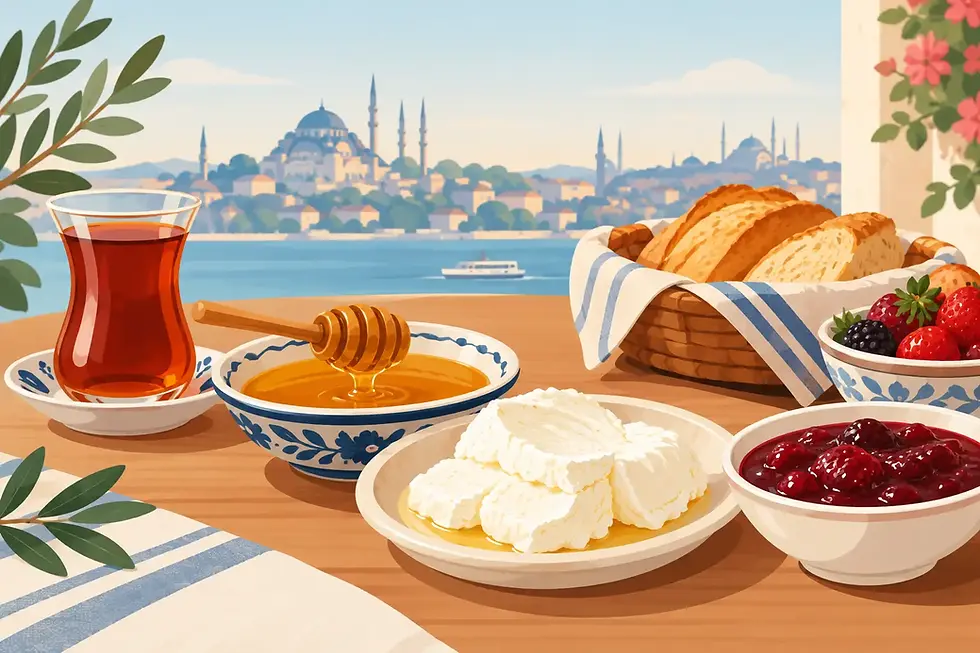
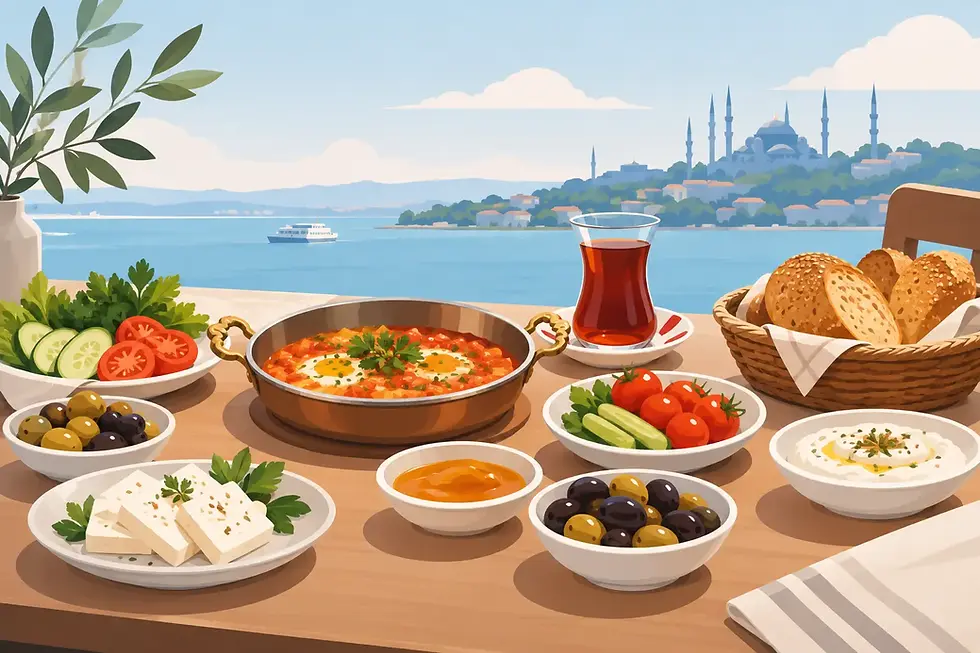
First comes the basic breakfast plate. This usually includes white cheese or several cheeses, black and green olives, sliced tomatoes, cucumbers, butter, honey, jam, and bread. Some tables also include clotted cream, tahini and molasses, or a seasonal preserve. These are not side notes. They are the grammar of the meal.
When deciding how to order Turkish breakfast, begin here before you get excited by pastries and pans of eggs. If your table skips the essentials, the meal can feel incomplete. Bread is used constantly, tea ties everything together, and the balance between salty, creamy, sweet, and fresh is what gives Turkish breakfast its rhythm.
For two people, one generous mixed breakfast is often enough as a base. For three or four, a larger breakfast spread designed for sharing usually makes more sense than building the meal item by item. Ordering everything separately can raise the bill quickly and leave the table crowded with duplicates.
Know Your Cheeses, Olives, and Spreads
Not every breakfast table looks the same. Some places present a modest neighborhood style plate, while others lean into regional detail with Ezine-style white cheese, kashar, herb cheeses, house jams, or flower honey. That difference is part of the pleasure.
If the menu lists several cheese options, choose at least one familiar and one local. A sharp white cheese gives the table salt and structure. A softer or more buttery cheese adds contrast. The same goes for olives. A deep, wrinkled black olive and a brighter green olive create a fuller breakfast than choosing only one kind.
Sweet elements deserve a little attention too. Honey and clotted cream are one of the most beloved pairings on the Turkish breakfast table, but they are rich. If you already plan to order pastries, one sweet spread may be enough.
Add One Hot Dish That Anchors the Meal
Once the cold table is set, add a hot dish. This is usually where guests feel most uncertain, because menus can list several egg dishes and baked specialties that sound similar. The easiest way to choose is to think about mood.
Menemen is soft, spoonable, and comforting - eggs gently cooked with tomatoes and peppers, sometimes with onion, sometimes not, depending on the house style and personal loyalty. It is ideal if you want something classic and shareable.
Sucuklu yumurta, eggs with Turkish sausage, is richer and more assertive. The sucuk brings spice, garlic, and fat, so this choice works especially well if the rest of your table is light and fresh.
If the menu offers gözleme, pişi, börek, or simit service, consider whether you need another carb-heavy item. These are wonderful, but they can push breakfast from balanced to excessive fast. For two people, one hot egg dish plus one pastry is usually enough. For larger groups, two hot dishes with a mixed breakfast spread can create the right abundance without waste.
Menemen or Sucuklu Yumurta?
This is one of the most useful decisions to make well. If you are visiting Istanbul for the first time and want the most classic answer, menemen is the safer start. It speaks softly and suits almost every table.
If you love bold breakfast flavors and do not mind a heavier plate, sucuklu yumurta may be the more memorable choice. It also pairs beautifully with plenty of bread and strong tea. There is no wrong answer here. It depends on whether you want comfort or intensity.
Do Not Forget Tea
Ordering Turkish breakfast without tea is technically possible and emotionally incomplete. Tea is not just a beverage here. It sets the pace of the meal, fills the pauses, and keeps the table alive.
In most cafes, black Turkish tea is served in tulip-shaped glasses and often refreshed throughout breakfast. If you are unsure, ask whether tea is included in the breakfast set or ordered separately. This small detail matters because some places offer unlimited tea with breakfast, while others charge by the glass or pot.
If your table prefers coffee, have it after breakfast rather than during. Turkish breakfast is built for tea. Coffee belongs more naturally at the end, when the table has quieted and the morning starts to stretch toward the rest of the day.
Order for Sharing, Not for Ownership
One of the easiest mistakes visitors make is ordering as if every item belongs to one person. Turkish breakfast is more generous than that. The table is meant to be shared, reached across, and talked through.
That changes how much you need. For two people, a mixed breakfast and one hot dish often creates a full meal. If you are both big eaters, add one pastry or another egg dish. For four people, one large village breakfast spread, two hot dishes, and a bread basket or pastry selection can be more than enough in many places.
If you are with friends who all want different things, choose a common base and then add items with contrast. For example, pair a fresh breakfast spread with menemen and one baked item, rather than two versions of eggs and three breads. Variety matters more than volume.
Ask What Is House-Made or Regional
This is where breakfast becomes more personal. If you want more than the standard tourist version of the meal, ask which jams are house-made, whether the breads are baked in-house, or if a cheese or preserve comes from a specific region. A good breakfast menu in Istanbul often carries traces of Anatolia, the Aegean, the Black Sea, or old family kitchen habits.
This question also helps if you are choosing between several similar items. A simple plate becomes more meaningful when you know the butter is village-style, the honey comes from a particular region, or the börek follows a family recipe. At Dafne Cafe & Kitchen, that spirit matters. Breakfast is not treated as a checklist of dishes but as a table with memory and character.
Pace Yourself and Leave Room
The table often looks manageable at first. Then bread keeps coming, tea keeps being poured, and you realize the meal is designed to unfold slowly. So order with restraint at the beginning if you can. In a good cafe, it is easier to add one more hot dish later than to watch half the table go untouched.
This is especially true if you are tempted by pastries, extra spreads, and side plates all at once. Turkish breakfast rewards patience. Let the first round arrive, see what the table needs, then decide. Sometimes all that is missing is another basket of bread and one more glass of tea.
How to Order Turkish Breakfast Like You Belong There
Confidence usually comes from respecting the style of the meal rather than memorizing dish names. Start with a shared spread if you are not alone. Add one hot dish with purpose. Make tea part of the experience. Ask what is local, fresh, or house-made. Order less than your appetite claims, then build slowly if the table asks for more.
A beautiful Turkish breakfast should feel generous, not performative. It should leave enough space for conversation, second pours of tea, and the quiet pleasure of discovering that something as simple as cheese, olives, bread, and eggs can carry a whole culture on the table. The best order is the one that lets you taste that story without rushing past it.

Yorumlar