A Guide to Anatolian Food Traditions
The first thing you notice about a truly Anatolian table is that nothing arrives alone. Bread comes with olives, cheese with tomatoes, tea with conversation, and every dish seems to carry the memory of another hand that once made it. This guide to Anatolian food traditions begins there - not with a recipe, but with the idea that food across Anatolia has always been about sharing, seasonality, and the quiet pride of place.
Anatolia is not a single flavor. It is a vast geography shaped by migration, trade, climate, faith, and family memory. A dish from the Aegean coast speaks differently from one in Central Anatolia or Southeastern Turkey, yet they belong to the same cultural table. That is what makes Anatolian cooking so compelling. It is deeply regional, but it also recognizes a larger identity built around hospitality, thrift, skill, and abundance.
What makes Anatolian food traditions distinct?
At the heart of Anatolian cuisine is balance. There is respect for grain, dairy, legumes, vegetables, and meat, but no single ingredient dominates every region in the same way. In one town, bulgur is the foundation of daily life. In another, olive oil and wild herbs define the table. In colder inland areas, dough-based dishes, preserved foods, and slow-cooked stews make practical sense. Along the coasts, freshness and lighter textures take the lead.
This is also a cuisine shaped by necessity as much as beauty. Many beloved dishes were born from making a little feel generous. Yogurt turns grain into a meal. Tomato and pepper pastes deepen simple ingredients. Dried eggplant, tarhana, pickles, and cured products reflect a strong preservation culture. Anatolian food traditions are elegant partly because they are resourceful.
There is another layer too: ceremony. Food is not treated as fuel. It marks births, mourning, weddings, religious holidays, harvests, departures, and reunions. A tray of stuffed leaves, a pot of aşure, or a plate of mantı tells you something about labor, celebration, and who has gathered in the room.
A guide to Anatolian food traditions by the table
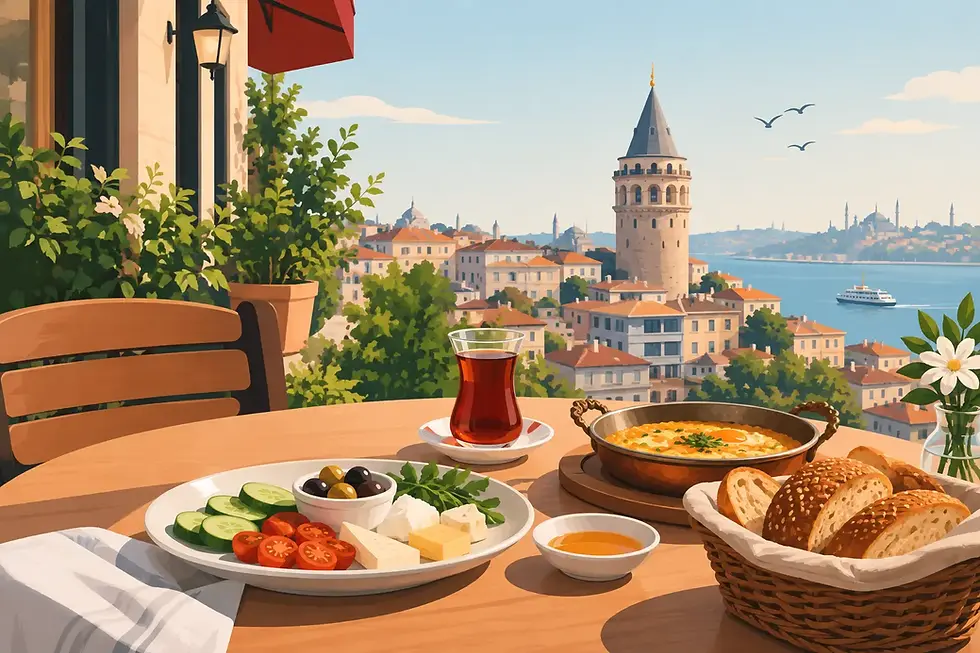
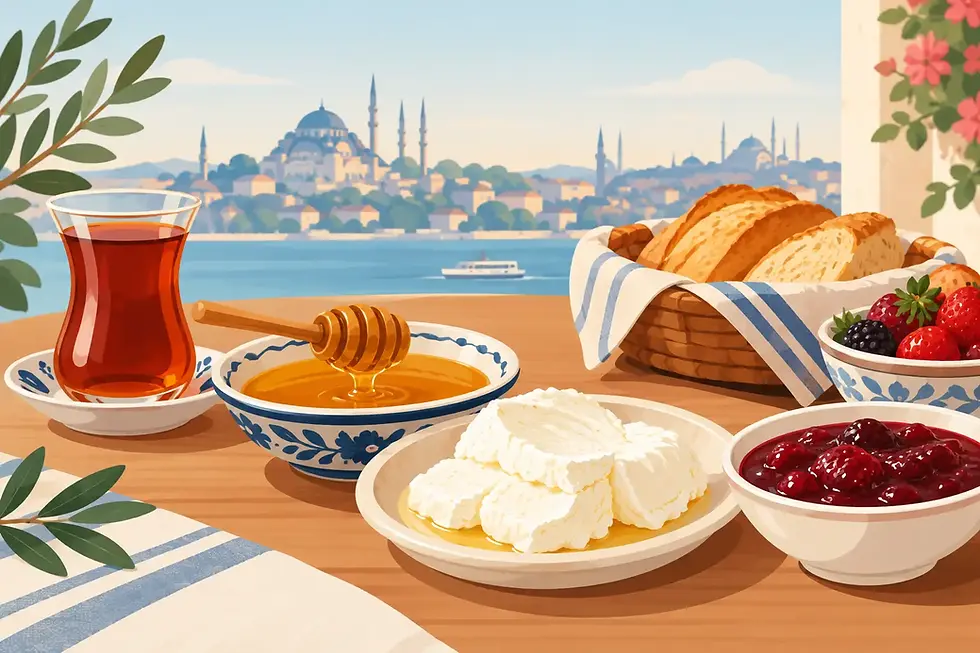
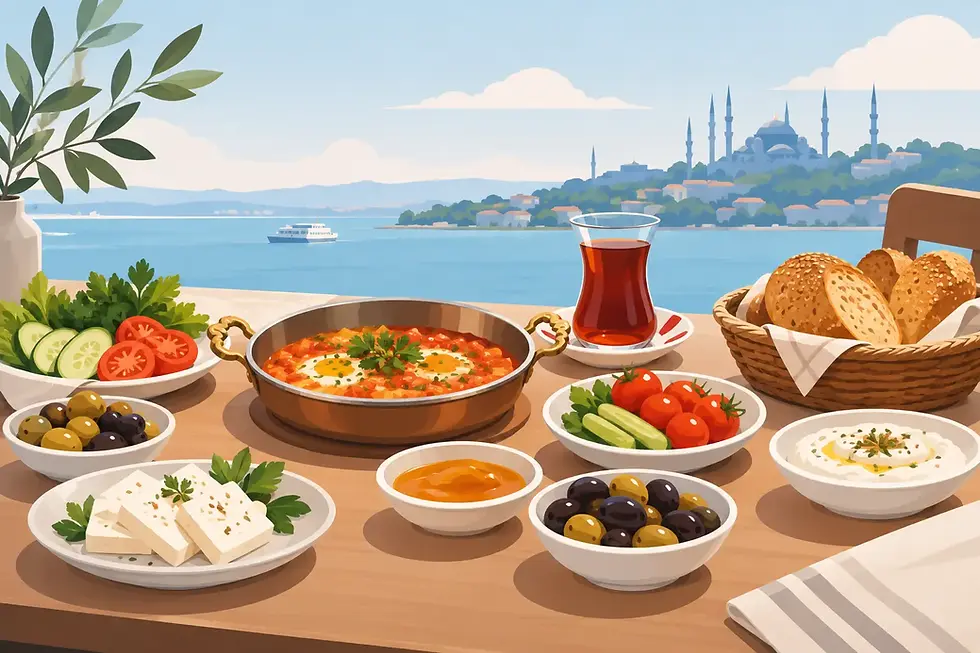
If you want to understand Anatolia, start with breakfast. Turkish breakfast is often described through its ingredients, but its real meaning lies in rhythm. Breakfast is rarely rushed when it is done properly. White cheese, olives, eggs, fresh herbs, tomatoes, cucumbers, jams, honey, butter, bread, and tea create a table that invites people to linger. In many homes, breakfast is where the day begins emotionally as much as physically.
Regional variation matters here. In Van, breakfast culture can feel almost ceremonial in its abundance. In the Aegean, herbs and lighter preparations often bring brightness to the morning. In Central and Eastern Anatolia, richer dairy, eggs, and baked items can make breakfast feel more substantial. The common thread is generosity. A modest home may still set a table that feels welcoming because care, not luxury, defines the experience.
Lunch and dinner often reveal the deeper architecture of Anatolian cooking. Soups open the meal not just because they are comforting, but because they reflect household wisdom. Lentil soup, yogurt-based soups, tarhana, and grain soups are practical, nourishing, and expressive of regional habits. Then come olive oil dishes, stews, kebabs, pilafs, stuffed vegetables, pastries, and handmade dough specialties.
Much depends on geography. Southeastern traditions may lean into spices, grilled meats, and bold combinations. Central Anatolia often offers a stronger wheat culture - breads, pastries, mantı, and hearty oven dishes. The Black Sea region gives corn, anchovy, greens, and a distinct local logic. The Aegean brings olive oil, vegetables, and herb-driven simplicity. It is one cuisine, but it speaks in many accents.
The ingredients that carry memory
Anatolian food is ingredient-led in a way that feels intimate. Wheat is not just wheat. It becomes yufka, bulgur, erişte, mantı, and breads tied to local techniques. Yogurt is not a side note. It cools, enriches, sharpens, and anchors countless dishes. Legumes such as lentils and chickpeas are everyday staples with deep historical roots.
Then there are the ingredients that immediately signal home for many Turkish families: salça, sumac, isot, dried mint, pomegranate molasses, tahini, walnuts, and clarified butter. These are not decorative additions. They shape regional identity and emotional memory. A spoonful of yogurt with dried mint can make a dish feel familiar. A touch of pomegranate molasses can bring sweetness, acidity, and place all at once.
Seasonality also remains central. Winter tables welcome soups, legumes, pickles, and preserved summer produce. Spring brings herbs and lighter vegetable dishes. Summer means ripe tomatoes, peppers, eggplants, and fruit at their fullest expression. Autumn invites slower cooking and preparation for colder months. Even today, in modern urban life, the old calendar still echoes through the kitchen.
Handmade food and the value of effort
Few things express Anatolian hospitality more clearly than handmade dishes. Mantı is a perfect example. It is never just pasta. It represents patience, fine motor skill, and often collective labor. In many homes, making mantı has long been a social act, with several people gathering around a table to fill and fold tiny pieces of dough. The final bowl may look delicate, but it carries hours of work.
The same is true for gözleme, börek, içli köfte, stuffed vegetables, and many festive pastries. These foods are admired partly because they resist speed. They ask for touch, repetition, and attention. That effort becomes part of their meaning. When such dishes are served to a guest, they communicate esteem.
This is why Anatolian dining often feels emotional even in a restaurant setting. When a handmade dish is prepared with care, it recalls the home table without needing to imitate it too literally. At its best, that balance between heritage and presentation is what makes places like Dafne Cafe & Kitchen feel memorable.
Hospitality is part of the recipe
A proper guide to Anatolian food traditions has to include hospitality, because the meal is never only the food. In much of Anatolia, a guest is fed insistently, affectionately, and often beyond reason. Tea appears before you ask. Bread is refreshed. Plates are urged upon you with warmth. Refusing seconds can become its own small negotiation.
This generosity is cultural, but it is also nuanced. Hospitality does not always mean excess. Sometimes it means the best olive oil dish in the house, a carefully made soup, or fruit offered at the right moment. The deeper idea is that a shared table creates dignity and connection. You are not just being served. You are being received.
That matters for travelers and urban diners looking for more than a checklist of famous dishes. The most meaningful experiences often come from understanding how a meal is offered, not just what is on the plate.
Festive foods, religious rhythms, and family rituals
Many Anatolian dishes become fully legible only when seen in context. Aşure, prepared and shared in Muharram, carries meanings of community, remembrance, and abundance. Ramazan tables have their own cadence, from iftar soups and breads to sweets shared after fasting. Holiday pastries and meat dishes vary by region and family, but the emotional structure is familiar: food marks sacred time.
Life-cycle events carry their own foods too. Weddings, funerals, engagements, births, and farewell gatherings all have culinary forms. Some dishes are celebratory, others comforting and restrained. In each case, food helps the community express what words sometimes cannot.
There is also a strong culture of neighborhood exchange. A tray sent next door, a pot shared with relatives, a dessert made for visitors - these gestures are easy to overlook if you focus only on restaurant menus. But they are central to how Anatolian food traditions live on.
How to read an Anatolian menu with more confidence
If you are new to this cuisine, it helps to think in categories rather than chase only the most famous names. Look for what is grilled, what is baked, what is stewed, and what is dressed with olive oil. Notice the role of yogurt, wheat, and regional spice profiles. Ask whether a dish is tied to a season or a city.
It also helps to accept that authenticity is not always a rigid thing. Some recipes are fiercely local and specific. Others have traveled, changed, and adapted from household to household. One version of mantı may be tiny and richly sauced, another more rustic. One lentil soup may be silky, another textured and peppery. Variation is not a flaw. It is part of the tradition.
The best approach is to eat with curiosity rather than certainty. Try the soup. Order one familiar dish and one you do not know. Share widely if the table allows it. Anatolian food rewards comparison because the details matter - the fold of dough, the sharpness of sumac, the balance of butter and yogurt, the fragrance of fresh bread.
Food in Anatolia has never been separate from memory, place, or people. That is why even a simple plate can feel generous and why a meal can stay with you long after the table is cleared. If you approach it with appetite and attention, Anatolian cuisine will offer more than flavor. It will show you how a culture keeps speaking through the things it cooks, shares, and never rushes to forget.
Yorumlar