
A Traveler's Guide to Turkish Coffee Culture
The first sign that Turkish coffee is being treated with care is the waiting. A small copper pot rests over gentle heat, the aroma deepens, and no one rushes the foam. This guide to Turkish coffee culture begins there: not with caffeine, but with patience, conversation, and the belief that a small cup can carry a large welcome.
For travelers, Turkish coffee can look deceptively simple. It arrives in a delicate fincan, often alongside a glass of water and something sweet. Yet its ritual holds centuries of social memory. In Istanbul, a coffee may close a long breakfast, welcome an old friend, soften a serious conversation, or create a quiet pause between the lively streets and the table.
Turkish Coffee Is a Method, Not a Bean
Turkish coffee does not refer to one particular coffee bean or roast origin. It describes a preparation method: coffee ground to a powder-like fineness, gently brewed with water in a small pot called a cezve, and served unfiltered. The grounds settle at the bottom of the cup, producing a dense, velvety texture that is entirely different from drip coffee, espresso, or a French press.
Traditionally, the coffee is served in a fincan, a small handleless or delicately handled cup designed for sipping rather than drinking quickly. A proper cup is modest in size but full in character. The foam at the top is prized, the aroma is direct, and the final sip is intentionally left alone once the grounds gather at the bottom.
The flavor depends on the bean, roast, water, and hand of the person making it. It can be nutty, chocolatey, smoky, bright, or deeply bitter. A very dark roast may feel familiar to some visitors, but it can conceal a coffee's more delicate notes. A good cup should have body and depth without tasting scorched.
A Coffee House Tradition Built on Conversation
Coffee entered Ottoman Istanbul in the 16th century and soon became part of the city's social fabric. Coffeehouses offered more than a drink. They were places for storytelling, music, poetry, news, debate, games, and companionship. The cup created an excuse to sit longer and speak more freely.
That spirit still matters. Turkish coffee is rarely treated as a portable errand. It asks you to be present. Even in a busy neighborhood, the ritual is an invitation to slow the pace for ten minutes and let conversation find its natural shape.
This is also why hospitality surrounds the coffee itself. Offering a cup can say welcome, thank you, stay a little longer, or tell me what is on your mind. Turkish culture gives great value to this kind of generous attention. A meal is not merely served; it is shared. Coffee continues that shared feeling after the plates have been cleared.
How Turkish Coffee Is Made
The classic preparation uses cold water, very finely ground coffee, and a cezve. Sugar, if desired, is added before brewing rather than stirred into the finished cup. The mixture is heated slowly so a fine layer of foam rises without boiling aggressively.
When ordering, sweetness is often decided in advance. You may hear these traditional terms:
Sade means plain, with no sugar.
Az şekerli means lightly sweetened.
Orta means medium sweet.
Şekerli means sweet.
Milk is not part of traditional Turkish coffee. If you prefer a milky coffee, there is nothing wrong with ordering another style of drink, but asking for milk in the fincan changes the preparation completely. The same is true of adding sugar after it arrives: possible, perhaps, but less harmonious than choosing your sweetness before brewing.
The skill lies in control. Heat that is too high can make the coffee taste harsh and destroy the foam. Heat that is too low can leave the cup thin. Many households and cafes have their own habits, from the preferred cezve material to the roast they trust most. There is room for personal style, but the central principle remains gentle attention.
The Water and Sweetness Are Part of the Ritual
A glass of water commonly accompanies Turkish coffee. The simplest explanation is practical: take a sip of water first to refresh your palate, then taste the coffee clearly. But like many details of Turkish hospitality, it also carries warmth beyond function. The table is prepared for your comfort before you ask.
A bite of Turkish delight, chocolate, or another small sweet may arrive with the cup. The sweet contrast can soften the coffee's intensity, especially after a savory meal. It is not a mandatory rule, and regional or household customs vary, but it is a familiar and welcome pairing.
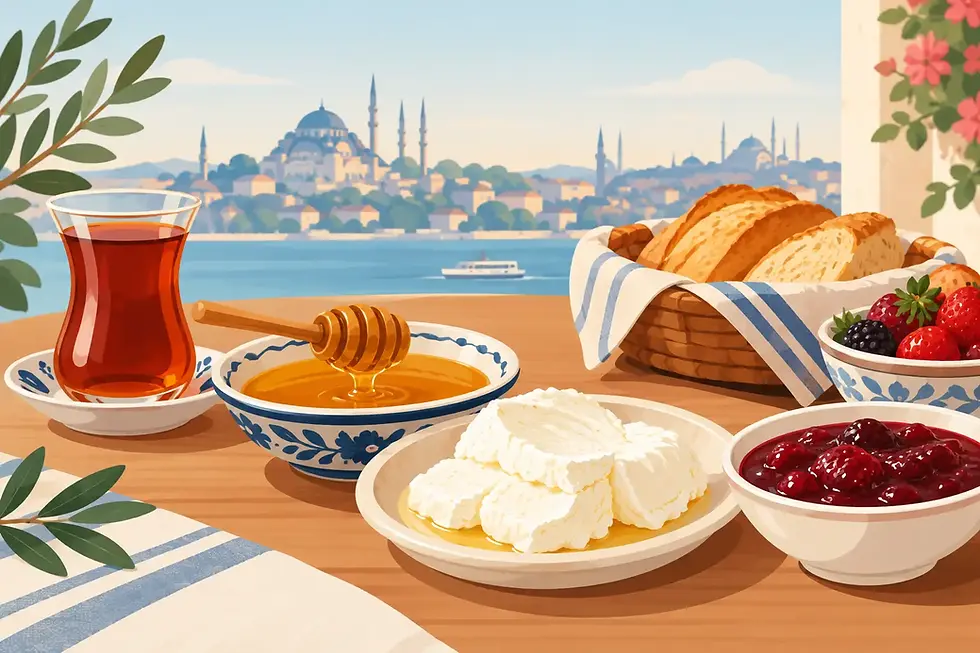
Coffee is often enjoyed after breakfast, lunch, or dinner. After a generous Turkish breakfast, its concentrated character provides a satisfying final note. In a restaurant setting, it can extend the pleasure of the meal without making the table feel finished too soon. At Dafne Cafe & Kitchen in Cihangir, that lingering moment belongs naturally to the rhythm of a shared table, where heritage is allowed to remain present after the last bite.
Do Not Stir, and Do Not Drink the Grounds
A few small customs help visitors enjoy the experience with ease. Once the coffee arrives, do not stir it. The grounds need time to settle, and stirring brings grit into the sip. Take small, unhurried sips from the surface and middle of the cup.
As you near the bottom, the texture becomes heavier. This is your cue to stop. Turkish coffee grounds are not meant to be consumed, even if a little sediment inevitably reaches the final sip. Leaving the last mouthful is normal and expected.
There is no need to perform ceremony perfectly. Hosts generally appreciate curiosity far more than formality. If you are offered coffee in a home, accepting it when you can is a gracious response. If you do not drink coffee, a warm and honest thank you is equally respectful.
Reading the Cup: Coffee Fortune as Playful Tradition
One of Turkish coffee's most recognizable customs begins after the cup is empty. In coffee fortune reading, called fal, the drinker places the saucer over the cup, makes a wish if they like, and turns the cup upside down. Once it cools, the patterns left by the grounds are interpreted as symbols, stories, possibilities, or affectionate teasing among friends.
A road may suggest travel. A bird may suggest news. A heart may suggest love or a cherished connection. The reader's imagination is part of the charm. Fortune reading is not a universal daily practice, nor is it a rule attached to every coffee, but it remains a beloved social tradition in many circles.
Treat it with the lightness it deserves. The pleasure is not in a fixed prediction. It is in the laughter, suspense, and storytelling that gather around the overturned cup. Like the coffeehouse conversations of earlier centuries, it gives people a reason to listen closely to one another.
A Guide to Turkish Coffee Culture for Ordering Well
When you order Turkish coffee, start by deciding how sweet you want it. If you enjoy the direct, roasted flavor of coffee, choose sade. If you are trying it for the first time, az şekerli or orta can make the first cup more approachable without overwhelming its character.
Then give it time. Turkish coffee is not meant to be gulped between appointments. Let it arrive, sip the water first, notice the foam, and allow the cup to settle as you talk. If you are visiting Istanbul, this may be one of the most intimate ways to experience local hospitality without needing a long explanation or a grand occasion.
It is worth remembering that every cup will not taste identical. Some places use a stronger roast, some serve more foam, and some prepare it over sand for visual effect. Sand brewing can distribute heat gently, but it is not automatically a guarantee of better coffee. Freshness, grind, water, and careful brewing matter more than spectacle.
The most memorable Turkish coffee is rarely the one photographed most quickly. It is the one shared after a good meal, on a rainy afternoon, or at a table where nobody is ready to leave yet. Hold the warm fincan for a moment, take the first sip slowly, and let the conversation do what Turkish coffee has always encouraged: continue.


Yorumlar