
A Guide to Ottoman Inspired Dining Traditions
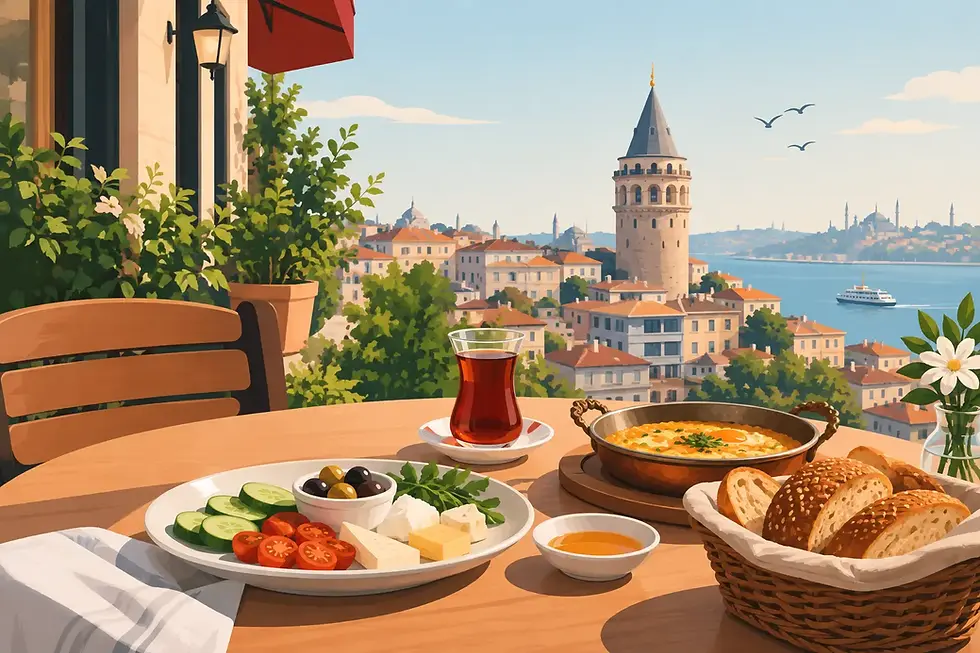
A copper tray arrives with small plates catching the light: glossy olive oil, white cheese, dark olives, warm bread, and the scent of tea rising from a tulip-shaped glass. This is where a guide to ottoman inspired dining should begin - not with the image of a distant palace, but with the feeling of a table made ready for people to linger, talk, and be cared for.
Ottoman-inspired dining is less about reenacting one historical menu and more about understanding a culinary culture shaped by centuries of movement. Palace kitchens, Anatolian villages, Silk Road trade, the Balkans, the Levant, the Aegean, and the Black Sea all left their marks. The result is a table where sweet and savory can meet in the same dish, where spice adds depth rather than shock, and where generosity matters as much as presentation.
For travelers and culturally curious diners, the pleasure lies in reading those details. A meal becomes richer when you know why a fruit compote may appear beside meat, why a yogurt dish can feel both cooling and luxurious, or why the first course is often an invitation to slow down.
What Ottoman-Inspired Dining Really Means
The Ottoman Empire covered an enormous geography for many centuries, so there is no single, fixed Ottoman cuisine. Any restaurant that presents it as one narrow category is leaving out the most interesting part of the story. Ottoman-inspired cooking draws from a living tradition of regional ingredients and techniques, then presents them with the balance, hospitality, and visual care associated with historic Turkish tables.
At one end of that tradition is the refined cuisine of the palace. Its dishes often paired lamb or poultry with dried fruits, nuts, delicate spices, herbs, and sauces enriched with butter or broth. At the other end are home kitchens, where beans simmered slowly in olive oil, dough was rolled by hand, and seasonal vegetables became the center of the meal. Both belong in the conversation.
The word “inspired” matters. A thoughtful contemporary kitchen may use traditional ideas without treating history as a museum piece. It might serve handmade mantı with a polished presentation, create a bowl around familiar Anatolian flavors, or give an old recipe a lighter balance for an all-day dining setting. The best versions respect the memory of the dish while allowing it to belong to the present table.
The Ottoman-Inspired Table Is Built for Sharing
If you are used to a restaurant rhythm of appetizer, individual entrée, dessert, Ottoman-inspired dining can feel more communal. The table often develops in layers. Small dishes arrive first, then warm plates, then something from the grill, oven, or pan. Bread is not merely a side. It is part of the conversation, used to gather a spoonful of meze, a sauce, or the last fragrant drops of a stew.
Start by letting the table open slowly. Cold meze may include yogurt with herbs, smoky eggplant, beans in olive oil, seasonal greens, or a pepper and walnut spread. These dishes create contrast: tangy, creamy, bright, earthy, and fresh. Their role is not to fill you before the main course. They awaken the appetite and make room for exchange.
Then come the more substantial flavors. A warm börek brings crisp pastry and a soft filling. Mantı brings tiny parcels of dough, often dressed with garlic yogurt and a peppery butter sauce. Rice dishes can be aromatic with currants, pine nuts, or subtle spice. A meat dish may be savory and deeply satisfying, yet softened by fruit, onion, or a gently sweet glaze.
Sharing is not a rule that requires everyone to eat the same way. It is an attitude. Order a few dishes that speak to different tastes, place them in the center, and allow the meal to unfold. If someone at the table is vegetarian, there is often no need for a separate, lesser experience. Vegetable dishes, grains, legumes, yogurt, pastry, and olive-oil preparations can form a generous meal of their own.
A Guide to Ottoman Inspired Dining Flavors
The flavor profile is often misunderstood by diners expecting heat-heavy spice or rich, heavily sauced food. There can certainly be chili, pepper paste, roasted meat, and generous butter, but balance is the central idea. Sour notes from pomegranate, lemon, yogurt, or sumac keep richer dishes lively. Herbs bring lift. Dried fruit adds a quiet sweetness rather than dessert-like sugar.
A few ingredients appear again and again because they carry this sense of balance. Yogurt may be sharp and garlicky, cooling a warm dish or adding body to a sauce. Eggplant can be smoked, fried, roasted, or cooked down until silky. Pistachios, walnuts, almonds, and pine nuts provide texture and richness. Cinnamon, allspice, clove, cumin, black pepper, and saffron are used with restraint, often as background notes rather than the main event.
Olive oil also deserves attention. In many Turkish dishes, especially those centered on vegetables, it is not simply a cooking medium. It carries the flavor of tomatoes, onions, beans, artichokes, or greens and gives the dish a clean, rounded finish. These preparations are often served at room temperature, which can surprise visitors expecting every “main” dish to arrive hot. Give them a moment. Their flavor is designed to open gradually.
The sweet side of the table follows the same logic. Baklava is beloved for good reason, but it is only one expression of Ottoman dessert. Milk puddings, fruit desserts, rose or citrus notes, and syrup-soaked pastries show a more delicate side of the tradition. Turkish coffee or tea after dessert is not an afterthought. It is a graceful way to extend the meal and let the table settle.
How to Order With Curiosity, Not Caution
The easiest way to order is to choose contrast. Pair something cool with something warm, something vegetable-forward with something substantial, and something familiar with one dish you have never tried before. A table built only around grilled meat can be delicious, but it misses the range that makes this cuisine memorable.
Ask how a dish is traditionally served and whether it is meant for sharing. If you see an unfamiliar name, let the ingredients guide you: yogurt, eggplant, lamb, bulgur, pomegranate, pistachio, and seasonal vegetables are useful clues. You do not need to know every historical reference to appreciate the food. Curiosity is enough.
There are trade-offs, of course. A large spread makes the experience more social, but it can be too much for one or two people. In that case, choose two small plates, one warm specialty, and a dessert or tea to share. If you have dietary needs, ask about broth, butter, yogurt, and nuts, since these ingredients can be woven into dishes that appear simple at first glance.
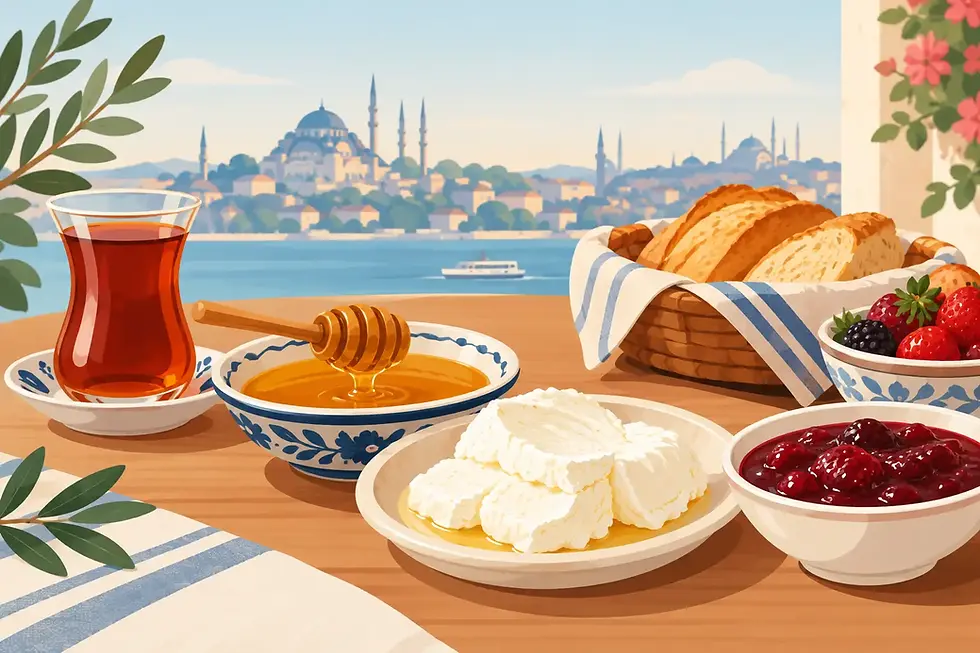
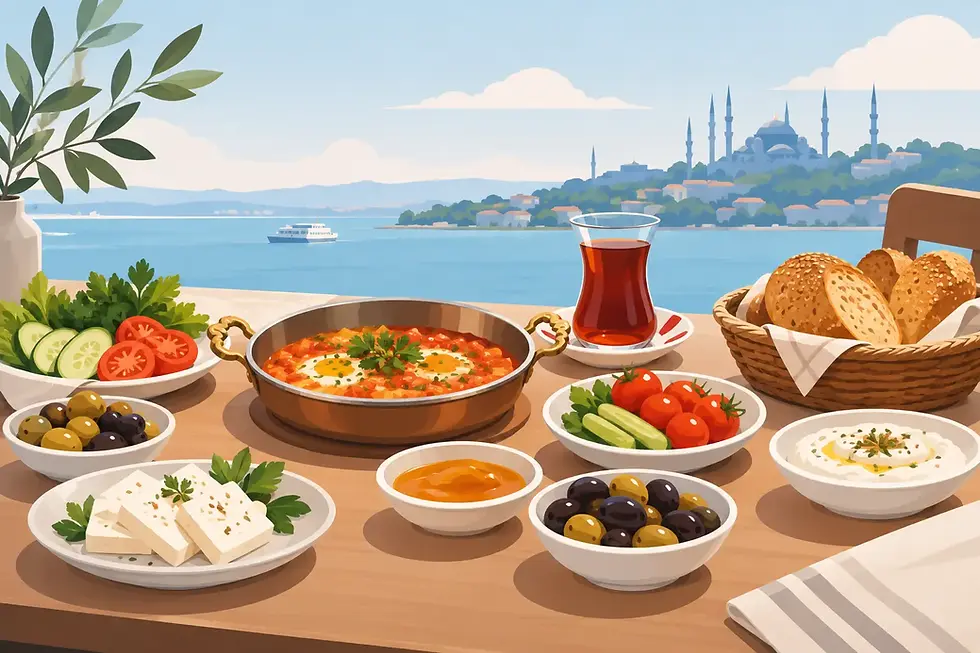
For a breakfast visit, think beyond a single plate. Turkish breakfast is one of the clearest expressions of the shared-table tradition: cheeses, preserves, eggs, tomatoes, cucumbers, olives, breads, pastries, and tea arranged as an unhurried morning ritual. In Cihangir, a place such as Dafne Cafe & Kitchen can turn that ritual into an all-day invitation to taste heritage with a modern sense of ease.
Let the Meal Keep Its Own Pace
Ottoman-inspired dining rewards attention, but it should never feel like a history lesson delivered between bites. Notice the hand-rolled dough, the bright acidity beside a rich sauce, the way tea arrives just when conversation begins to deepen. These are small acts of hospitality, and together they tell a larger story.
Come hungry, order with a little generosity, and leave room for surprise. The most meaningful dish may not be the one you recognized on the menu. It may be the spoonful passed across the table, followed by the simple question that every good meal inspires: shall we order one more thing?
Yorumlar