Türk Kahvaltısında Peynir ve Zeytinin Önemi
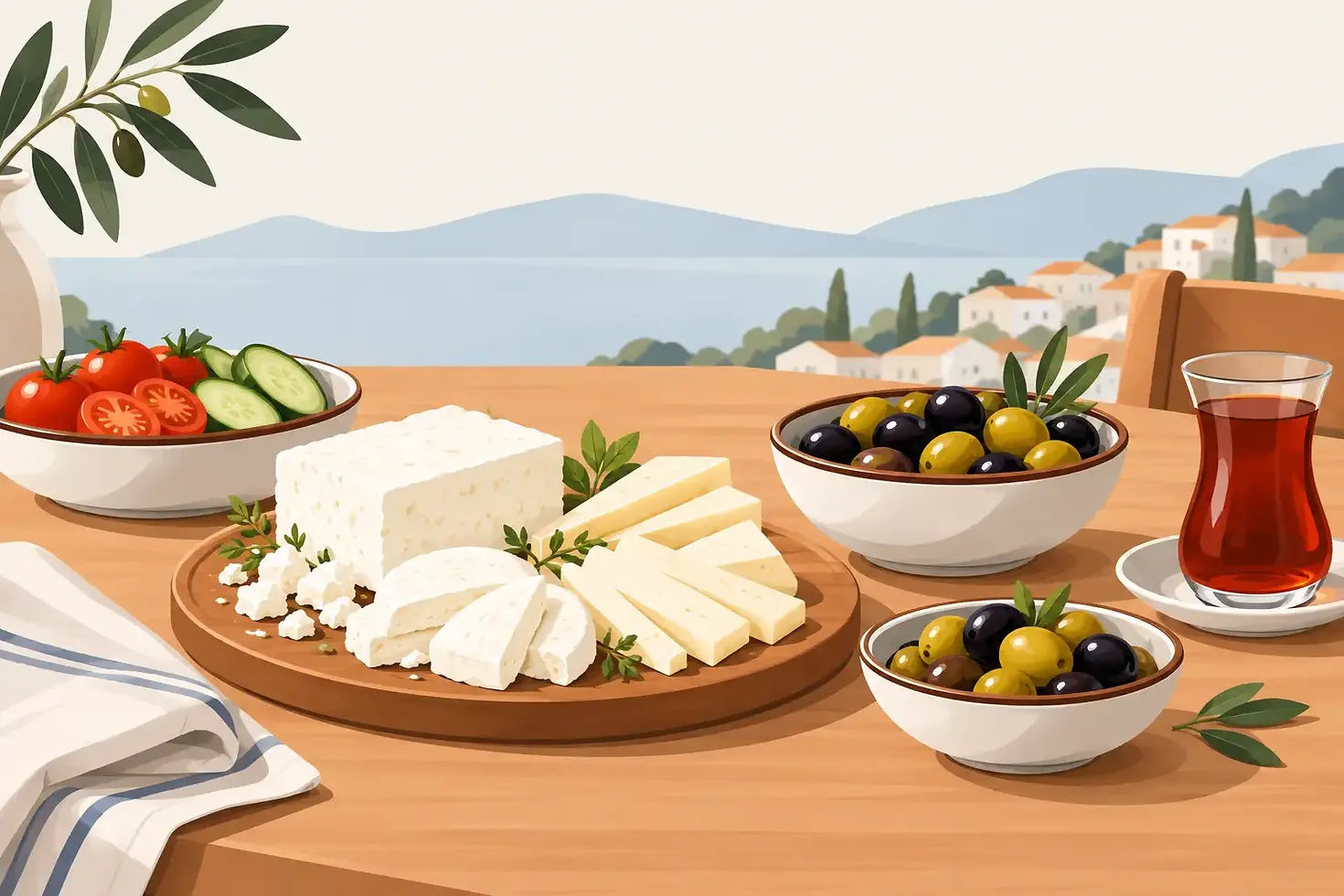
A Turkish breakfast table is often remembered not by one spectacular dish, but by the small, generous choices gathered around it: a white cheese glistening with olive oil, dark olives with their bitter-salty edge, warm bread waiting to be torn and shared. Türk kahvaltısında peynir ve zeytinin önemi begins here. They are not side dishes placed on the table out of habit. They set the rhythm of breakfast, inviting people to linger, taste slowly, and begin the day together.
For travelers, this abundance can feel like a revelation. For those raised with the ritual, the sight of cheese and olives carries a quieter kind of recognition: family conversations, long weekends, a grandmother arranging small plates, and the familiar sound of tea glasses meeting saucers. In Turkish breakfast culture, these two ingredients hold flavor, memory, and hospitality in the same small bowl.
Why cheese and olives belong at the center
Turkish breakfast, or kahvaltı, literally refers to what comes before coffee. Yet its character is far more expansive than the name suggests. It is a table designed for conversation, where sweet, salty, creamy, crisp, and fresh flavors are allowed to sit side by side. Cheese and olives create the savory foundation that makes this balance possible.
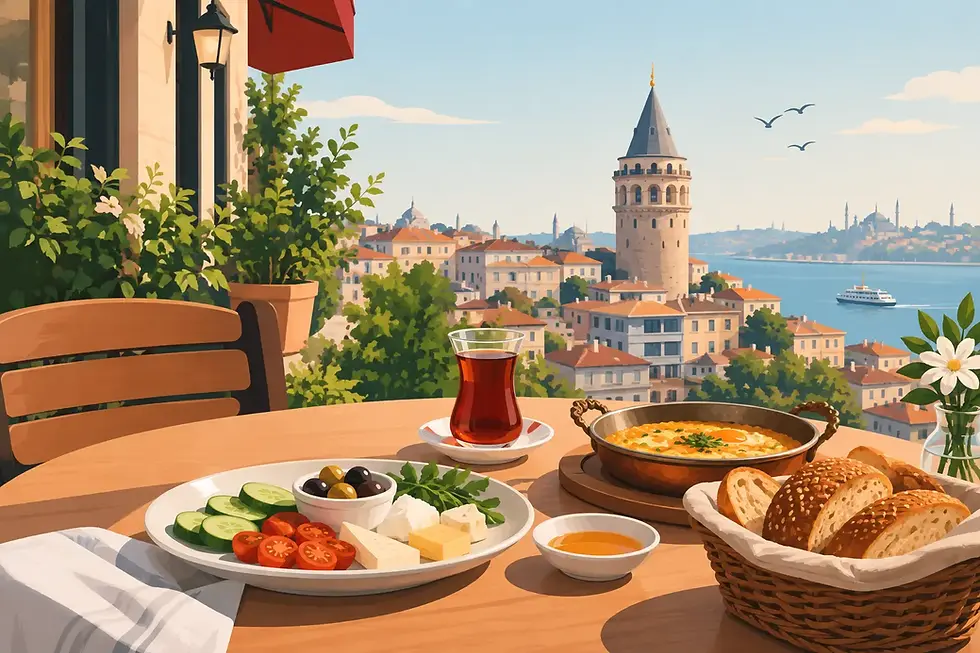
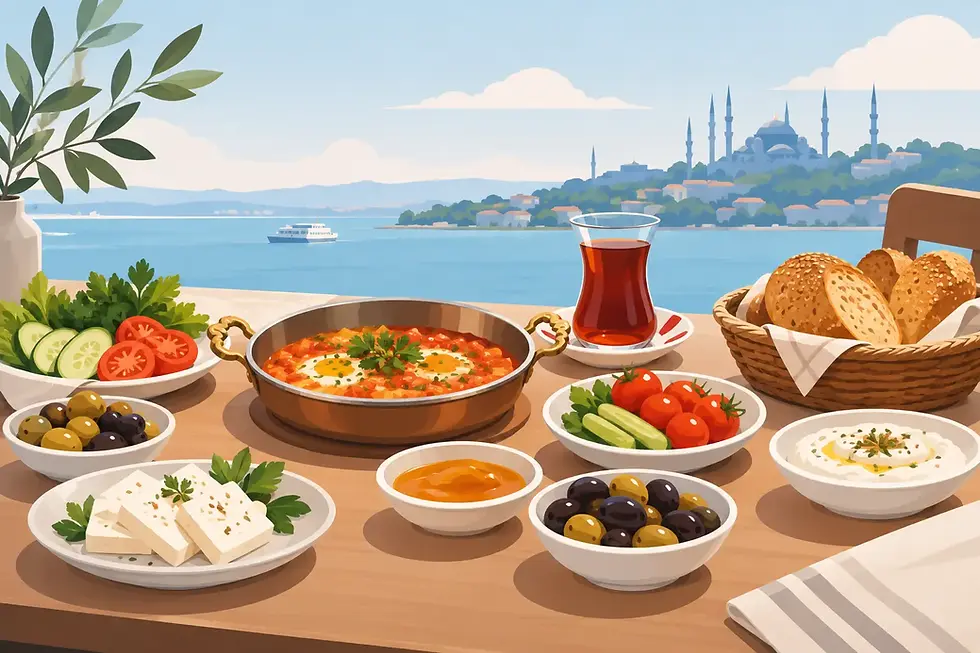
A slice of beyaz peynir offers coolness and gentle salinity against warm simit, toasted bread, or a soft piece of pide. Olives bring depth: some are bright and briny, some rich with olive oil, some lightly bitter in a way that wakes the palate. Add tomatoes, cucumbers, jam, honey, butter, eggs, and hot tea, and the table becomes a sequence of contrasts rather than a single prepared plate.
That distinction matters. A Turkish breakfast does not ask every guest to eat the same thing in the same order. It gives each person room to compose a bite that feels right - cheese with tomato, olive with bread, honey beside kaymak, or a little of everything. The shared spread is generous precisely because it leaves space for personal taste.
Turkish breakfast cheese: a map of regions and methods
There is no single “Turkish breakfast cheese.” The variety on the table often reflects the landscape, climate, and food traditions of different regions. This is why a thoughtfully prepared cheese plate can tell a story before anyone has taken a bite.
Beyaz peynir and the comfort of familiarity
Beyaz peynir is perhaps the most recognizable breakfast cheese. Often made from sheep’s milk, cow’s milk, or a blend, it has a crumbly yet creamy texture and a salty, tangy character. Its simplicity is its strength. With a ripe tomato, cucumber, and fresh bread, it creates one of the most enduring bites on the Turkish table.
The quality of beyaz peynir is especially noticeable when it is served simply. Too dry, and it can feel chalky; too salty, and it overwhelms everything around it. A well-balanced cheese should feel fresh, milky, and lively enough to stand up to tea without demanding all the attention.
Aged cheeses and deeper flavor
Kashar, tulum, and regional village cheeses bring another dimension. Fresh kashar is mild and buttery, while aged versions offer firmer texture and more pronounced savoriness. Tulum cheese, traditionally matured in a goatskin bag in some regions, tends to be more assertive, crumbly, and earthy.
Not every breakfast needs several strong cheeses. In fact, an overcrowded plate can blur their character. A softer white cheese, one aged or textured option, and perhaps a mild melting cheese often create a more satisfying balance. It depends on the season, the bread, and what else is on the table. A rich cheese plate may suit a leisurely weekend gathering, while a lighter selection feels more natural on a warm Istanbul morning.
Olives: small fruits with a long cultural memory
Olives are among the oldest flavors of Anatolia and the Aegean, and they bring a sense of place to breakfast that is difficult to replace. Green olives tend to be firmer and sharper, often cracked or lightly seasoned with lemon, thyme, pepper, or olive oil. Black olives can be softer, fruitier, and more mellow, depending on how they are cured.
Their importance is not only culinary. The olive tree speaks to patience. It requires time, care, harvest, curing, and preservation before the fruit reaches the breakfast table. That long journey is part of what makes a simple dish of olives feel so complete. It is a humble ingredient with the weight of generations behind it.
A good olive selection should offer character without excessive saltiness or harshness. Some guests prefer the clean tang of green olives; others reach first for wrinkled black olives dressed with olive oil. Serving both is a small gesture of generosity, and generosity is the real architecture of kahvaltı.
The pleasure lies in the pairing
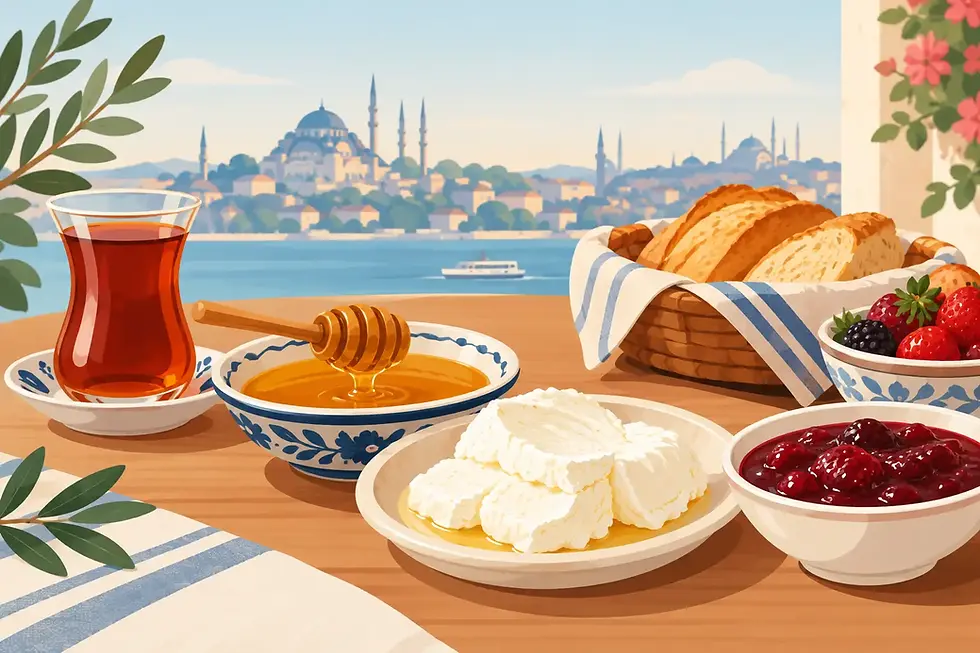
Cheese and olives are at their best when they are not isolated. They make sense in relation to everything around them. Fresh bread softens salty flavors. Tomatoes bring acidity and sweetness. Cucumbers add a cooling crunch. Walnut pieces can deepen the richness of cheese, while a spoonful of fig or cherry jam creates a surprising sweet-salty contrast.
Tea is equally essential to the experience. Its warmth and slight tannin refresh the palate between bites of creamy cheese and oily olives. This is one reason Turkish breakfast can continue for hours without feeling heavy. Each element answers another: hot and cold, crisp and soft, sweet and savory.
At Dafne Cafe & Kitchen in Cihangir, a breakfast table can be approached as more than a collection of dishes. It becomes a small expression of Istanbul itself, where regional memory, everyday comfort, and a polished sense of welcome meet around shared plates. The most memorable table is not necessarily the largest one. It is the one where every ingredient has a reason to be there.
Türk kahvaltısında peynir ve zeytinin önemi: hospitality in practice
To understand the importance of cheese and olives is also to understand Turkish hospitality. When a host brings another small plate to the table, the gesture says, “Stay a little longer.” The offer is not measured only by quantity. It is measured by attention: the cheese served at the right temperature, the olives lightly dressed, the bread warm, the tea renewed before the glass is empty.
This is why breakfast is rarely treated as a rushed individual task. Even on a busy weekday, a few minutes spent with bread, cheese, olives, and tea can create a pause in the day. On weekends, the same ingredients expand into a social ritual for families, friends, couples, and visiting guests.
For American diners encountering kahvaltı for the first time, the instinct may be to search for the main course. But the pleasure comes from releasing that expectation. There is no need to choose one centerpiece. Start with a piece of bread, a little beyaz peynir, an olive, and a slice of tomato. Then follow your own appetite across the table.
The next time you sit before a Turkish breakfast spread, give the cheese and olives the attention they deserve. Taste them slowly, pair them differently, and let the tea make room for another bite. Some of the richest food traditions reveal themselves not through extravagance, but through the care placed in the simplest things.
Yorumlar