
Traditional Turkish Breakfast Essentials
A true Turkish breakfast does not arrive as a plate. It arrives as a table - generous, layered, and meant to slow you down. When people search for traditional Turkish breakfast essentials, they are usually looking for ingredients. What they are really asking is how a morning meal becomes a ritual of hospitality, conversation, and memory.
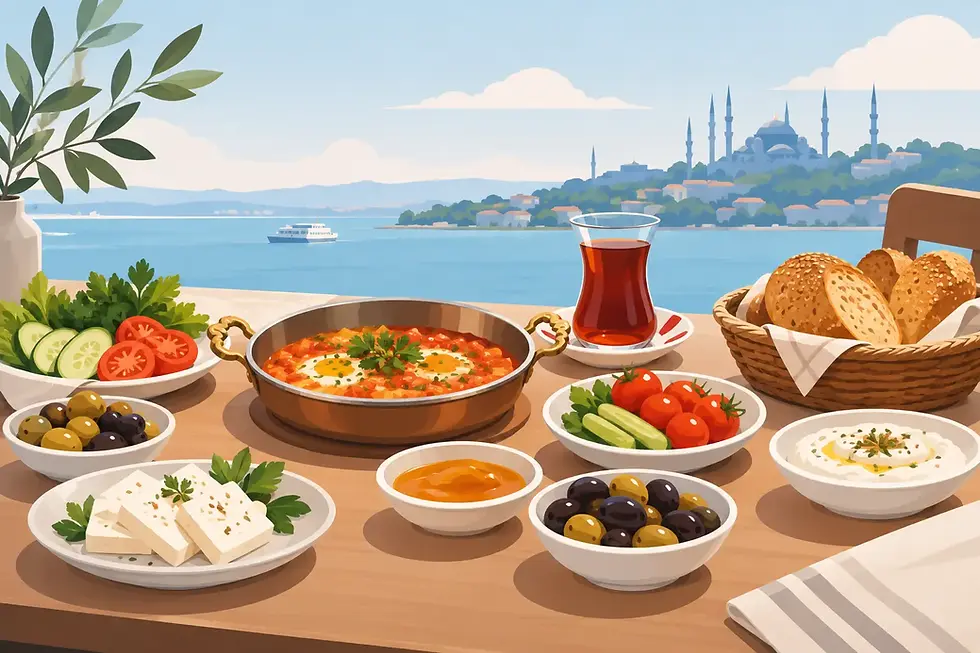
In Turkey, breakfast is less about rushing toward the day and more about gathering yourself before it begins. The table fills gradually. Bread is set down warm. Tea glasses glow amber. Small dishes of cheese, olives, tomatoes, cucumbers, honey, butter, and jam create a mosaic of color and texture. Then come the cooked dishes, often simple, always comforting. Every item has a role, and together they tell a story far bigger than breakfast.
What makes traditional Turkish breakfast essentials different?
The first distinction is variety. A Turkish breakfast values contrast - salty next to sweet, fresh next to rich, creamy next to crisp. It is not built around one centerpiece in the American sense. There may be eggs, but eggs do not dominate the table. There may be pastries, but they are part of the experience, not the whole thing.
The second distinction is pace. This is a meal designed for staying. Tea is poured more than once. Bread is torn and shared. One bite leads naturally to another combination - feta with tomato, clotted cream with honey, olive paste with cucumber, scrambled eggs with a piece of simit. The beauty of the table is in how personal each bite becomes.
That is why traditional Turkish breakfast essentials matter. They are not random side dishes. They are a structure for sharing, a language of care, and for many people, one of the clearest expressions of Turkish home and cafe culture.
The bread that anchors the table
No Turkish breakfast begins without bread. Fresh bread is the quiet foundation that connects everything else on the table. A soft white loaf, rustic village bread, or toasted slices might appear depending on region and setting. Simit, the sesame-crusted ring often compared to a bagel, is another beloved choice, especially in Istanbul.
Bread is not an accessory here. It carries cheese, scoops up egg yolk, gathers honey, and balances sharper flavors like brined olives or spicy tomato spreads. If the bread is stale, the whole breakfast loses something. If it is warm and fresh, the table feels instantly alive.
Cheese and olives - the savory heart
Cheese is one of the clearest breakfast signatures in Turkey. White cheese similar to feta is the most common, with its briny, crumbly character pairing beautifully with tomatoes and cucumbers. Kasar, a firmer semi-hard cheese, often brings a milder and creamier note. In more abundant spreads, tulum or regional cheeses may also appear.
Olives are just as essential. Both black and green varieties are common, sometimes served plain, sometimes dressed lightly with olive oil, herbs, or red pepper flakes. Their presence gives the breakfast table depth. Without olives and cheese, the meal can still be pleasant. It just does not feel complete.
This is also where regional and personal preference comes in. Some diners want bold, salty flavors first thing in the morning. Others prefer milder cheeses and softer olives. A thoughtful breakfast table leaves room for both.
Tomatoes, cucumbers, and the freshness factor
One of the great strengths of a Turkish breakfast is how fresh it tastes. Sliced tomatoes and cucumbers may seem simple, but they are indispensable. They brighten the richer foods, cool the palate, and add texture to almost every combination on the table.
When tomatoes are in season, the difference is unmistakable. Sweetness, acidity, and juice turn a basic plate into something memorable. Cucumbers bring crunch and calm. Together, they make the breakfast feel balanced rather than heavy.
Greens and herbs often join them. Parsley, arugula, mint, and peppers can all appear. These additions are not decorative. They bring the garden to the table and remind you that Turkish breakfast is grounded in ingredients that feel alive.
Eggs, but never just eggs
Egg dishes are central, though usually in a more communal form than the American habit of individual breakfast plates. Menemen is perhaps the most famous - softly cooked eggs with tomatoes and peppers, sometimes enriched with white cheese or sucuk, the spiced Turkish sausage. It should be spoonable, not dry, and best enjoyed with plenty of bread.
Sucuklu yumurta, eggs cooked with slices of sucuk, offers something deeper and more savory. The sausage perfumes the pan with garlic and spice, turning a few ingredients into a dish with real character. In some homes and restaurants, boiled eggs also appear, especially as a simpler, lighter option.
The trade-off is mood. Menemen feels soft, homey, and leisurely. Sucuklu yumurta is richer and bolder. A fuller breakfast might include one of them, not both, so the table stays varied rather than overbuilt.
Sweet essentials that soften the morning
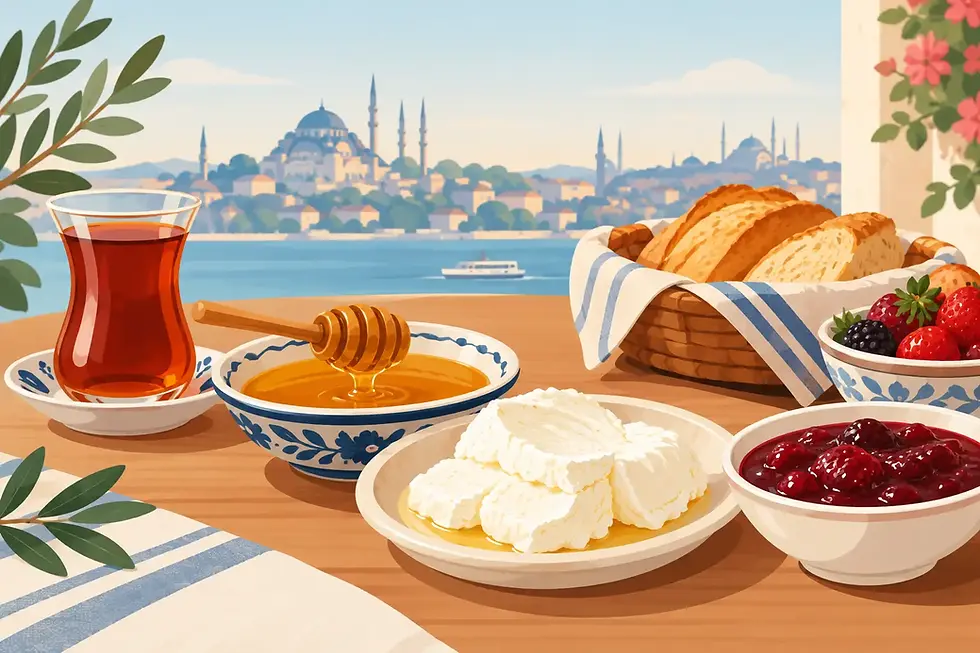
A proper Turkish breakfast is never entirely savory. Honey, butter, and jam bring warmth and indulgence to the table. Fruit preserves can range from strawberry and sour cherry to apricot, fig, or rose. Their sweetness is usually more nuanced than sugary, especially when paired with bread, fresh butter, or tahini and molasses.
One of the most beloved combinations is bal kaymak - honey served with kaymak, a thick, silky clotted cream. It is luxurious but not flashy, the kind of bite that makes people pause for a second before speaking again. For many guests, this is the bite that turns breakfast into an occasion.
These sweet elements matter because they round out the meal emotionally as much as flavor-wise. They add generosity. They say the table was prepared with care.
Spreads, pastries, and warm extras
Beyond the core traditional Turkish breakfast essentials, many tables include a few items that deepen the experience. Acuka or similar pepper-walnut spreads bring gentle heat and richness. Tahini with grape molasses introduces a darker, earthier sweetness than jam or honey.
Pastries may also appear, especially if the breakfast is expansive. Borek with cheese or herbs adds flaky comfort. Gozleme, thinner and more rustic, leans more toward a cooked flatbread experience. These are wonderful additions, though they can also make the table feel heavier. It depends on whether breakfast is meant to be light and conversational or long and celebratory.
That balance matters in a restaurant setting. A beautiful Turkish breakfast should feel abundant, not exhausting.
Tea is not optional
If there is one item that binds the whole table together, it is tea. Turkish black tea, served in tulip-shaped glasses, is more than a drink. It sets the rhythm of breakfast. It cuts through salt and richness, warms the hands, and invites one more piece of bread, one more bite of cheese, one more few minutes at the table.
Coffee may follow later, but breakfast belongs to tea. A table without tea feels unfinished, however generous the food may be. This is one of the clearest cultural markers of the meal, and one of the easiest to overlook if you focus only on the food itself.
Traditional Turkish breakfast essentials in a modern cafe setting
For today’s diners, especially travelers and city regulars, the appeal of Turkish breakfast is not only authenticity. It is atmosphere. People want to taste tradition, but they also want the table to feel curated, welcoming, and worth lingering over. That is where presentation matters.
A thoughtful breakfast service honors the old form without making it feel museum-like. The cheeses are carefully chosen. The produce is vibrant. The eggs arrive hot. The tea keeps coming. Nothing is overly stylized, yet everything feels intentional. At its best, this is exactly what a place like Dafne Cafe & Kitchen understands - that heritage is not something to display from a distance, but something to serve warmly, generously, and with confidence.
For guests visiting Istanbul, breakfast can be one of the most immediate ways to understand the city’s cultural texture. For locals and expats, it offers something equally valuable: familiarity with grace. The table feels rooted, but never static.
How to recognize a breakfast worth sitting down for
A good Turkish breakfast is not defined by the number of small plates alone. More is not always better. What matters is freshness, balance, and whether the table invites real enjoyment rather than performance. If the tomatoes are ripe, the bread is fresh, the cheese has character, the eggs are properly cooked, and the tea is brewed with care, you already have the essentials.
The rest is hospitality. That is the final ingredient, and the one no menu can fully list. A traditional Turkish breakfast should make you feel looked after, not processed. It should leave room for conversation, for second helpings, for stories that stretch a morning into something softer and more memorable.
If you want to understand Turkish breakfast, start with the essentials - then give yourself enough time to enjoy what they were always meant to create.

Yorumlar