
Turkish Gastronomy Is Made for Sharing
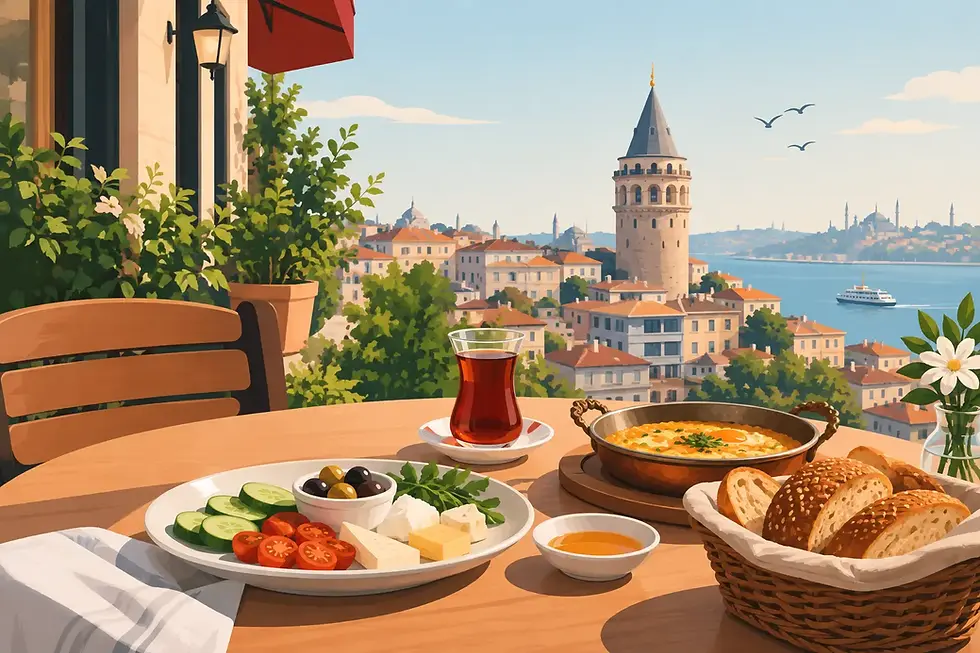
A glass of deep red tea arrives first, sending a thin ribbon of steam across the table. Then come warm simit, white cheese, olives shining with olive oil, spoonfuls of jam, eggs, tomatoes, and bread made for tearing and passing. This is Turkish gastronomy at its most honest: not a single famous dish, but a table that invites people to stay, talk, and take one more bite.
For travelers and Istanbul residents alike, Turkish food can seem wonderfully abundant. The real pleasure begins when that abundance is understood as a language of place. Every region contributes its own ingredients, techniques, and memories. Every shared plate says something about welcome.
Turkish Gastronomy Begins at the Table
In Turkey, a meal is rarely treated as a brief interruption to the day. It is a gathering point. Breakfast stretches into conversation. Lunch makes room for several small dishes. Dinner may begin with soup and end with fruit, coffee, and a sweet that seems to ask the evening to slow down.
That rhythm explains why a simple plate can hold such emotional weight. Fresh bread is not merely a side. It is a gesture of abundance. A bowl of yogurt can cool spice, balance richness, and connect a meal to centuries of pastoral cooking. Tea is offered not because someone has ordered it, but because hospitality feels unfinished without it.
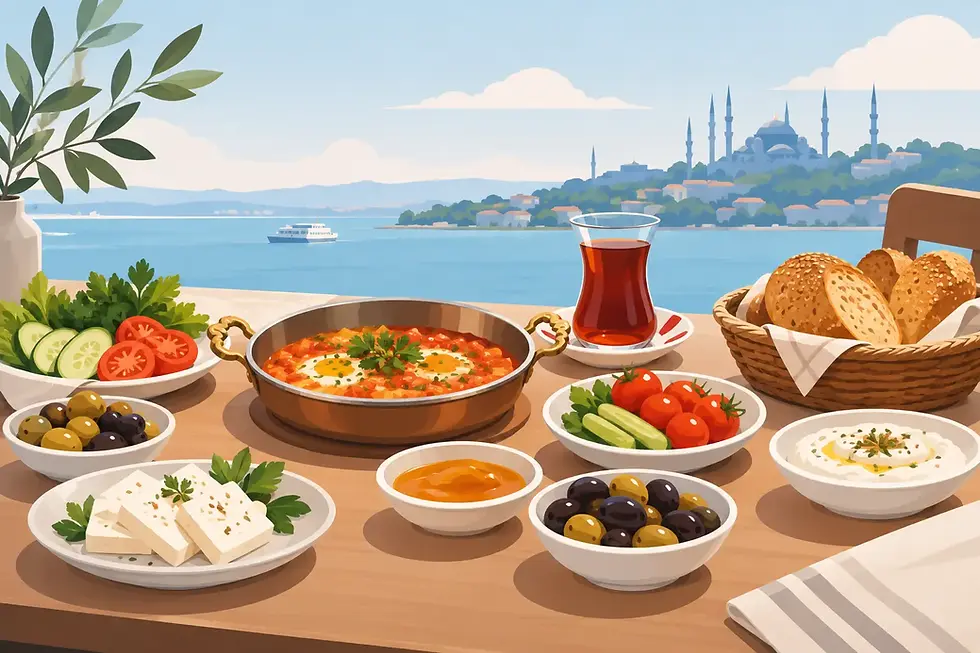
The Turkish table also resists the idea that food must be rushed or overly formal to be meaningful. A plate of menemen, softly scrambled eggs with tomatoes and peppers, can be as memorable as an elaborate Ottoman-inspired feast when it is made with care and eaten among friends.
Breakfast Is a Cultural Ritual
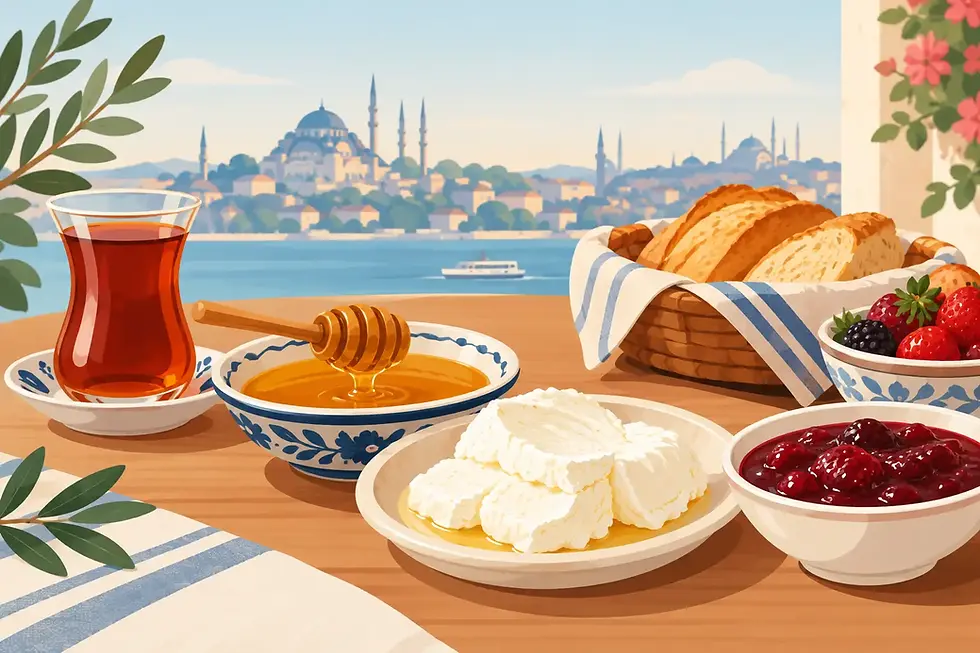
Turkish breakfast, or kahvaltı, literally carries the idea of eating before coffee. Yet it has become much more than a morning meal. It is a generous landscape of flavors: tangy cheeses, black and green olives, honey with clotted cream, cucumber, tomatoes, pastries, eggs, preserves, and endless tea.
There is no single correct breakfast table. Along the Black Sea, corn bread and regional cheeses may take center stage. In eastern provinces, stronger cheeses, herb-filled pastries, and richer dairy traditions appear. In Istanbul, the table gathers influences from across the country, often mixing the familiar with a little city polish.
For visitors, the best approach is simple: do not treat Turkish breakfast as a checklist. Tear bread, combine flavors, taste slowly, and let the table unfold. Sweet honey beside salty cheese, peppery arugula beside a warm egg, and tea between bites all make more sense together than apart.
A Cuisine of Regions, Not One Recipe Book
Calling Turkish cuisine a single thing is convenient, but incomplete. Anatolia has always been a meeting ground of climates, migrations, trade routes, and home kitchens. The food changes with the land.
The Aegean coast cooks with olive oil, wild greens, herbs, artichokes, and bright vegetables. Dishes known as zeytinyağlılar, vegetables gently cooked in olive oil, are often served at room temperature and show the cuisine's quieter, more delicate side. A plate of braised green beans can be every bit as expressive as grilled meat.
Southeastern cooking, particularly around Gaziantep, Şanlıurfa, and Adana, is known for its confident use of pepper, pistachio, lamb, bulgur, and charcoal. Kebabs from this region are not interchangeable. Their texture, seasoning, fat content, and method of cooking are part of their identity. A proper kebab is less about heat alone than balance: smoke, savoriness, spice, and the freshness of onion salad, parsley, or grilled vegetables.
Central Anatolia brings wheat, legumes, dough, and slow-cooked dishes into focus. Here, mantı holds a special place. These tiny parcels of dough, often filled with seasoned meat and served with garlicky yogurt and a peppery butter sauce, reward patience in both making and eating. Their size is not simply decorative. It reflects the labor and tenderness of a kitchen where food is made by hand.
Along the Black Sea, anchovies, corn, greens, and buttery pastries speak to a wetter landscape and a different pantry. The eastern provinces offer rich breakfasts, honey, grains, and dishes shaped by long winters. Turkish gastronomy becomes more interesting when these differences are allowed to remain distinct rather than folded into one broad label.
Ottoman Influence, Without the Costume
Ottoman palace cooking has left an undeniable mark on the culinary imagination of Istanbul. It brought together ingredients and methods from a vast geography, pairing fruit with meat, using nuts and fragrant spices with restraint, and giving special attention to presentation. Dishes such as stuffed vegetables, pilafs, sherbets, and layered sweets carry traces of this refined tradition.
Still, Turkish food should not be reduced to palace nostalgia. Much of its enduring character lives in home kitchens, neighborhood bakeries, street carts, village ovens, and family restaurants. A lentil soup served with lemon, a crisp gözleme made on a griddle, or a bowl of kuru fasulye with rice carries its own history of care and everyday nourishment.
The most thoughtful modern Turkish menus hold both truths. They honor Ottoman references without turning them into theater, while giving regional and domestic dishes the respect they deserve. A beautiful plate matters, but flavor, technique, and generosity matter more.
The Handmade Dishes That Carry Memory
Some dishes explain Turkish hospitality through the work they require. Mantı is one. Yaprak sarma, vine leaves rolled around rice, herbs, and sometimes meat, is another. So are hand-rolled börek, braided breads, and dumplings shaped one by one before a family gathering.
These foods cannot be understood only through ingredients. They carry the image of hands working together at a kitchen table, someone rolling dough while another prepares filling, conversation moving between recipes and family news. That is why handmade food often feels personal even to a first-time guest.
At Dafne Cafe & Kitchen in Cihangir, this spirit is central to the experience: heritage is not placed behind glass. It is served warm, with the ease and generosity of an aile lokantası, while leaving room for the tastes of a contemporary Istanbul audience.
Yogurt, Bread, and the Art of Balance
A Turkish meal is rarely built around one dominant flavor. Yogurt brings cool tang to roasted meats and dumplings. Sumac adds a gentle sourness to onions. Pomegranate molasses gives depth to salads and meze. Butter can make a dish luxurious, while lemon keeps it awake.
Bread is the quiet foundation of that balance. It gathers sauces, accompanies cheese, softens the spice of a pepper paste, and turns a few small plates into a meal. Good bread on a Turkish table is not an afterthought. It is part of the welcome.
This is also why portions alone do not define generosity. A modest table with warm bread, good olive oil, a bowl of yogurt, and food meant to be passed around can feel more abundant than an oversized individual plate. The pleasure lies in exchange.
How to Eat With Curiosity in Istanbul
For anyone new to Turkish food, begin with contrast rather than excess. Pair a comforting dish such as mantı or a slow-cooked stew with fresh meze. Try a breakfast spread on a day when there is time to linger. Order tea after a savory meal, then Turkish coffee when you are ready for its deeper, slower ritual.
Be open to dishes you may not recognize. The best meal may be a seasonal vegetable cooked in olive oil, a soup that changes with the day, or a dessert selected because it is made well rather than because it is famous. Ask what is handmade, what is regional, and what the kitchen is particularly proud to serve.
It also helps to let the meal follow its own pace. Turkish hospitality is not about racing through courses. It is about noticing the details: the scent of toasted butter over dumplings, the crackle of fresh bread, the brightness of a salad dressed with lemon, and the way a final glass of tea extends a good conversation.
A table tells its best story when no one is in a hurry to leave it. Come hungry, order with curiosity, and make room for the dish that arrives with a memory behind it.
Yorumlar