
Breakfast Culture: Why the Morning Table Matters
A breakfast can be eaten standing at a counter, coffee in one hand and a phone in the other. Or it can become a table that asks you to stay. Breakfast culture begins in that difference: not simply with what is served, but with the time, attention, and welcome offered around it.
For many travelers and city dwellers, breakfast is the first true encounter with a place. Before museums, meetings, and evening plans, there is the sound of tea glasses touching saucers, the scent of warm bread, and the small pleasure of passing a bowl across the table. In Turkey, that morning ritual has a particular generosity. It is a meal built not around haste, but around variety, conversation, and the happiness of sharing.
Breakfast Culture Is a Way of Gathering
A meaningful breakfast does not need to be elaborate, though it often is. Its deeper purpose is to bring people into the same moment. The table gives everyone something to reach for, comment on, and remember. A favorite cheese, a spoonful of jam, eggs prepared just the way a family likes them - these details turn food into a language of care.
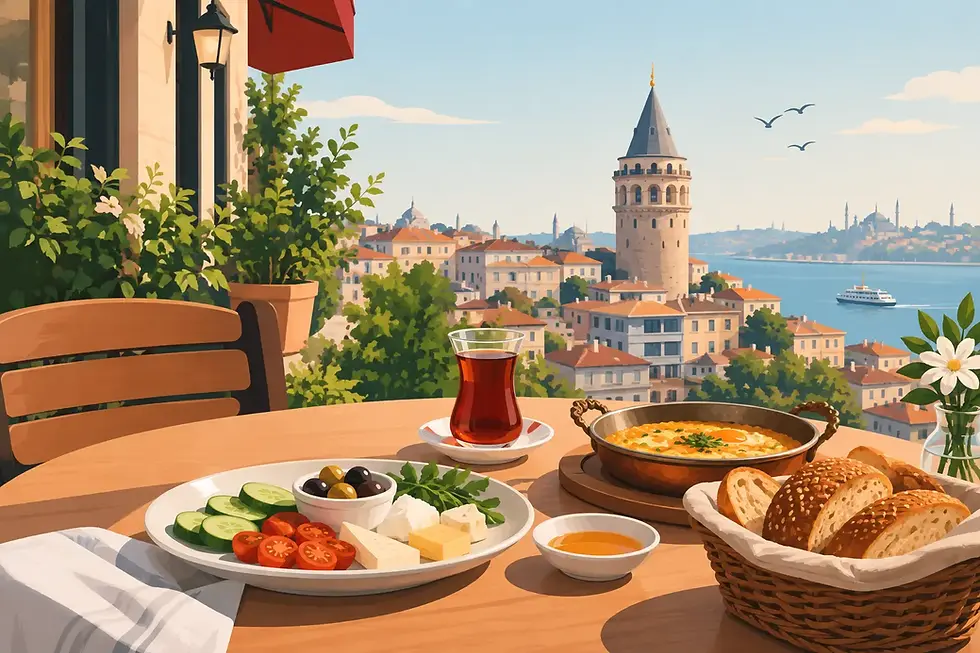
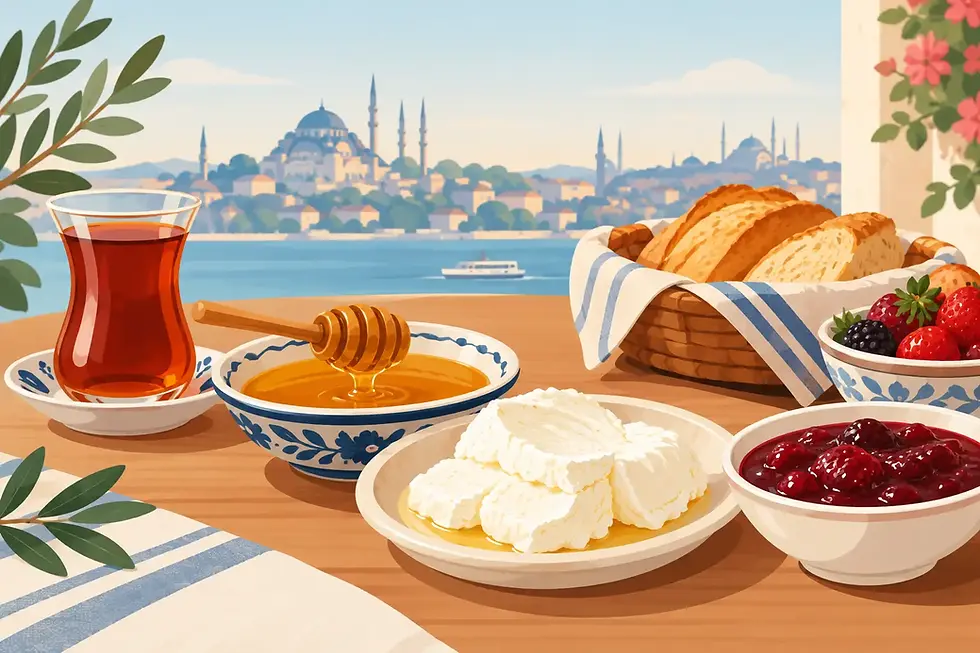
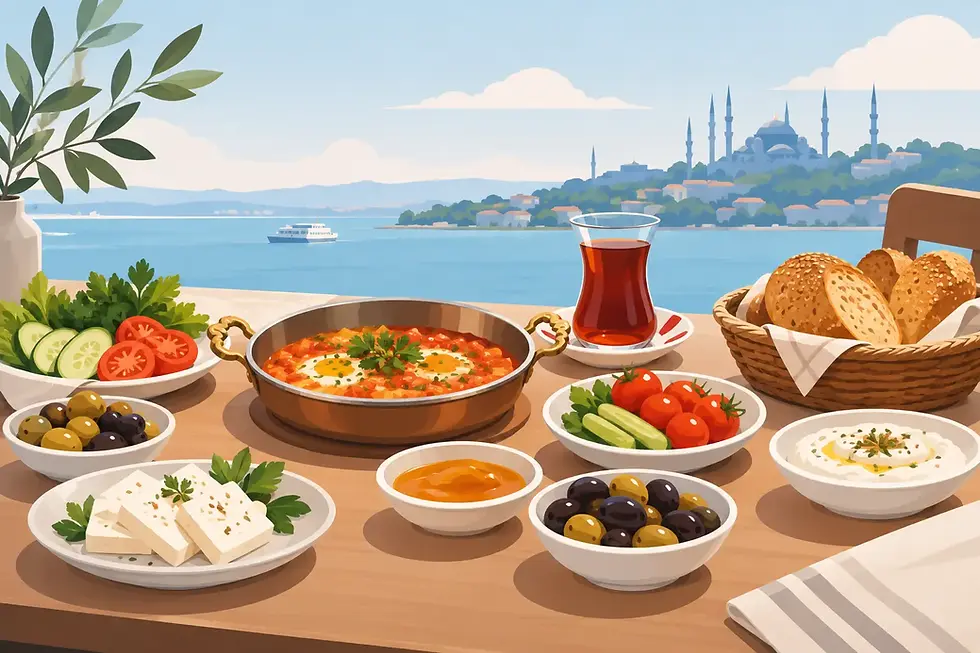
Turkish breakfast, or kahvaltı, carries this spirit beautifully. The word itself comes from the idea of eating before coffee, yet its meaning has grown far beyond a practical first meal. A traditional spread may include olives, several cheeses, tomatoes, cucumbers, butter, honey, clotted cream, eggs, pastries, fresh bread, preserves, and endless rounds of tea. No single plate tells the whole story. The pleasure lives in the collection.
That is why a full breakfast table feels so personal. One guest reaches first for simit, another looks for the sharpness of white cheese, and someone else returns to the honey and kaymak. Everyone composes a different bite. Everyone finds a small familiarity, even when encountering the meal for the first time.
The Table Has Its Own Rhythm
In many food cultures, breakfast is designed for efficiency. It gets people moving. There is nothing wrong with that, especially on a busy weekday. But a long breakfast serves another need: it gives the day a softer beginning.
The tea arrives hot and clear. Bread is replenished. Conversation opens slowly, then gathers warmth. A meal that might take twenty minutes elsewhere stretches naturally into an hour or more, not because anyone is delaying the day, but because they are choosing how to enter it.
This rhythm matters in a city like Istanbul, where every neighborhood holds layers of movement, history, and human energy. In Cihangir, breakfast can become a quiet pause before the streets fill, a chance to sit among friends or fellow travelers and feel the city from the inside rather than merely pass through it.
Why Turkish Breakfast Feels So Generous
The generosity of Turkish breakfast is not only about quantity. It is about choice without pressure. A table offers many tastes at once: salty olives, tangy cheeses, ripe vegetables, rich egg dishes, sweet preserves, and bread still warm from the oven. The contrasts keep each bite alive.
There is also an unmistakable connection to the land. Olives evoke the Aegean and Mediterranean coasts. Cheese speaks of villages, pastures, and patient craft. Honey and fruit preserves hold the brightness of orchards in a jar. Even the humble tomato and cucumber have a place of honor when they are fresh, well-seasoned, and served with care.
Regional differences make the story richer. A Black Sea-inspired table might bring corn bread, local cheeses, and the warmth of butter. Southeastern flavors may lean toward spice, pepper pastes, and bold breakfasts meant to sustain a long day. In Anatolia, dough, dairy, grains, and seasonal ingredients appear in forms shaped by local climate and family tradition.
Not every breakfast needs every regional specialty. In fact, trying to place everything on one table can flatten the experience. The most memorable spreads have a point of view. They balance abundance with restraint and let each ingredient have a reason for being there.
Familiar Foods, Deeper Meanings
Consider menemen. At first glance, it is a simple skillet of eggs, tomatoes, peppers, and olive oil. Yet it has inspired spirited opinions across Turkey: Should the eggs be fully mixed? Should onions be included? Is it best spooned directly from the pan with bread?
Those debates are part of the dish's charm. They reveal that breakfast foods are rarely neutral. They carry family habits, regional identities, and affectionate disagreements. A recipe becomes memorable not only because it tastes good, but because it belongs to someone.
The same is true of börek, poğaça, sucuklu eggs, and handmade preserves. These are not merely menu categories. They are reminders of home kitchens, weekend visits, holiday mornings, and the people who taught us which bite should come next.
Breakfast Culture Beyond the Plate
A beautiful breakfast is often photographed, especially by guests looking for a memorable Istanbul experience. There is pleasure in that, and visual presentation can honor the colors and textures of the table. But breakfast culture is more than a picture of arranged dishes.
It is the welcome behind the table. It is whether the bread arrives warm, whether tea is offered before it is requested, whether a guest dining alone feels just as comfortable as a large group. It is whether a restaurant understands that hospitality can be polished without becoming distant.
This is where the spirit of an aile lokantası, a family-style restaurant, remains so powerful. The guest is not treated as a transaction moving through a service system. They are received. Their appetite, pace, and company are given room. The meal has structure, but it also has ease.
For visitors, this can be one of the most lasting memories of Turkey. A historic landmark may be seen once, but the feeling of lingering over tea while morning light moves across the table can travel home with them. For locals and expats, the same experience can offer something equally valuable: a reliable place to return to, where a weekday feels less hurried and a weekend feels more complete.
Making Space for the Modern Morning
Modern breakfast culture has room for change. Some guests want a traditional village-style spread. Others prefer a lighter bowl, a plant-forward plate, or a breakfast that reflects global tastes alongside Turkish ingredients. A thoughtful menu does not have to choose between heritage and the present.
The key is sincerity. A contemporary dish should still have flavor, balance, and a sense of place. Traditional dishes should be treated as living food, not museum pieces. A restaurant can honor Ottoman and Anatolian culinary memory while presenting it with clarity, care, and an eye for how people dine now.
At Dafne Cafe & Kitchen, this meeting of heritage and contemporary table culture can feel especially natural. The aim is not to turn tradition into decoration, but to let it remain generous, flavorful, and alive among the streets of Cihangir.
There is a trade-off, of course. A long, abundant breakfast is not always what a guest needs before an early flight, a work call, or a full day of walking. Quick meals have their place. Yet when time allows, choosing a table over a rushed bite can change the character of the entire day.
The Morning Meal We Remember
The breakfasts we remember are rarely remembered for one perfect ingredient. We remember who was there, the weather outside, the first glass of tea, the basket of bread that kept returning to the table. We remember the feeling that no one was in a hurry to leave.
That is the quiet power of breakfast culture. It protects a small portion of the day from becoming purely functional. It makes room for stories, for second cups, for shared tastes, and for the kind of hospitality that says: sit a little longer, there is still plenty on the table.
The next time you choose where to have breakfast, look beyond the menu. Look for a place that understands the morning as an occasion - one where every plate can carry a story, and every bite can offer a little culture.
Yorumlar