
Turkish Breakfast Versus Continental Breakfast
A breakfast table can tell you how a place understands pleasure. In the conversation around Turkish breakfast versus continental breakfast, the difference is not simply how much food arrives or whether coffee comes first. It is a question of rhythm: a quick, composed start to the day versus a generous gathering where conversation has as much room as the plates.
For travelers in Istanbul, that distinction can be wonderfully revealing. One breakfast asks you to choose a pastry, a fruit, perhaps an egg, and move on. The other invites you to linger over warm bread, salty cheese, bright tomatoes, sweet preserves, and tea poured again before you have noticed the morning becoming afternoon.
Turkish Breakfast Versus Continental Breakfast: The Essential Difference
A continental breakfast is shaped by European hotel and cafe culture. At its most traditional, it is light and individual: bread or a croissant, butter and jam, coffee or tea, and possibly juice, fruit, yogurt, cheese, or cold cuts. Its charm is efficiency and elegance. The items are familiar, the portions are contained, and the meal leaves space for a busy day, a museum visit, or an early train.
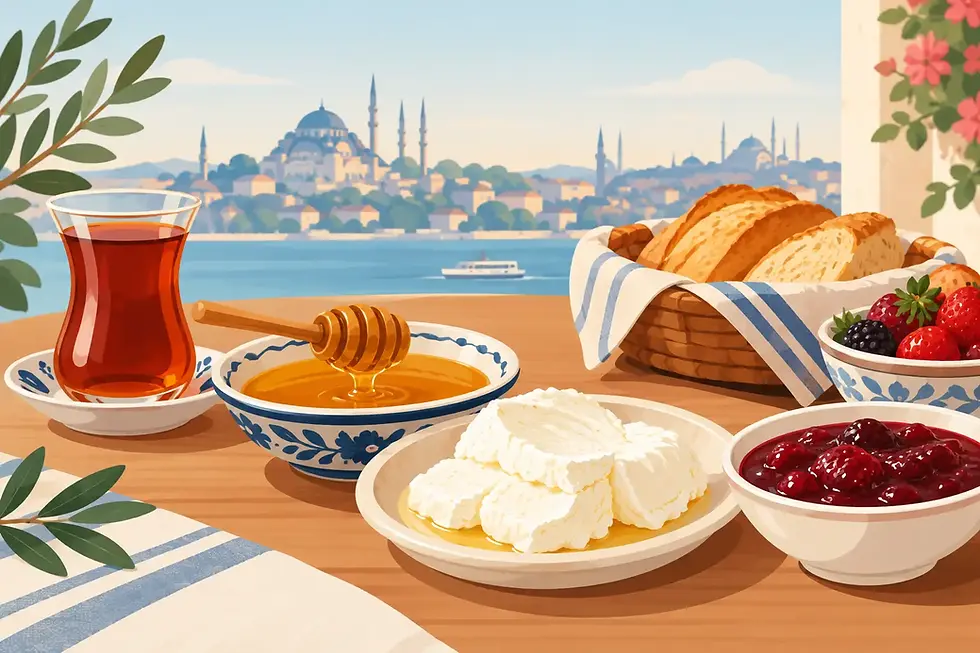
Turkish breakfast, known as kahvaltı, begins from a more social idea. The word is often understood as “before coffee,” yet tea is the drink that anchors the table. A proper spread is not built around one main dish. It is a collection of small pleasures arranged for sharing: white cheese, aged kaşar, olives, tomatoes, cucumbers, eggs, honey, clotted cream, jams, bread, and often something warm from the kitchen.
The contrast is less about one being superior than about intention. Continental breakfast offers a calm, practical morning meal. Turkish breakfast turns the morning meal into an occasion. If you are eating alone before work, the first may suit your pace beautifully. If you are meeting friends, hosting visitors, or hoping to understand Turkish hospitality through food, kahvaltı has a different kind of generosity.
A Table of Small Plates, Not a Single Course
The first visual difference is abundance. A continental plate or buffet often organizes food by category: baked goods, dairy, fruit, beverages. Turkish breakfast organizes food by contrast. Creamy cheese sits beside briny olives; cool cucumber meets hot eggs; a spoonful of grape molasses may follow a bite of feta. Nothing needs to be eaten in a prescribed order.
That freedom gives Turkish breakfast its particular pleasure. You build each bite yourself. Tear a corner of simit or village bread, add cheese and tomato, then reach for a fig jam. Try honey with kaymak, the rich clotted cream that turns sweetness into something almost ceremonial. The meal changes from bite to bite, with no need for a large centerpiece to carry the experience.
Warm dishes deepen the table. Menemen, softly cooked eggs with tomatoes, peppers, and olive oil, is one of the most beloved examples. Sujuk with eggs brings spice and richness. Pastries such as börek or pişi can add a comforting, just-made quality. Regional traditions may introduce muhammara, tahini and molasses, herb-filled cheeses, or toasted breads that reflect a family recipe as much as a culinary rule.
A continental breakfast can be varied, especially in a generous hotel setting, but it usually remains a selection of individual choices. Turkish breakfast is designed so the table itself becomes the dish. Reaching, offering, and passing are part of the meal.
Tea Changes the Pace
Coffee is central to many continental breakfast rituals. Its aroma signals momentum: wake up, focus, begin. Turkish coffee may certainly appear after a meal, but at breakfast, tulip-shaped glasses of black tea set another tempo.
Tea is continuously present rather than quickly finished. A fresh glass arrives while the conversation is still unfolding. This matters because breakfast is rarely treated as a transaction. It becomes a pause, especially on weekends, when family members and friends make room for one another before the demands of the day take over.
Flavor, Nutrition, and the Question of Heaviness
It is easy to assume that Turkish breakfast is always heavier because the table is fuller. That is only partly true. The spread includes many fresh components: tomatoes, cucumbers, greens, olives, cheeses, eggs, and olive oil. A guest can eat lightly, assembling a vegetable-and-cheese-focused plate, or choose a more indulgent route with fried dough, pastries, kaymak, and preserves.
Continental breakfast also has a wide range. A croissant with butter and jam can be rich in its own way, while yogurt, fruit, and whole-grain bread offer a lighter option. The real difference is flexibility. Turkish breakfast places numerous contrasting foods in front of you at once, which can feel nourishing and expansive, but it can also tempt you to eat more than you planned.
Dietary preferences deserve practical consideration. Vegetarians often find Turkish breakfast easy to enjoy because cheese, eggs, vegetables, breads, and spreads create plenty of choice. Guests who avoid dairy or gluten should ask about ingredients and bread options, as both cheese and wheat are common foundations of the traditional table. Those watching sugar may want to treat jam, honey, and molasses as accents rather than the main event.
The best breakfast is not the largest one. It is the one that meets your appetite, your schedule, and the kind of morning you want to have.
Why Turkish Breakfast Feels Like a Cultural Experience
Food carries memory most vividly when it is shared. Turkish breakfast has this quality because its ingredients are humble enough to feel familiar yet carefully chosen enough to express place. An olive can suggest the Aegean coast. A cheese can recall a village dairy tradition. A preserve made from sour cherry, quince, or rose petal can turn a simple piece of bread into a small story of season and home.
There is also a quiet etiquette of abundance. Putting several foods on the table says, in effect, that every guest should find something they enjoy. It is an expression of care rather than display. The host does not dictate the perfect bite; the guest is welcomed to make it.
That spirit is especially meaningful in Cihangir, where local routines and international curiosity meet over cafe tables. At Dafne Cafe & Kitchen, breakfast can be approached as more than a checklist of famous Turkish foods. It is an invitation to taste the textures, regional echoes, and warmth that make a table feel lived in.
When a Continental Breakfast Is the Better Choice
There are mornings when a continental breakfast is exactly right. If you have an early flight, a full itinerary, or little appetite when you wake, a well-made coffee, fresh pastry, fruit, and yogurt can feel satisfying without slowing the day. Its simplicity is not a lack of culture. French bakery traditions, Italian espresso rituals, and Central European breads all carry their own histories and pleasures.
Continental breakfast also suits diners who prefer clear portions and fewer decisions. There is comfort in knowing that a cappuccino and a warm roll will taste familiar, wherever you are traveling. For some, that consistency is part of the appeal.
Still, when time allows, Turkish breakfast offers a different reward. It asks for attention, but gives back atmosphere. The most memorable version is not necessarily the most extravagant one. It is the table with good bread, ripe produce, honest cheese, warm tea, and people who are happy to stay a little longer.
Next time you face a breakfast menu, choose according to the morning you hope to create. Take the continental route when you need a graceful beginning on the move. Choose kahvaltı when you want the table to become the destination, and leave enough time for one more glass of tea.


Yorumlar