
How to Share Turkish Meals Like a Local
A Turkish table is rarely built around one plate and one person. It begins with a little more than expected: another slice of bread, an extra bowl in the middle, tea ready to be poured. Knowing how to share Turkish meals is less about following formal rules than learning to recognize this generous rhythm. The food arrives with an invitation: taste this, pass that, stay a little longer.
For travelers and newcomers to Istanbul, the abundance can feel wonderfully unfamiliar. A breakfast may cover the table in color. A dinner can unfold through warm starters, dishes meant for the center, and conversation that lasts well after the last bite. The pleasure is not simply in trying everything. It is in allowing a meal to become a small act of togetherness.
Start with the center of the table
In Turkish dining, the center matters. Rather than ordering a separate dish for every guest, begin with several dishes everyone can reach. This gives the table variety and lets each person build a plate according to appetite, curiosity, and taste.
Bread is often the first shared element. Fresh ekmek, warm pide, or crisp simit is not a side thought. It is there to accompany cheese, gather a spoonful of olive-oil dishes, and savor the last traces of a rich sauce. Take what you need, then pass it along. If a bread basket is empty, ordering more is usually a welcome gesture, not an excess.
Small plates set the tone beautifully. Meze may include creamy yogurt preparations, smoky eggplant, seasonal greens, beans in olive oil, or stuffed vegetables. They are made for tasting, comparing, and returning to. A shared meal becomes more memorable when the table has contrast: something cool beside something warm, something bright beside something deeply savory.
There is no need to claim a dish as your own simply because you ordered it. In a generous group, the person who chooses a plate often becomes its first storyteller: what it tastes like, why it caught their eye, whether it reminds them of a meal they had elsewhere in Turkey. Then the plate makes its way around.
How to share Turkish meals at breakfast
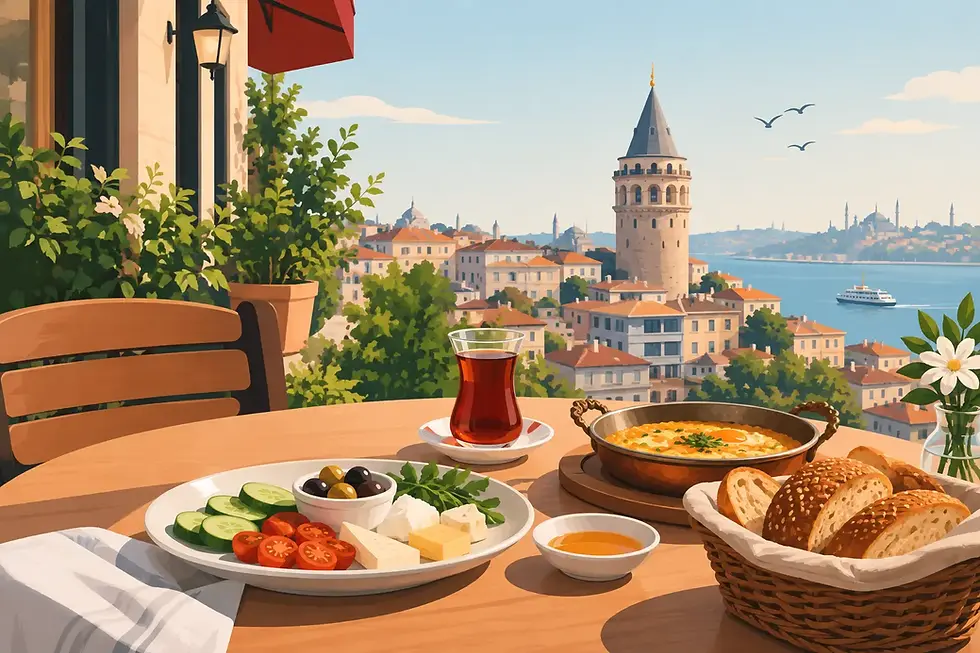
Turkish breakfast, or kahvaltı, is perhaps the clearest expression of shared dining. It is not a rushed morning transaction. It is a table arranged for lingering, with flavors that move between sweet, salty, herbal, and comforting.
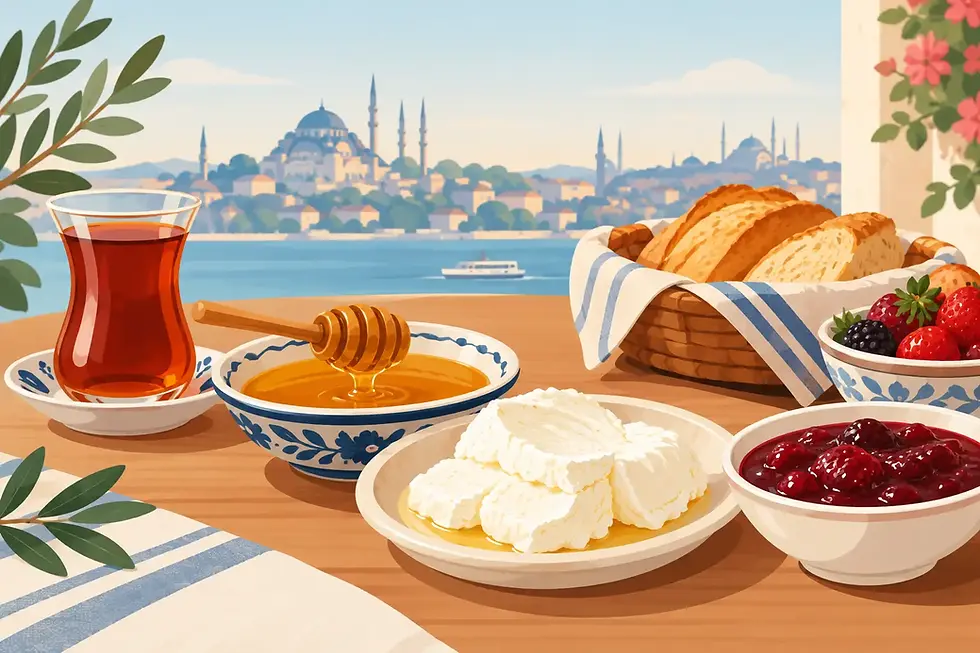
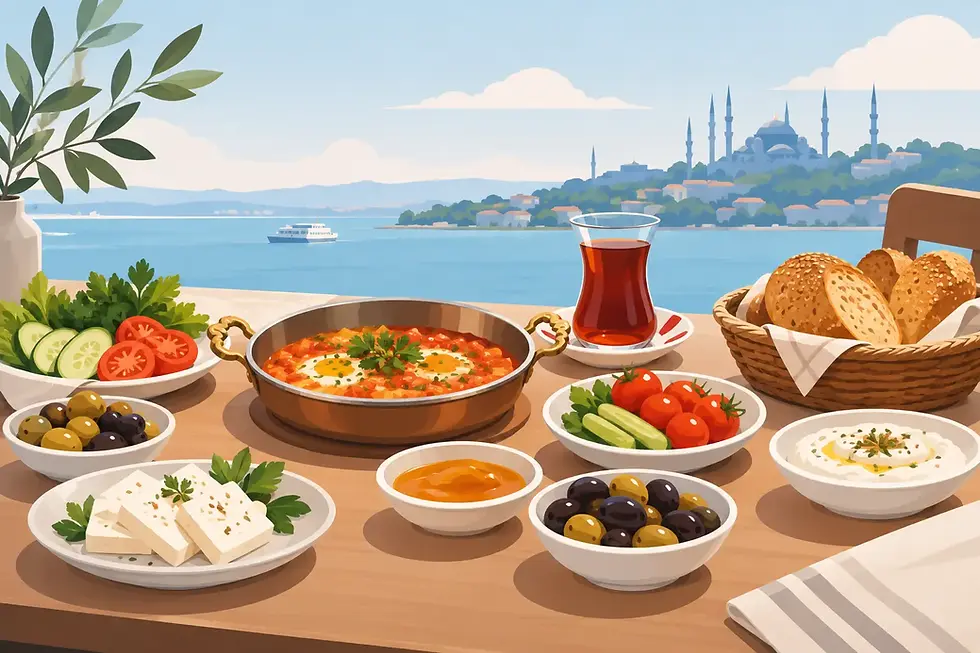
A classic spread might bring together white cheese, aged kaşar, olives, tomatoes, cucumbers, butter, jams, honey with clotted cream, eggs, and several kinds of bread. Menemen, with softly cooked eggs, tomatoes, and peppers, is especially made for sharing. Spoon it onto bread or onto your own plate, but leave room for the next person. The same is true of sucuklu yumurta, eggs cooked with aromatic Turkish sausage, and warm pastries such as börek.
The best approach is to begin lightly. Take a small taste of several things before settling into favorites. This keeps the meal open and makes room for the dishes that arrive later. If you are dining with people who know Turkish breakfast well, let them guide the first round. You may find that honey and kaymak tastes even more luxurious after a salty bite of cheese, or that a sprig of parsley brings freshness to a rich egg dish.
Tea is part of the exchange. It is traditionally served in small tulip-shaped glasses, and refills often appear before you ask. When you are ready for more, accept it if you wish. When you have had enough, leaving the teaspoon across the top of the glass is a polite, widely understood signal. The pace remains yours, but the warmth of the offer is part of the meal.
Choose dishes that invite conversation
For lunch or dinner, look for foods that naturally belong in the middle. Meze is an easy beginning, but shared dining can go further. A plate of mantı invites guests to notice its handmade folds and the balance of yogurt, butter, and spices. A seasonal vegetable dish opens a conversation about the market, the region, or a family kitchen. A generous salad brings relief between fuller bites.
Some main dishes are best shared by ordering a few for the group, especially when everyone is eager to explore. This works well with grilled meats, kebabs, oven-baked specialties, and regional dishes that arrive in substantial portions. Still, sharing does not mean every dish must be communal. A person may want their own soup, bowl, or entrée, while the table shares starters and bread. The right balance depends on appetite, dietary needs, and how adventurous the group feels.
If someone is vegetarian, avoiding dairy, or has an allergy, say so clearly before the meal begins. Turkish cuisine offers many naturally vegetable-forward dishes, but sauces, yogurt, butter, and meat broths can appear where a visitor may not expect them. Good sharing starts with making sure everyone can eat comfortably.
At Dafne Cafe & Kitchen in Cihangir, this spirit can be felt in the meeting of handmade specialties, breakfast traditions, Anatolian recipes, and dishes shaped by broader culinary journeys. A thoughtfully chosen table allows each guest to find something familiar while discovering something new.
Serve yourself with ease, not ceremony
There is a graceful simplicity to serving yourself from shared plates. Use the spoon or serving utensil provided rather than your own fork, and take a modest first portion. You can always return for more. This is especially helpful with a small bowl of a beloved meze or a final piece of pastry that everyone has been admiring.
When a shared dish is close to you, offer it before someone reaches across the table. When bread is passed, pass it with attention rather than interruption. These gestures are small, but they change the feeling of the meal. They say that everyone at the table belongs to the experience.
Do not worry about performing perfect etiquette. Turkish hospitality is warmer than it is rigid. Hosts may encourage you to eat more, offer another serving, or insist that you try a house favorite. You can accept enthusiastically, take a small amount, or kindly say that you are satisfied. Gratitude matters more than finishing every plate.
Let the meal unfold slowly
A shared Turkish meal is not designed to be rushed through in a fixed order. One person may return to a cheese plate after a warm dish arrives. Another may combine flavors in a way no menu description suggested. This is part of the pleasure.
The table often follows a natural arc. Fresh and light flavors come first. Warm dishes create the heart of the meal. Then there may be fruit, a syrupy dessert, Turkish coffee, or another glass of tea. If baklava appears, it is often better to order enough pieces for the group to sample than to treat it as a private finale. A shared sweet ends the meal on the same generous note on which it began.
Coffee deserves its own moment. Turkish coffee is small, intense, and traditionally enjoyed slowly. Let the grounds settle before taking the final sips. It does not need to be accompanied by a complicated ritual, though a glass of water and a sweet bite make a lovely pairing.
Bring curiosity, and leave room for generosity
The most meaningful way to share a Turkish meal is to arrive willing to participate. Ask what a dish is made with. Notice the regional details. Offer someone the last piece, then smile when they offer it back. Food in Turkey carries memory: a grandmother's dough, an Aegean olive harvest, a spice market fragrance, an Ottoman recipe reimagined for a modern table.
You do not need to know every name or custom to belong at that table. Order with curiosity, share with care, and give the meal the time it asks for. Often, the dish you remember most will not be the one you chose. It will be the one someone across the table urged you to taste.
Yorumlar