Geleneksel Türk Kahvaltısının Özellikleri
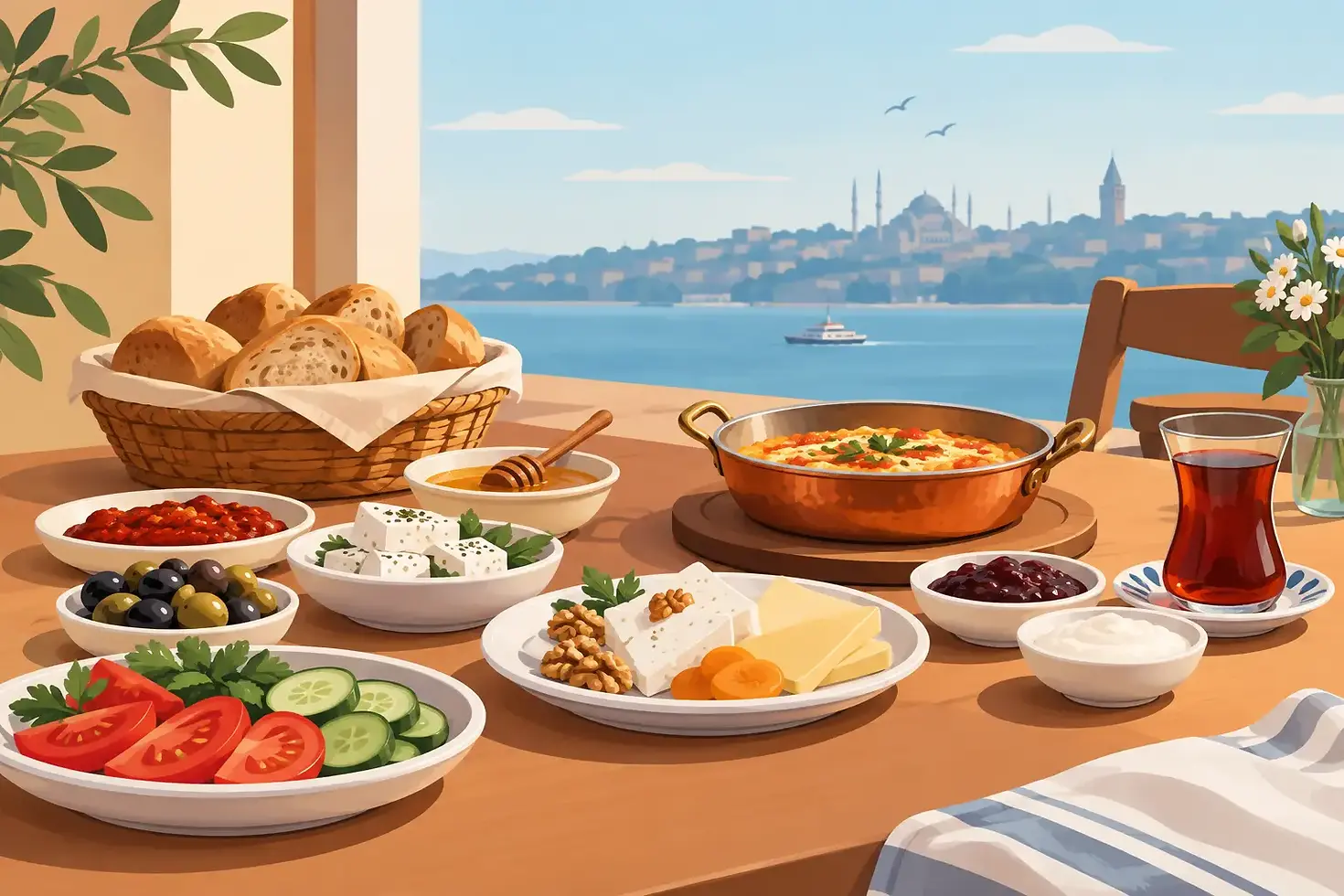
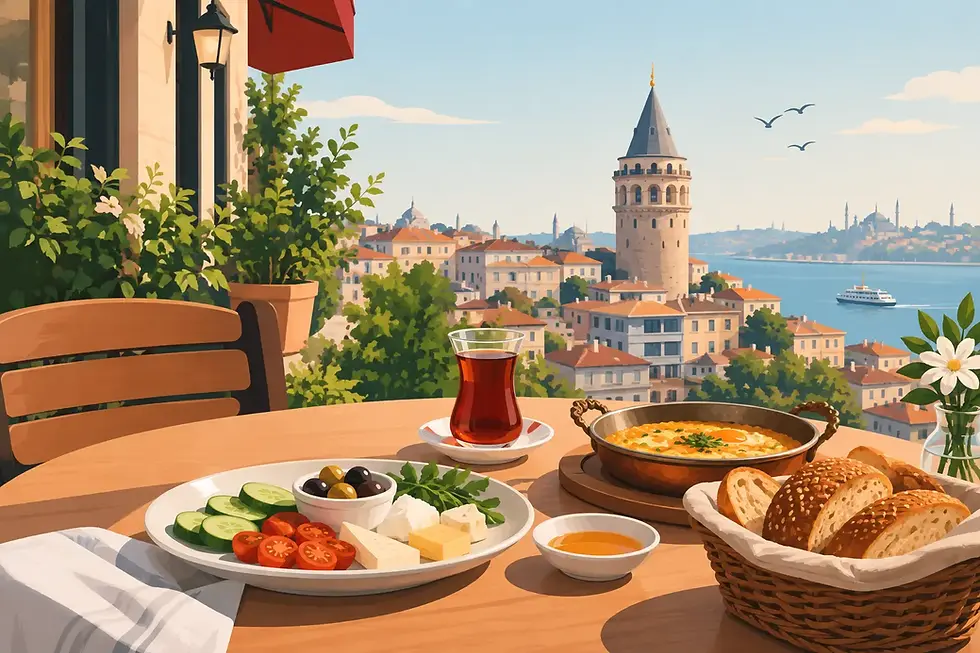
A Turkish breakfast is never meant to feel hurried. The table arrives in small dishes, colors, textures, and aromas: ruby-red tomatoes, pale cheeses, glossy olives, warm bread, and tea glowing amber in a slender glass. The geleneksel Türk kahvaltısının özellikleri are found not only in what is served, but in the generous rhythm of sharing it.
For travelers, it can be a delicious surprise that breakfast is treated as an occasion rather than a quick stop between sleep and the day ahead. For many Turkish families, it carries the feeling of a long Sunday morning, a crowded table, familiar voices, and the quiet pleasure of taking one more piece of bread before pouring another glass of tea.
What Defines a Traditional Turkish Breakfast?
Traditional Turkish breakfast, or kahvaltı, is built around variety and balance. Its name comes from the idea of eating before coffee, yet tea has become the true companion of the breakfast table. A proper spread brings salty, creamy, fresh, sweet, crisp, and warm elements together without forcing them into a single plate.
Rather than one large main dish, guests are invited to compose each bite for themselves. A slice of village bread may hold white cheese and tomato; simit may be paired with clotted cream and honey; olives can be followed by a spoonful of jam. This freedom is part of the ritual. There is no single correct order, only the pleasure of discovering the combinations that suit the moment.
The table also expresses a deeply rooted form of hospitality. More than enough is placed at the center, because abundance is a gesture of welcome. Even a simple home breakfast can feel festive when food is shared with care.
The Essential Flavors on the Table
Cheese is one of the first signatures of a traditional spread. Beyaz peynir, a brined white cheese, offers a tangy, refreshing contrast to vegetables and bread. Kaşar brings a milder, buttery note, while regional cheeses may introduce sharper, earthier flavors. The selection changes by household and season, but cheese is rarely absent.
Olives belong just as naturally to the table. Turkey’s olive-growing regions contribute green and black varieties, often dressed simply with olive oil, thyme, red pepper flakes, or a squeeze of lemon. Their savory depth balances the gentle sweetness of preserves and honey.
Fresh vegetables give the meal its brightness. Tomatoes, cucumbers, peppers, and greens are presented with minimal intervention because their freshness is the point. In warmer months especially, a ripe tomato with cheese, olive oil, and bread can become the most memorable bite on the table.
Bread is not a side thought. It is the bridge between nearly every dish. Freshly baked loaves, rustic village bread, sesame-crusted simit, or soft pastries are used to scoop, layer, and savor. The quality of the bread can change the entire experience, especially when it arrives warm enough to carry the scent of the bakery.
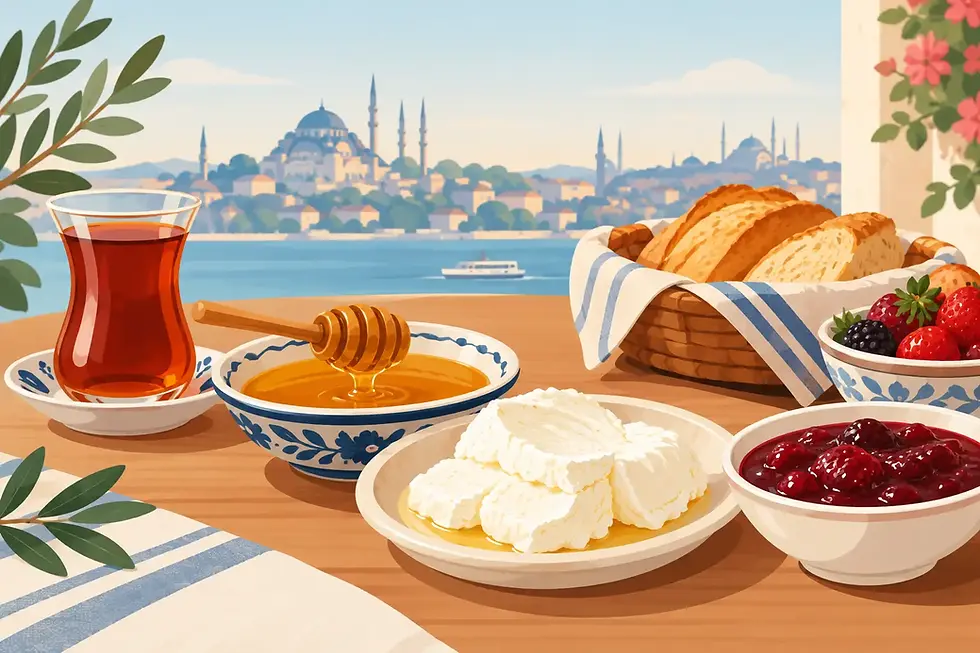
Then there are the sweet touches: honey, jam, tahini mixed with grape molasses, and kaymak, the luxurious clotted cream often served with honey. They are not dessert in the usual sense. They sit comfortably beside cheese and bread, allowing the table to move naturally between savory and sweet.
Eggs, Pastries, and Warm Dishes
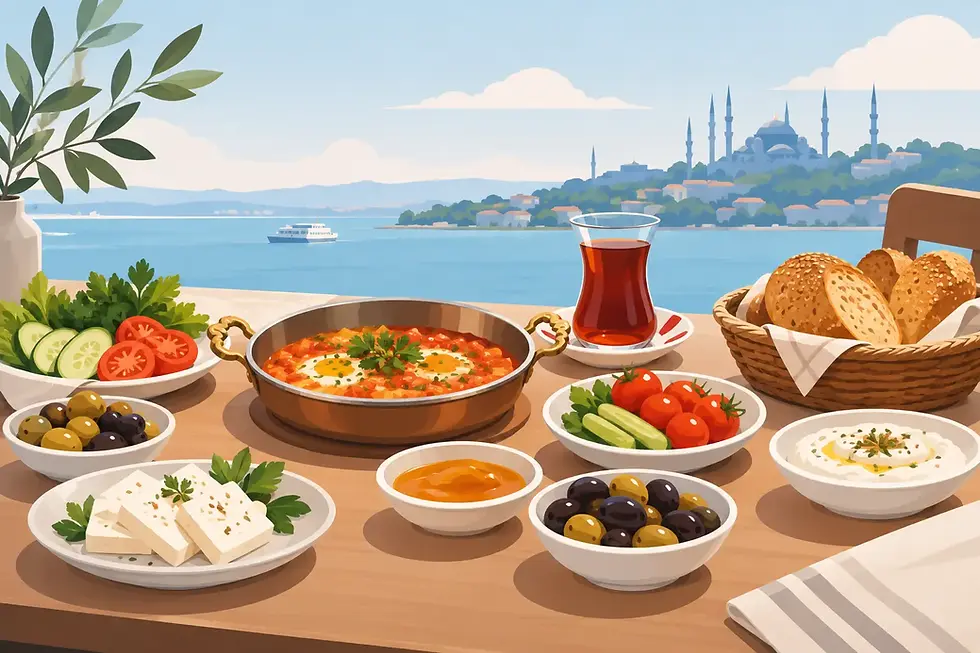
The cold dishes create the foundation, but warm plates give breakfast its comforting center. Menemen is among the best known: eggs gently cooked with tomatoes, green peppers, and spices. Some prefer it soft and spoonable, others a little firmer. The question of whether onions belong in menemen is a beloved culinary debate, with strong opinions on both sides.
Sucuklu yumurta combines eggs with sucuk, a boldly seasoned Turkish sausage flavored with garlic and spices. It is rich, fragrant, and especially satisfying alongside bread. Fried eggs, omelets, and small pastries filled with cheese, herbs, or potatoes can also appear, depending on the kitchen and the appetite around the table.
These warm dishes show why kahvaltı is not simply a collection of appetizers. It is a complete meal, generous enough to stretch into late morning. Still, the scale depends on the setting. A weekday breakfast may be modest and practical, while a weekend table is often slower, fuller, and made for lingering.
Tea Is the Heartbeat of Kahvaltı
Coffee may have given breakfast its name, but Turkish tea gives it its rhythm. Black tea is traditionally brewed in a double teapot and served in tulip-shaped glasses. Its clear, deep color is part of the visual language of the table, as recognizable as the small white plates and baskets of bread.
Tea is poured, sipped, refilled, and offered again. It invites conversation to continue. At a shared breakfast, the tea glass is rarely empty for long, and that small act of replenishing reflects the warmth of Turkish hosting.
For visitors accustomed to coffee-centered mornings, this can be one of the most meaningful details. Turkish coffee may follow later, often after the meal, but tea stays close from the first olive to the final bite of simit.
Regional Traditions Make Every Table Different
The traditional Turkish breakfast is not a fixed museum display. It is a living collection of regional habits, local ingredients, and family preferences. Along the Black Sea coast, corn-based dishes and local cheeses may shape the morning. In the southeast, richer flavors, spicy pastes, and ingredients such as pistachios can appear. The Aegean brings herbs, olive oil, and the freshness of its produce to the table.
Van breakfast has earned particular admiration for its extraordinary breadth, often featuring local cheeses, herb cheese, honey, butter, jams, and warm breads. In other places, a single exceptional ingredient can define the memory: a peppery olive oil, a homemade sour cherry preserve, or cheese made in a nearby village.
This regional variety is one reason a Turkish breakfast deserves to be approached with curiosity. The familiar anchors remain - tea, bread, cheese, olives, vegetables - but the details tell a story of landscape, season, and local taste.
Geleneksel Türk Kahvaltısının Özellikleri: Sharing Over Speed
At its core, the most enduring characteristic of Turkish breakfast is its social nature. It asks people to sit down together. Dishes are placed in the middle, hands reach across the table, and conversation makes the meal feel longer than the clock suggests.
That quality matters in a neighborhood like Cihangir, where a morning meal can become a pause between the city’s energy and the day’s plans. At Dafne Cafe & Kitchen, the spirit of kahvaltı is honored as more than a menu tradition: each shared plate can carry a memory of home, a regional recipe, or a new connection made over tea.
There is room for modern preferences, of course. Some guests seek a lighter table with greens, eggs, and olive oil; others want the full richness of kaymak, honey, pastries, and sucuk. Neither approach is less authentic. Turkish breakfast has always adapted to the people gathered around it.
The best way to enjoy it is simple: begin slowly, taste widely, and leave space for one more glass of tea. A breakfast table set with generosity has a way of turning an ordinary morning into a story worth carrying with you.
Yorumlar