Manti vs Ravioli: Two Dumplings, Two Stories
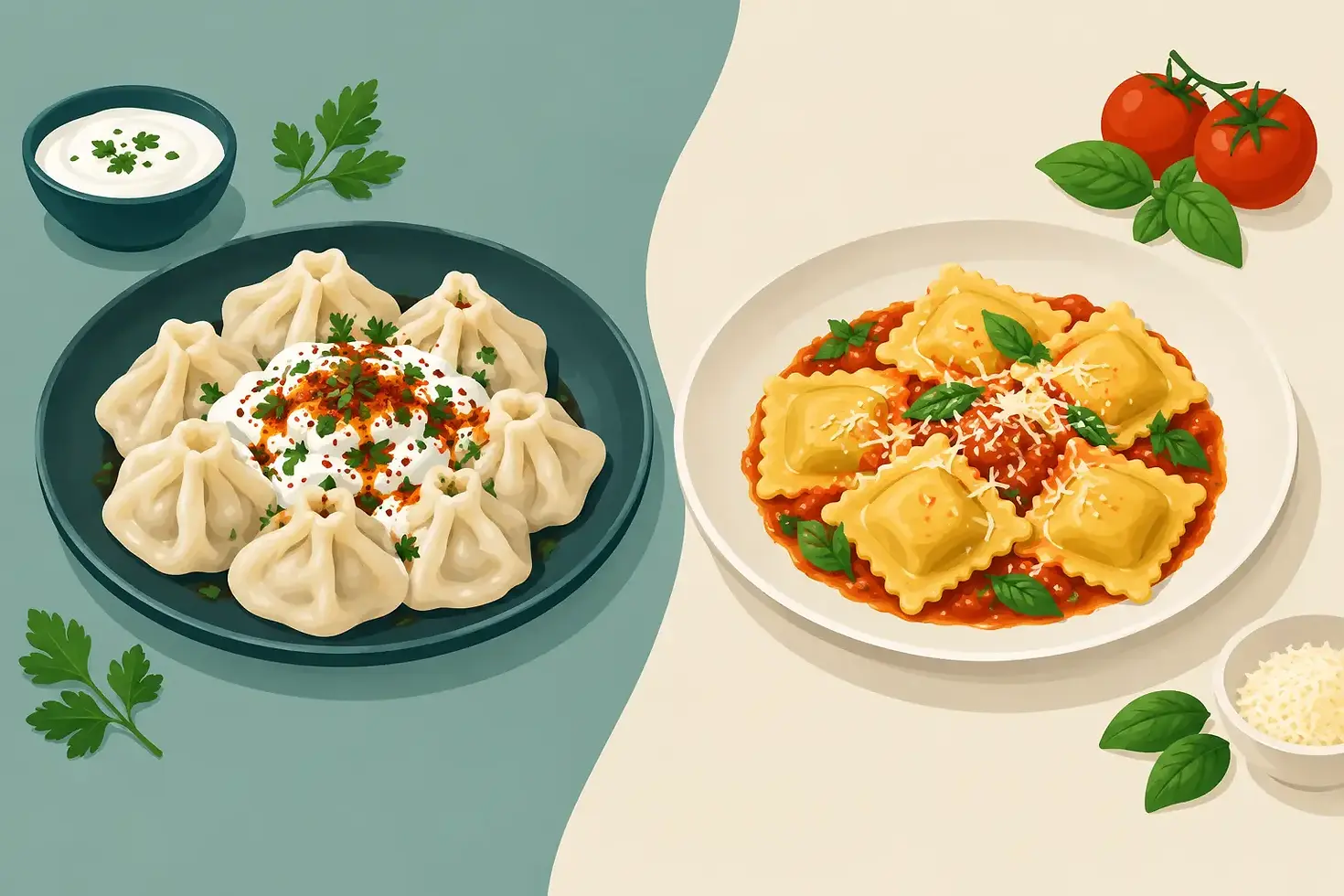
A plate of mantı may remind an Italian diner of ravioli at first glance: tender dough, a savory center, and the kind of comfort that makes a table fall briefly quiet. But manti vs ravioli is not a contest with one winner. It is a meeting of two food traditions that happen to share a beautiful idea: a small parcel can hold the memory of a home, a region, and the hands that made it.
In Istanbul, where recipes travel as naturally as people do, the comparison feels especially inviting. Both dishes reward attention. Yet the differences live in the details: the size of the fold, the character of the dough, the seasoning in the filling, and perhaps most of all, the sauce that brings each parcel to life.
Manti vs Ravioli: Similar Shape, Different Language
Mantı is a Turkish dumpling, most famously associated with Kayseri in central Anatolia, though its family extends across a wide geography. Related filled dumplings appear throughout Central Asia, the Caucasus, and beyond. Turkish mantı is often made with a very thin, firm dough and a filling of ground meat, commonly beef or lamb, mixed with onion and restrained seasoning. The pieces can be remarkably small, folded into neat little bundles that speak of patience before they ever reach the pot.
Ravioli belongs to the broad and deeply regional landscape of Italian filled pasta. Its dough is usually made from flour and eggs, although recipes vary by place and household. Ravioli may be square, round, half-moon shaped, or softly irregular. Fillings are equally open-ended: ricotta and spinach, pumpkin, mushrooms, braised meat, seafood, greens, cheese, or seasonal vegetables.
So, are they the same thing? Not quite. They are culinary cousins rather than twins. Both wrap a filling in dough, but each carries a distinct grammar of flavor and ritual.
The Difference Begins With the Dough
Traditional Turkish mantı dough is often simple: flour, water, egg, and salt. It is rolled thin but needs enough strength to hold a tight fold through cooking. When properly made, the dough offers a pleasant resistance before yielding to the filling. The texture is part of mantı's identity. It should not disappear completely beneath the sauce.
Ravioli dough is frequently richer because of its egg content. It can be supple and silky, with a more tender bite. That softness suits fillings such as ricotta or roasted squash, which are meant to feel almost creamy against the pasta. Still, there is no single ravioli dough. Northern Italian traditions, southern kitchens, restaurant pasta rooms, and family tables all make their own decisions.
This is one reason direct comparisons can mislead. A delicate spinach ravioli in butter and sage is designed for a different experience than a small Kayseri-style mantı served with garlicky yogurt. One highlights the filling's softness and a carefully balanced sauce; the other creates contrast between tangy yogurt, savory meat, and warm spiced butter.
Size Is More Than a Visual Detail
Kayseri mantı is famous for its tiny size. There is a beloved saying that a skilled cook should be able to fit 40 pieces on a spoon. Whether or not a household follows that rule, the point is clear: small mantı represents care, skill, and generosity. Folding dozens, sometimes hundreds, of pieces turns preparation into an occasion. Someone rolls the dough, someone portions the filling, someone closes the parcels. The meal begins long before serving.
Ravioli is often larger, allowing its filling to take a more central role. A single generous raviolo might hold an egg yolk, whipped cheese, or a slow-cooked meat filling. Smaller ravioli certainly exist, but the tradition is not defined by tiny parcels in the same iconic way.
There is a practical trade-off here. Small mantı gives you more dough-to-filling edges, more folds, and more surface for yogurt and pepper butter to cling to. Larger ravioli offers a fuller, more pronounced bite of its center. Neither approach is better. They simply ask for different kinds of attention.
Filling: Focused Seasoning or Regional Freedom
Classic Turkish mantı tends toward a focused filling. Ground beef or lamb, onion, salt, and black pepper are often enough. The result is not meant to be loudly spiced inside, because the finishing elements provide brightness and heat. Some versions may include garlic, herbs, or different meat choices, and regional recipes bring their own character. The classic profile, however, is savory, clean, and balanced.
Ravioli fillings range more widely because Italy's regions bring different landscapes to the table. Near the coast, seafood may appear. In areas known for dairy, cheese can lead. Autumn brings pumpkin or squash; mountain regions might favor mushrooms, potatoes, or game. Ravioli often captures what is abundant in a particular season.
Mantı has its own variations, too. Some are baked, some are served in broth, some are filled differently, and some are shaped in ways that immediately reveal their regional roots. The lesson is not that ravioli is creative while mantı is fixed. Both are living traditions. But a familiar plate of Turkish mantı usually arrives with a more recognizable flavor profile than the endlessly varied world of ravioli.
Sauce Tells the Story
If mantı has a signature finishing gesture, it is garlic yogurt followed by melted butter infused with pepper, often Aleppo pepper or a similar Turkish red pepper. The cool tang of yogurt meets the warmth of butter and spice. Dried mint or sumac may join the plate, adding fragrance or brightness. This contrast is why mantı feels so complete: creamy, savory, gently fiery, and deeply comforting at once.
Ravioli sauces are chosen to support the filling. Brown butter and sage may flatter pumpkin ravioli. Tomato sauce may suit cheese or meat-filled ravioli. A light broth can make a delicate filling feel elegant, while a cream sauce can bring richness to mushrooms or seafood. Parmesan often adds a final salty note.
The key difference is that mantı's yogurt-and-butter pairing is an essential cultural signal, while ravioli has no one universal sauce. Asking for ravioli without a fixed sauce is normal. Asking for classic Turkish mantı without yogurt and pepper butter changes the dish's familiar heartbeat.
How They Are Served and Shared
Mantı often arrives as a generous, comforting bowl, meant to be eaten slowly enough to catch every layer of sauce. It belongs naturally at a family table, where handmade food signals welcome. In Turkish hospitality, serving mantı can say more than “I cooked for you.” It can say, “I made time for you.”
Ravioli can be equally meaningful, especially at Sunday lunches and holiday meals, but it often appears as a course within a longer Italian meal. Its presentation may be more individually portioned, with each ravioli arranged to show its shape and sauce. Mantı is often more enveloping and communal in feeling, even when served as an individual plate.
At Dafne Cafe & Kitchen in Cihangir, mantı belongs to the larger pleasure of sitting down without rushing. It is a dish that makes room for conversation, for bread on the table, for a second spoonful of yogurt sauce, and for the quiet satisfaction of a meal made with heritage in mind.
Which Should You Choose?
Choose mantı when you crave the bright tang of garlic yogurt, the gentle heat of pepper butter, and the particular pleasure of small handmade dumplings. It is especially satisfying when you want something soulful and distinctly Anatolian.
Choose ravioli when a specific filling calls to you: sweet squash, ricotta and greens, earthy mushroom, or a luxurious meat filling. Ravioli is often the better choice for diners who want the filling to lead and the sauce to frame it.
Of course, the real answer depends on the plate in front of you. A beautifully made mantı and a beautifully made ravioli have more in common than their origins might suggest. Both ask us to value craft over speed. Both turn humble flour into something celebratory.
The next time you lift one of these small parcels with your fork or spoon, pause before comparing it too quickly. Taste the fold, the filling, and the sauce. Somewhere in that first bite is a kitchen, a family, and a story still being passed from hand to hand.

Yorumlar