Why Culinary Tourism Belongs at the Istanbul Table
A city can be admired from a rooftop, photographed from a ferry, and mapped street by street. But it is understood most intimately at the table. Culinary tourism is the choice to travel with an appetite for more than a famous dish. It asks travelers to notice the bread arriving warm, the tea glass offered without hurry, the recipe shaped by a grandmother’s hands, and the conversation that makes a meal feel shared.
In Istanbul, this kind of travel has a particular depth. The city has always brought people, ingredients, and ideas into conversation. Its food carries traces of Anatolian kitchens, Ottoman palace traditions, neighborhood bakeries, migrations, seasons, and family tables. A meal here can be beautiful enough for a photograph, certainly. Its greater gift is the story that remains after the plates are cleared.
Why Culinary Tourism Is a Way of Listening
Food is often treated as an attraction to collect: try this dessert, order that street food, move on to the next address. There is joy in that approach, but it can flatten a place into a checklist. Meaningful culinary tourism slows the pace. Rather than asking only, “What is the must-try dish?” it asks, “Who makes this, when is it eaten, and what does it mean to the people gathered around it?”
That shift matters in a country with as much regional variety as Turkey. There is no single Turkish table. The olive oil dishes of the Aegean, the pepper-rich flavors of the southeast, the grains and soups of Central Anatolia, Black Sea cooking, Istanbul’s cosmopolitan pantry, and Ottoman-influenced recipes all speak in distinct voices. A good dining experience does not pretend to contain every tradition at once. It offers a thoughtful way into them.
For travelers, food can also soften the distance between visitor and city. The customs are often simple: accept the tea, share the plates, linger a little longer than planned. You may not understand every word around you, but the rhythm of generosity needs little translation. In that sense, a meal becomes a form of listening.
Culinary Tourism Starts With Breakfast
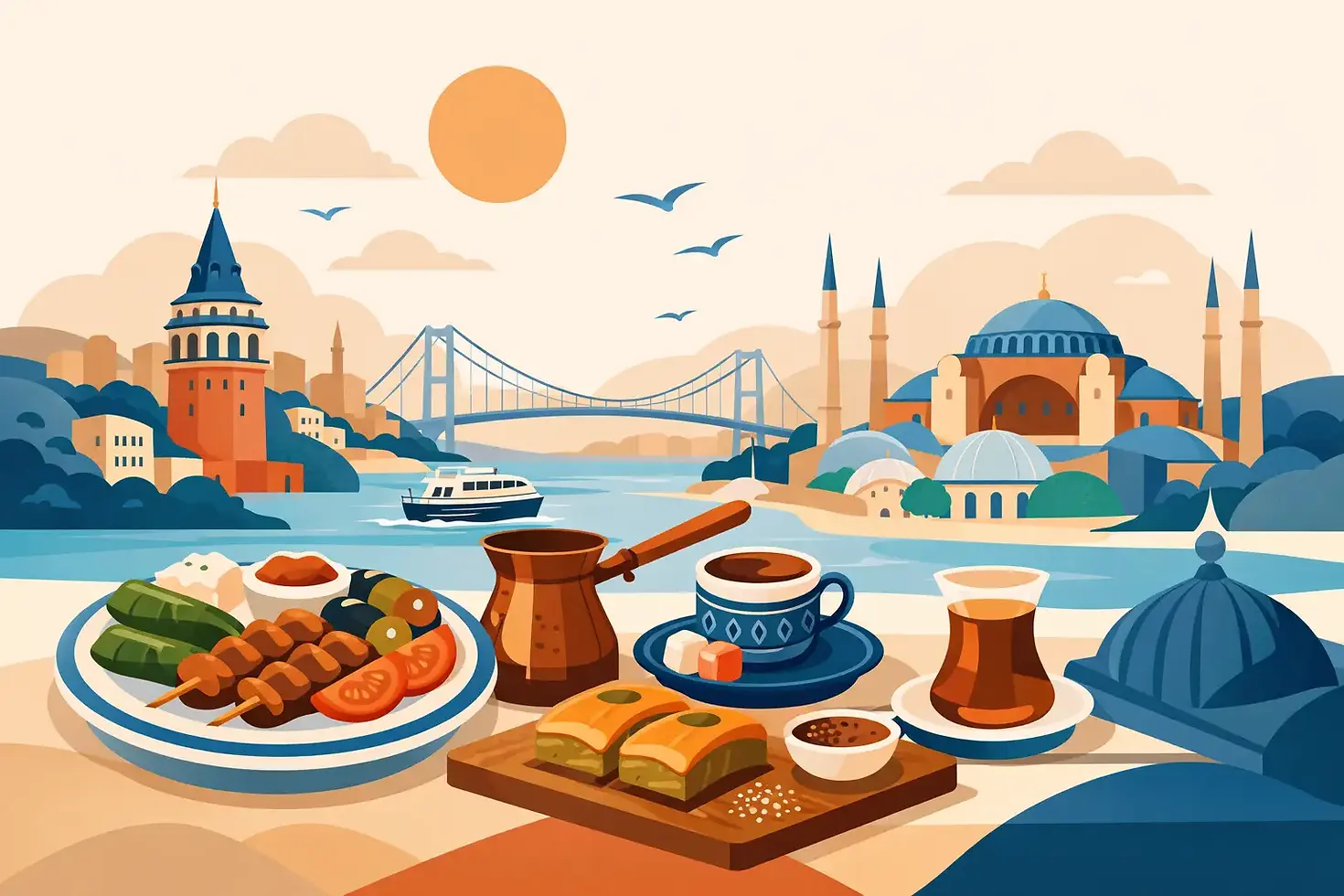
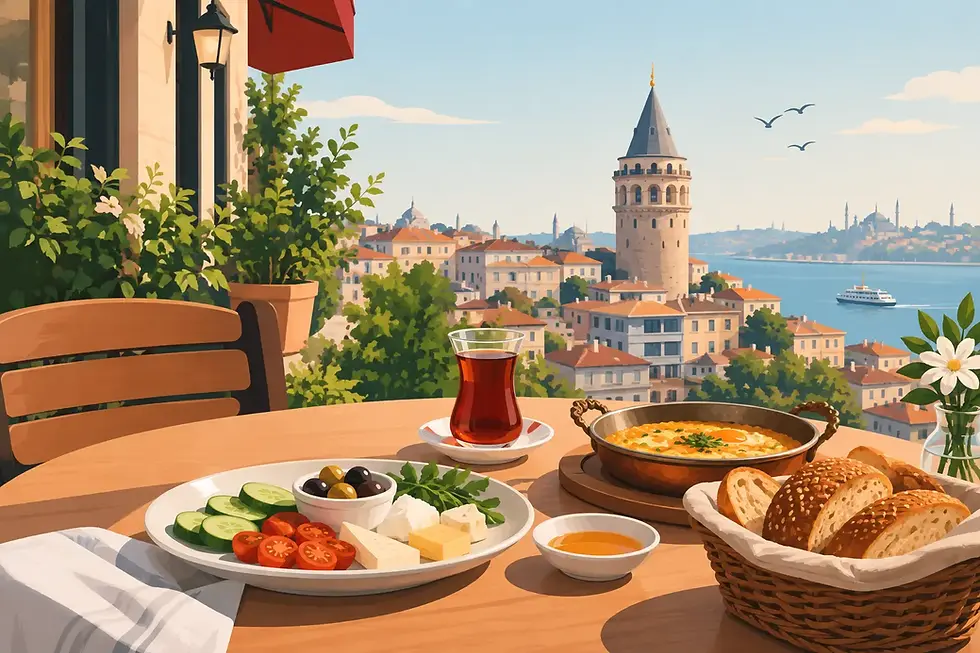
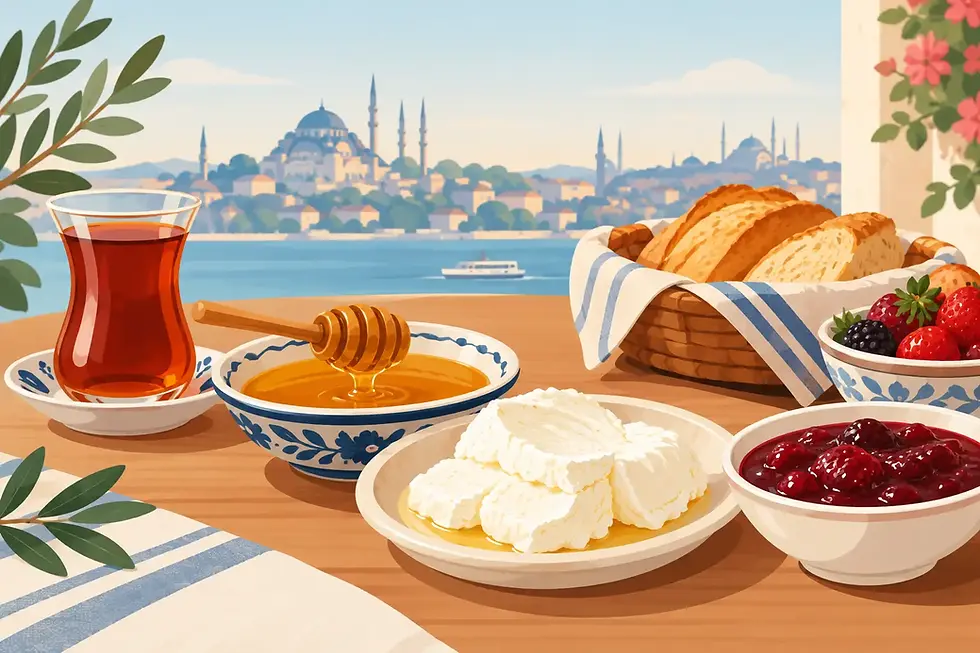
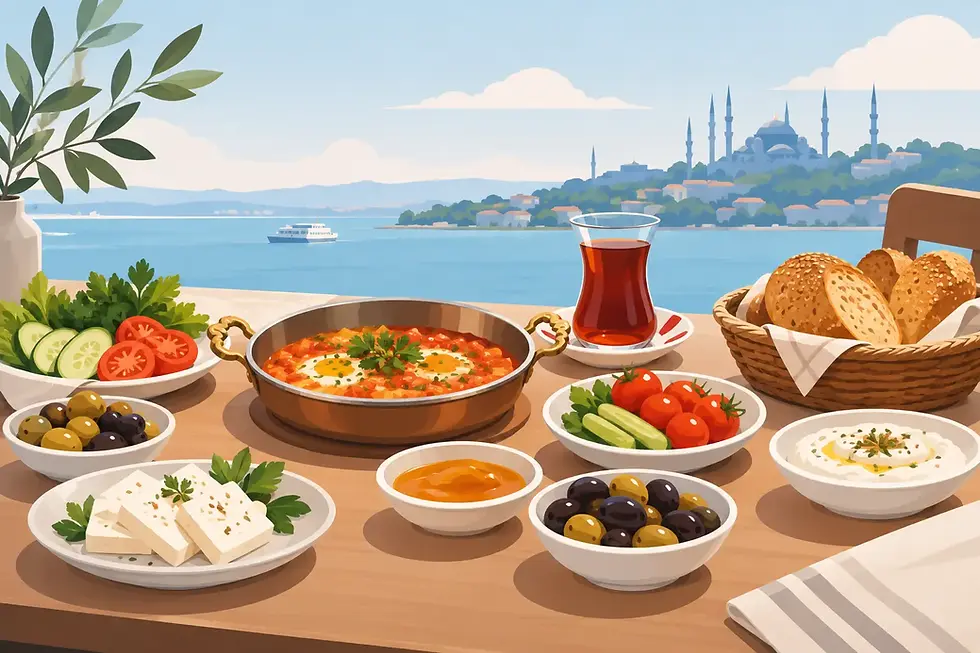
Turkish breakfast, or kahvaltı, is one of the most generous introductions a traveler can receive. It is not built around rushing out the door with a single pastry. It is a table of contrasts: salty white cheese and briny olives, sweet honey and rich clotted cream, tomatoes and cucumbers, eggs, jams, warm bread, and glass after glass of deeply colored tea.
The pleasure is not only in the variety. It is in the pace. Breakfast invites people to sit close, reach across the table, compare favorites, and order one more thing because the morning is still unfolding. Menemen, with softly cooked eggs, tomatoes, peppers, and gentle seasoning, is best appreciated as comfort rather than spectacle. Simit has its own quiet appeal: a sesame-crusted ring of bread that belongs as naturally to a ferry ride as it does to a long breakfast.
There is a useful lesson for visitors here. Do not feel pressure to order every dish you have seen online. A crowded table can be memorable, but so can a smaller selection chosen with care. Ask what is made fresh that day, what pairs well with tea, and which specialties reflect the kitchen’s own character. Culinary curiosity works best when it leaves room for appetite.
A handmade dish carries time within it
Some foods reveal culture through the labor they require. Mantı is one of them. These delicate filled dumplings may look modest on a plate, yet their preparation carries patience, precision, and the kind of knowledge often passed through generations. Served with yogurt and a warmly fragrant sauce, mantı holds a balance of tenderness, tang, and spice that feels both celebratory and deeply familiar.
When travelers seek out handmade dishes, they are tasting more than ingredients. They are recognizing time as part of hospitality. The same is true of slow-cooked stews, carefully rolled pastries, and desserts made for sharing. These are not foods designed to be hurried, even when a restaurant serves them with modern polish.
Let the Neighborhood Shape the Meal
A city’s food cannot be separated from its neighborhoods. In Istanbul, the experience of eating changes with the street outside the door: the sound of gulls near the water, the market bustle, the late-night crowd, the old apartment buildings, the galleries, the small shops opening for the day. Choosing where to eat is partly about choosing which version of the city you want to meet.
Cihangir, in Beyoğlu, offers a particularly appealing balance for culturally curious diners. Its streets hold the ease of a residential neighborhood alongside the energy of central Istanbul. It is a place to pause between galleries, walks, and conversations, then settle in for food that feels considered rather than rushed. The best meals here have room for both heritage and the present moment.
At Dafne Cafe & Kitchen, that meeting point is part of the table itself. Traditional Turkish breakfast, Anatolian flavors, Ottoman references, handmade specialties, and globally influenced bowls can sit within one warm, curated experience. The intention is not to turn heritage into a museum display. It is to let recipes remain alive - generous, beautiful, and meant to be enjoyed together.
How to Eat With Curiosity, Not Just Hunger
The most rewarding food travelers are not necessarily those with the longest list of restaurants. They are the ones willing to stay attentive. Start by choosing one meal each day that is not optimized for convenience. Give it enough time to unfold. Notice the condiments, the bread, the serving dishes, and the way people at neighboring tables share food.
When you see an unfamiliar dish, ask a simple question about it. Is it regional? Is it traditionally served at breakfast, lunch, or a family gathering? Is the recipe associated with a season or celebration? These questions often lead to a richer answer than a description of ingredients alone. They also show respect for the people whose food you are enjoying.
It helps to balance iconic dishes with quieter discoveries. Baklava, Turkish coffee, kebabs, and meze deserve their reputations, but a daily soup, a vegetable dish finished with olive oil, or a plate of rice and yogurt may tell you just as much about how people actually eat. The memorable meal is not always the grandest one. Sometimes it is the dish that makes a distant place feel unexpectedly like home.
There is also a trade-off worth accepting. Restaurants built for visitors may make a cuisine easier to approach through clear menus, polished service, and broad selections. Small neighborhood spots may feel more immediate but offer fewer explanations or less flexibility. Neither is automatically more authentic. Authenticity is not a costume or a lack of comfort. It lives in care, knowledge, ingredients, technique, and the honesty of the welcome.
Bring Home a Better Kind of Souvenir
A meal becomes part of a journey when it changes the way you remember a place. Weeks later, the flavor of mint, the warmth of fresh bread, or the sight of tea catching the afternoon light can return with surprising clarity. These memories endure because food reaches beyond taste. It holds atmosphere, company, and the feeling of being welcomed into a rhythm that existed long before you arrived.
So leave space in your itinerary for the unhurried table. Order what feels unfamiliar. Share what you can. Ask about the dish in front of you, then let the answer lead to the next bite. Istanbul has many stories to tell, and some of its most lasting ones arrive quietly, carried to the table on a warm plate.
Yorumlar