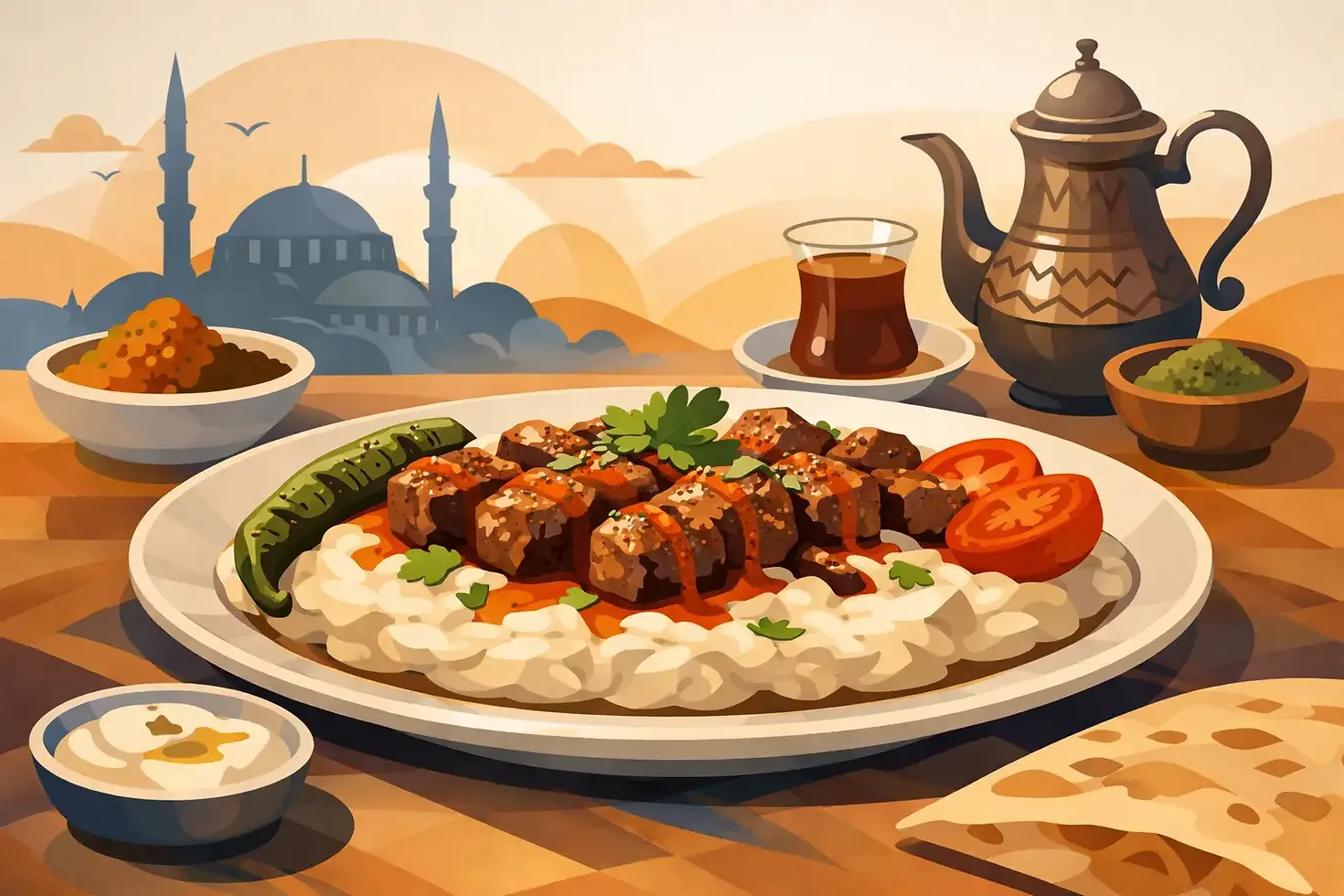
What Is Alinazik Kebab? A Turkish Classic
Some dishes announce themselves with spice or heat. Alinazik kebab wins people over more quietly - with smoke, tang, warmth, and a kind of deep comfort that feels both refined and homey. If you have ever wondered what is alinazik kebab, the short answer is this: a beloved Turkish dish made with roasted eggplant blended into a silky yogurt base, topped with seasoned meat, usually lamb or beef.
That simple description is true, but it still leaves out why the dish stays with people. Alinazik is one of those plates that tells a bigger story about Anatolian cooking. It brings together ingredients that are central to the Turkish table - eggplant, yogurt, meat, butter, and spice - and turns them into something layered, balanced, and memorable.
What Is Alinazik Kebab Made Of?
At its heart, alinazik kebab is built on contrast. The base is made from eggplant, traditionally roasted over open flame until the skin chars and the flesh turns soft and smoky. That eggplant is then mixed with yogurt, and often a little garlic, creating a creamy layer with both richness and brightness.
On top comes the meat. In many versions, it is small cubes of lamb cooked until tender with butter, peppers, and mild Turkish spices. In others, especially in restaurant settings, you may see it served with minced meat or even with a kebab-style topping. A spoonful of melted butter seasoned with red pepper often finishes the dish, adding aroma and color.
What makes alinazik special is not just the ingredient list. It is the proportion. Too much yogurt, and the dish loses depth. Too much smoke, and the eggplant overpowers everything. Too much spice, and the elegance disappears. At its best, each part supports the next.
The Story Behind Alinazik Kebab
Alinazik is closely associated with Gaziantep, one of Turkey's most important culinary cities. That matters, because Antep cuisine is known for precision, restraint, and confidence. Flavors are bold, but they are rarely careless. A dish like alinazik reflects that sensibility beautifully.
There are a few stories about the name. One popular telling connects it to Ottoman court culture, with the phrase interpreted as something like “beautifully delicate” or “elegantly pleasing.” Whether that origin is exact or partly folkloric, it suits the dish. Alinazik does feel graceful on the palate. It is rich, yes, but not heavy in a crude way. It has softness, acidity, smoke, and savory depth all at once.
This is part of what makes Turkish cuisine so compelling for curious diners. A plate can feel generous and comforting while still showing technique and regional identity. Her tabakta bir hikaye, her lokmada bir kültürdür - some dishes express that idea especially well, and alinazik is one of them.
What Does Alinazik Kebab Taste Like?
The first thing most people notice is the smoky eggplant. It gives the dish its soul. This is not the sharp smoke of a grill-heavy barbecue plate. It is softer and rounder, woven into the creamy yogurt so the flavor feels mellow rather than aggressive.
Then comes the yogurt itself, cool and slightly tangy. It lifts the eggplant and keeps the dish from feeling overly rich. Garlic, if used with a confident hand, gives the base a quiet edge.
The meat brings warmth and substance. Lamb is especially traditional because its savory character stands up beautifully to the eggplant. Beef can work too, though it usually gives a cleaner, less distinctive finish. Butter and red pepper tie the plate together with a gentle heat and a fragrant, almost silky finish.
The overall effect is layered rather than loud. If you are expecting a skewer dish with sharp char and punchy spice, alinazik may surprise you. It is a kebab, but in a more composed, spoon-meets-fork way. The pleasure comes from how each bite shifts between creamy, smoky, tangy, and savory.
How Alinazik Differs From Similar Turkish Dishes
For many first-time diners, alinazik gets confused with a few neighboring dishes, and that is understandable. Turkish cuisine has several kebab traditions that use yogurt, eggplant, or both.
The closest comparison is perhaps hünkar beğendi. Both dishes feature a soft eggplant base and meat on top. But hünkar beğendi usually includes milk and cheese in the eggplant puree, making it more like a rich bechamel-style mash. Alinazik, by contrast, leans on yogurt. That gives it a brighter, more earthy profile.
It is also different from dishes served with plain yogurt beside grilled meat. In alinazik, the yogurt is not a side note. It is integrated into the foundation of the plate. The eggplant and yogurt are inseparable.
You may also come across patlıcan kebab, where eggplant is cooked with meat, often on skewers or baked together. That dish celebrates texture and roasting in a different way. Alinazik is smoother, creamier, and more nuanced.
Why the Eggplant Matters So Much
If there is one ingredient that defines Turkish home cooking and restaurant cooking alike, it is eggplant. It appears in meze, stuffed dishes, stews, salads, and kebabs. But in alinazik, eggplant is more than an ingredient. It is the whole atmosphere of the dish.
The method matters as much as the vegetable itself. Roasting directly over flame gives the flesh a smoky perfume that cannot be fully replicated with ordinary baking. You can still make a good version without open fire, but the result changes. It becomes milder and less complex.
This is where alinazik shows its craftsmanship. A good cook knows when the eggplant is soft enough, when the char has gone far enough, and how much to drain or chop before mixing it with yogurt. Small choices shape the final plate.
Is Alinazik Always Made With Lamb?
Not always, though lamb is the classic choice and often the most expressive one. In some kitchens, beef is used for a more familiar or accessible flavor. In others, the topping may be made with hand-chopped or ground meat, especially in adaptations designed for speed or different service styles.
There is room for variation, but not every variation is equal. Lamb brings a natural richness that pairs beautifully with the cool yogurt and smoky eggplant. Beef can feel lighter, but it may also flatten some of the dish's character if it is too lean or under-seasoned.
That is true of many traditional foods. Flexibility exists, yet the original logic of the dish still matters. The best versions respect the balance even when the protein changes.
What Is Alinazik Kebab Usually Served With?
Alinazik kebab is often served with lavash or another soft bread, which helps scoop up the eggplant and juices. Rice may appear on the side, though bread feels especially natural with the dish because of its creamy texture. Grilled peppers and tomatoes are common companions too.
You might also see a simple garnish of parsley or a few fresh vegetables for contrast. Nothing on the side should compete too aggressively. Alinazik is not a plate that benefits from clutter. It asks for space.
That sense of balance is part of its charm. The dish feels generous, but it does not need excess. One well-made serving is often enough to turn a meal into a memory.
Why Alinazik Kebab Still Feels Modern
Some traditional dishes remain beloved because they are nostalgic. Others endure because they still match how people want to eat now. Alinazik does both.
It has the comfort of a family table and the elegance of a composed restaurant plate. The colors are inviting, the textures are satisfying, and the flavors feel distinctive without being difficult. For travelers, expats, and curious diners exploring Turkish cuisine, it offers something more revealing than a predictable grilled meat platter. It shows how much care can live inside a seemingly simple dish.
That is also why it works so well in a place like Cihangir, where people often want food with both atmosphere and meaning. A dish like alinazik does not need to perform. It already carries a strong sense of place.
Why People Keep Coming Back to It
Alinazik kebab has a quiet confidence. It does not rely on novelty, and it does not need dramatic presentation to make an impression. Its appeal comes from harmony - smoke softened by yogurt, richness sharpened by garlic, meat grounded by eggplant.
For some guests, the dish feels familiar from the first bite. For others, it is a discovery that opens the door to the wider depth of Turkish regional cooking. Either way, it tends to linger in memory because it tastes like care.
If you are choosing what to order and want a plate that offers more than surface-level comfort, alinazik is worth your attention. It is one of those rare dishes that feels intimate and ceremonial at the same time, as if the kitchen is offering not just food, but a piece of culinary inheritance.


Yorumlar