
Ottoman Dishes in Istanbul Worth Tasting
- tolgaturktan
- 19 Tem
- 5 dakikada okunur
A spoonful of warm eggplant purée, silkier than it looks, can carry the smoky memory of a charcoal fire. A rice pilaf may arrive jeweled with currants and pine nuts. This is the pleasure of seeking out Ottoman dishes in Istanbul: the meal is never only about richness or spectacle. It is about the way centuries of trade, migration, faith, seasonality, and family kitchens found a place at the same table.
For a visitor, the phrase “Ottoman cuisine” can sound like a fixed palace menu. Istanbul tells a more interesting story. Some dishes were shaped by the imperial kitchens of Topkapı Palace, where cooks worked with spices, dried fruit, game, seafood, and elaborate techniques. Others belonged to the homes, neighborhood kitchens, and regional traditions that fed the city beyond palace walls. What survives today is a living culinary language, interpreted differently from one restaurant and cook to the next.
Ottoman Dishes in Istanbul Are More Than Palace Food
The Ottoman Empire stretched across three continents, and its food reflects that reach. Rice traveled from the East, spices arrived through established trade routes, Balkan dairy traditions met Anatolian grains, and the produce of the Aegean and Mediterranean shaped lighter vegetable dishes. Yet the character of Ottoman cooking is not simply about putting many ingredients in one pot. Its beauty often lies in balance: sweet against savory, warm spice against fresh herbs, tender meat against tart fruit.
That is why a dish described as Ottoman-inspired should not automatically be expected to taste heavy. A careful kitchen may serve lamb slowly cooked with quince, apricot, or sour cherry; another may present olive oil-braised vegetables cooled to room temperature, bright with lemon and dill. Both belong to the broader story.
There is also no single, unchanging “authentic” version of these recipes. Palace records, handwritten cookbooks, regional habits, and family memory all offer different directions. A good meal in Istanbul leaves room for that variation. Rather than looking for a museum piece, look for food prepared with care, clarity, and respect for its ingredients.
The Flavors That Define an Ottoman Table
Hünkar Beğendi: Comfort With a Royal Name
Hünkar beğendi, often translated as “the sultan liked it,” is one of the most beloved introductions to Ottoman-style cooking. Traditionally, tender lamb stew rests over a creamy bed of roasted eggplant. The eggplant is charred until smoky, then worked into a smooth purée, sometimes enriched with milk, butter, and a light béchamel-style base.
The dish has a regal reputation, but its appeal is deeply comforting. The lamb should be soft without disappearing into the sauce, while the eggplant should retain its gentle smokiness. It is an ideal choice for diners who want a recognizable main course with a distinctly Istanbul character. If you do not eat lamb, ask whether a restaurant offers a vegetable or mushroom interpretation. The spirit of the dish can remain, even when the protein changes.
Mutancana: The Sweet-Savory Side of Ottoman Cooking
Mutancana is a reminder that fruit was not reserved for dessert in Ottoman kitchens. This historic stew commonly brings lamb together with dried apricots, raisins, almonds, and sometimes grapes or honey. The result should not be candy-sweet. At its best, the fruit deepens the savory juices of the meat while a touch of acidity keeps each bite composed.
For diners accustomed to meat served only with salt, pepper, and herbs, mutancana can be surprising. That contrast is precisely the point. Ottoman cooks understood that sweetness, used with restraint, could create dimension rather than excess. It is especially satisfying on a cool evening, shared alongside plain rice or a fresh seasonal salad.
İç Pilav: Rice Worth Paying Attention To
A well-made pilaf is never a side thought. İç pilav, or seasoned rice, may include pine nuts, currants, cinnamon, allspice, black pepper, and herbs such as dill or parsley. It can accompany roasted meat, fill poultry, or stand on its own as part of a generous table.
The texture matters as much as the seasoning. Each grain should remain distinct, with enough butter or olive oil to carry the aroma without making the plate feel heavy. Some versions lean sweet with currants, while others are more savory and peppery. This is a useful dish to order when sharing because it connects naturally with both meat and vegetable plates.
Zeytinyağlı Dishes: The Quiet Elegance of Vegetables
Not every memorable Ottoman dish arrives steaming hot. Zeytinyağlı, meaning “with olive oil,” refers to a treasured family of vegetable dishes usually served at room temperature. Artichokes with peas and carrots, green beans braised with tomato, stuffed grape leaves, and imam bayıldı, the famous eggplant cooked with onions and olive oil, all belong to this generous tradition.
These plates reveal another side of Istanbul dining: patient, produce-led, and refreshingly light. They are particularly welcome at lunch or as an opening course before a fuller dinner. The trade-off is that flavors can be more subtle than in a lamb stew or kebab. Give them time. Good olive oil, sweet onion, herbs, and the natural character of the vegetable do most of the work.
Stuffed Vegetables and the Art of the Filling
Dolma and sarma are often grouped together, but their forms vary widely. Dolma generally describes vegetables filled with rice, meat, or a mixture of both, while sarma refers to fillings wrapped in leaves, especially grape leaves. In Ottoman-influenced cooking, the filling may include rice, currants, pine nuts, cinnamon, and aromatic herbs.
A meatless leaf wrap served cool will taste very different from a warm pepper stuffed with minced meat and rice. Neither is more “real” than the other. Choose according to the meal you want: cool olive oil dishes for a leisurely daytime table, warm stuffed vegetables when you are looking for something more substantial.
How to Order Ottoman Food Without Overordering
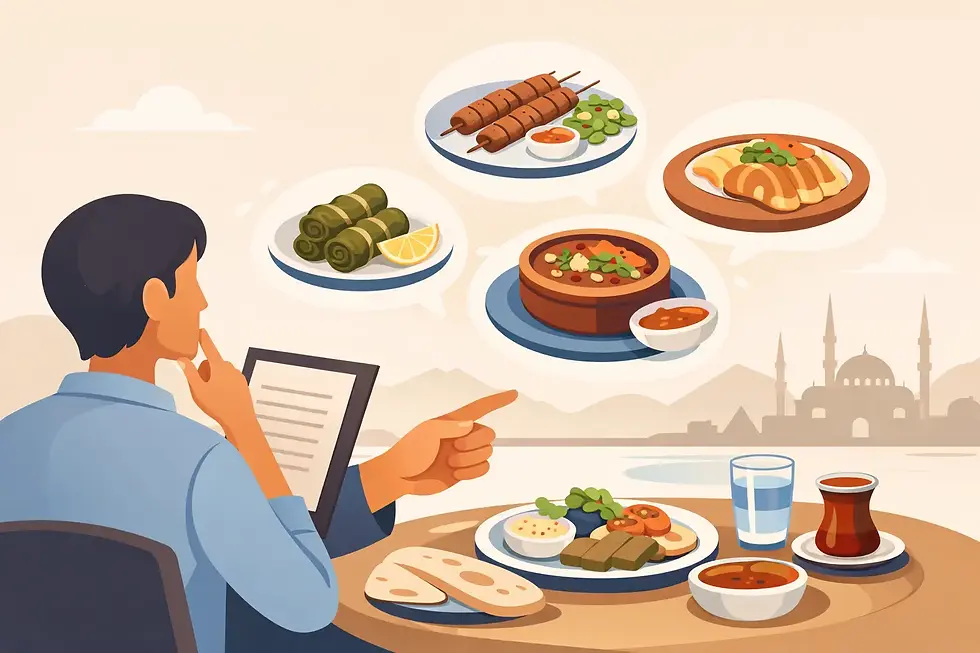
The most rewarding Ottoman-style meal is often shared. Start with two or three vegetable dishes, then choose one rice dish and one main course to divide among the table. This gives you contrast without turning dinner into a test of endurance. Bread is part of the experience, but save room for the sauces, the pilaf, and dessert.
Ask whether a dish is prepared daily, whether it contains nuts or dairy, and whether it is meant to be served warm or cool. These are useful questions, not fussy ones. Many recipes are naturally vegetarian, yet butter, yogurt, broth, or meat fillings can appear depending on the kitchen.
If you are dining near Cihangir, allow the pace of the neighborhood to guide you. Sit down without rushing from one landmark to the next. A thoughtful Istanbul meal rewards attention: the scent of toasted pine nuts, the brightness of lemon on an artichoke, the soft pull of bread through a lamb sauce. At Dafne Cafe & Kitchen, that sense of shared attention is part of the table itself - every plate holds a story, and every bite carries culture.
Save Room for an Old Istanbul Sweet
For dessert, seek softness and fragrance rather than only sugar. Keşkül is a delicately flavored milk pudding, often enriched with almond. Güllaç, most closely associated with Ramadan, layers thin starch sheets with milk, rosewater, and nuts. Aşure, made with grains, legumes, dried fruits, and nuts, carries a story of abundance and sharing that reaches far beyond the dessert bowl.
Availability changes with the season, and that is part of the charm. If a traditional sweet is on the menu, it is worth asking how it is made and when it is usually served. The answer may lead you to a local custom as memorable as the dessert itself.
The best way to understand Ottoman food in Istanbul is to order with curiosity rather than certainty. Choose one dish that feels familiar, one that surprises you, and one meant for passing across the table. Let the meal unfold slowly. That is where history becomes hospitality.


Yorumlar