How to Plan Shared Dining With Turkish Warmth
- tolgaturktan
- 31 Tem
- 6 dakikada okunur
A shared table should never feel like a series of separate orders arriving by coincidence. It should feel like an invitation: bread passed from hand to hand, a spoon offered across the table, a familiar flavor prompting a story. To understand how to plan shared dining, begin with this simple idea: the meal belongs to everyone at the table, not just to the person who ordered it.
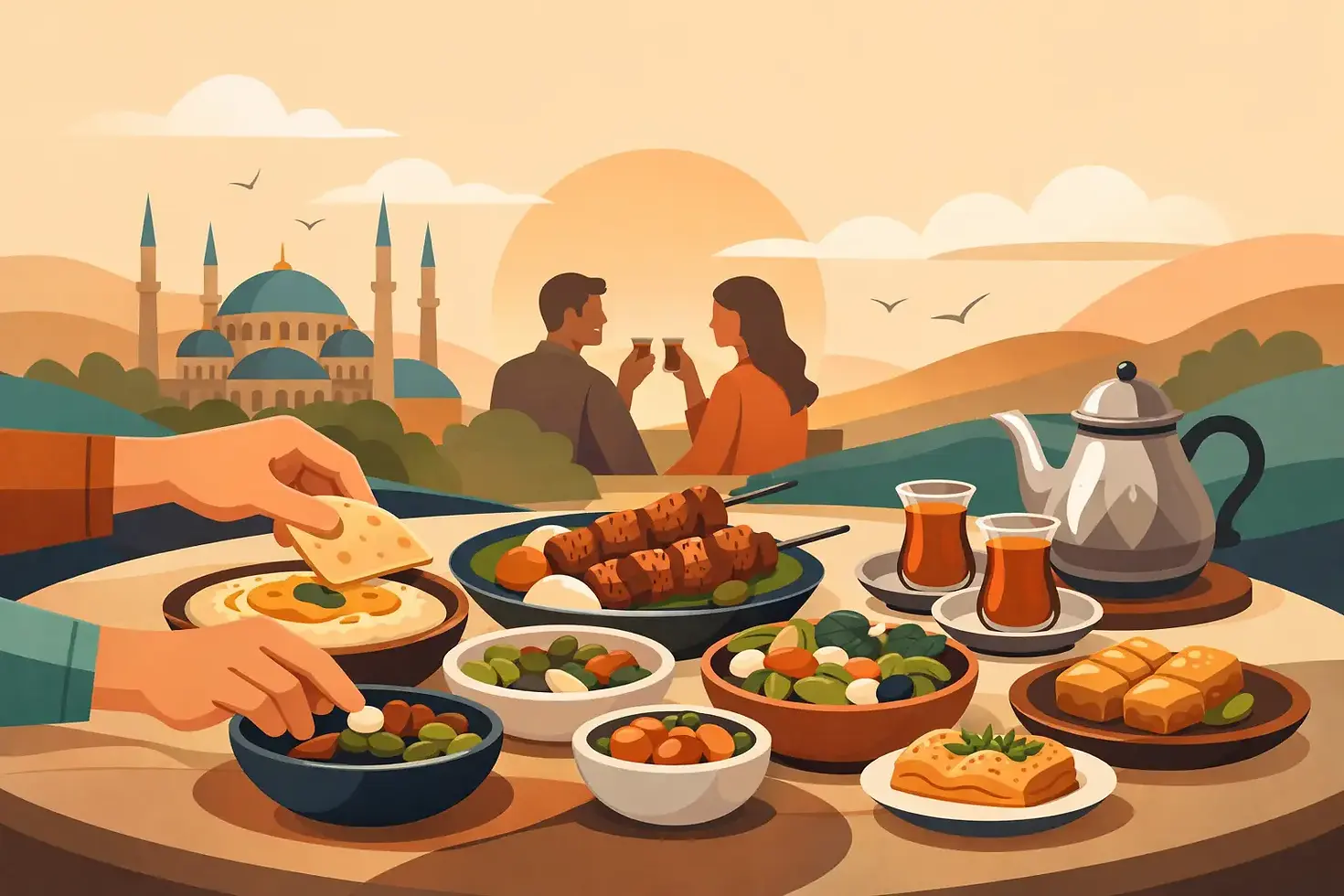
In Turkish food culture, sharing is not an extra feature added after the menu is chosen. It is part of the welcome. A breakfast spread arrives with small plates that make room for conversation. A warm dish of mantı encourages one more bite. Tea stays on the table a little longer because nobody is quite ready to leave. The best shared meals make people feel cared for without making the occasion feel overplanned.
Start With the Reason Everyone Is Gathering
The shape of the table should follow the feeling of the occasion. A slow Sunday breakfast with close friends needs abundance, ease, and plenty of time. A dinner for travelers who want to taste Anatolian traditions may call for a more guided progression of dishes. A team meal after work benefits from food that is easy to serve and enjoy while people talk.
Before choosing dishes, decide what you want guests to remember. Was it the first taste of warm bread with butter and honey? The laughter that began over a plate of meze? The moment someone discovered a dish connected to a place, a season, or a family memory? This intention helps you choose with more care than simply ordering the most popular items.
It also clarifies the pace. Shared dining works best when guests do not feel rushed into a main course or left waiting too long for the first plate. For a relaxed group, start with a few cold and warm dishes to place at the center right away, then bring more substantial plates after the table has settled in.
How to Plan Shared Dining Around Balance
Generosity matters, but quantity alone does not create a good spread. A table filled with similar textures can become heavy, while a table with too many separate dishes can lose its sense of rhythm. Aim for contrast: something crisp, something creamy, something bright with herbs or citrus, something slow-cooked and comforting, and bread or grains that invite guests to gather every last flavor.
A Turkish-style breakfast is naturally suited to this balance. Cheeses, olives, tomatoes, cucumbers, jams, honey, eggs, pastries, and warm bread create a table with color and variety before a single large plate appears. For lunch or dinner, the same principle can guide the meal. Begin with a fresh salad or vegetable-based plate, add a dip or yogurt dish, choose one or two warm shared specialties, and make room for a satisfying centerpiece.
For groups of four to six, it is often better to order a few dishes with clear differences than to order several versions of the same thing. Think of the menu as a conversation. Each dish should bring a slightly different voice to the table.
There are exceptions. If the gathering is centered on a beloved specialty, repetition can become part of the pleasure. A group that comes specifically for handmade mantı may happily make it the heart of the meal, with lighter companions around it. The key is to give that centerpiece enough contrast so every bite still feels alive.
Let Seasonality Guide the Table
Seasonal ingredients offer an easy way to make a shared meal feel connected to place. In warmer weather, lean into fresh vegetables, olive oil dishes, herbs, chilled yogurt, and fruit-forward finishes. When the weather turns cool, choose dishes with deeper sauces, roasted vegetables, warming spices, and comforting doughs.
This is not about following a strict rule. It is about serving food that feels right for the day. The most memorable tables have a sense of timing, as though the meal could only have happened in that season, in that neighborhood, with those people.
Make Space for Different Appetites and Needs
A generous host plans for the table, not an imagined average diner. One guest may want a light plate, another may arrive hungry enough for a full meal, and someone else may be vegetarian, avoiding dairy, or unfamiliar with a particular ingredient. Shared dining should make those differences easier, not more awkward.
Choose a foundation of dishes that most people can enjoy, then add a few more specific selections. Vegetable dishes, salads, breads, rice or grain-based sides, and yogurt or legume preparations can give a group plenty of common ground. From there, a meat-based or richer specialty can be added for guests who want it.
If you are organizing the meal, ask about dietary needs before everyone sits down. It is a small gesture with a large effect. Guests relax when they know there will be more than one thing they can eat, and the host can enjoy the meal instead of trying to solve a problem halfway through it.
Portion planning depends on the time of day and the purpose of the gathering. At breakfast, people often graze, revisit favorites, and linger. At dinner, one substantial dish per two people, supported by several shared starters and sides, can be a comfortable approach. If dessert is part of the plan, leave room for it rather than ordering every savory dish that catches your eye.
Plan the Order of Arrival, Not Just the Order
The best shared meals have movement. A few dishes should arrive early, especially bread, small plates, and anything that gives people something to enjoy while the table fills and conversation begins. Then let the warmer, more substantial dishes appear in stages.
This pacing protects the food as much as the atmosphere. Hot dishes stay hot. Crisp dishes keep their texture. Guests have time to taste and talk instead of trying to reach every plate before it cools. If everything arrives at once, the table may look impressive for a moment but feel crowded and hurried afterward.
A good restaurant can help guide this rhythm. At Dafne Cafe & Kitchen in Cihangir, the pleasure of a broad menu is not only choosing between Turkish breakfast, Anatolian favorites, Ottoman-inspired dishes, and globally influenced bowls. It is creating a table where those choices make sense together. Tell the team what kind of gathering you are planning and how many people are joining. A little guidance can turn a large menu into a meal with a clear, welcoming story.
Give the Table a Center
Shared dining is as much about the table itself as the food on it. Avoid filling every inch with large plates. Leave enough open space for guests to serve themselves, pour tea or water, and rest their phones without moving a bowl every few minutes. Put the dishes meant for everyone in the center, with serving utensils when needed, and make sure the bread is within easy reach.
The mood matters, too. A smaller group may welcome a long, unhurried table with tea after dessert. A larger gathering needs a little more structure, especially if guests do not all know one another. Seating people so that conversation can cross the table is often more valuable than arranging them by who arrived together.
If you are sharing dishes with people new to Turkish cuisine, offer a little context without turning the meal into a lecture. Mention what makes a dish special, where a flavor comes from, or why it is often served at breakfast. Then let the food speak. Curiosity grows naturally when it is met with warmth rather than instruction.
End With Time, Not Just Dessert
Dessert can be the final shared plate, but it should not be the signal that everyone must leave. A sweet bite, Turkish coffee, or tea gives the table a softer landing. It creates space for the last story, the photo nobody remembered to take earlier, or the simple pleasure of sitting together after the plates have been cleared.
That is the real measure of a successful shared meal. Not whether every dish was finished, but whether the table made people want to stay for one more cup of tea. Plan with generosity, choose with balance, and leave room for the unscripted moments. They are often the part guests carry home with them.



Yorumlar