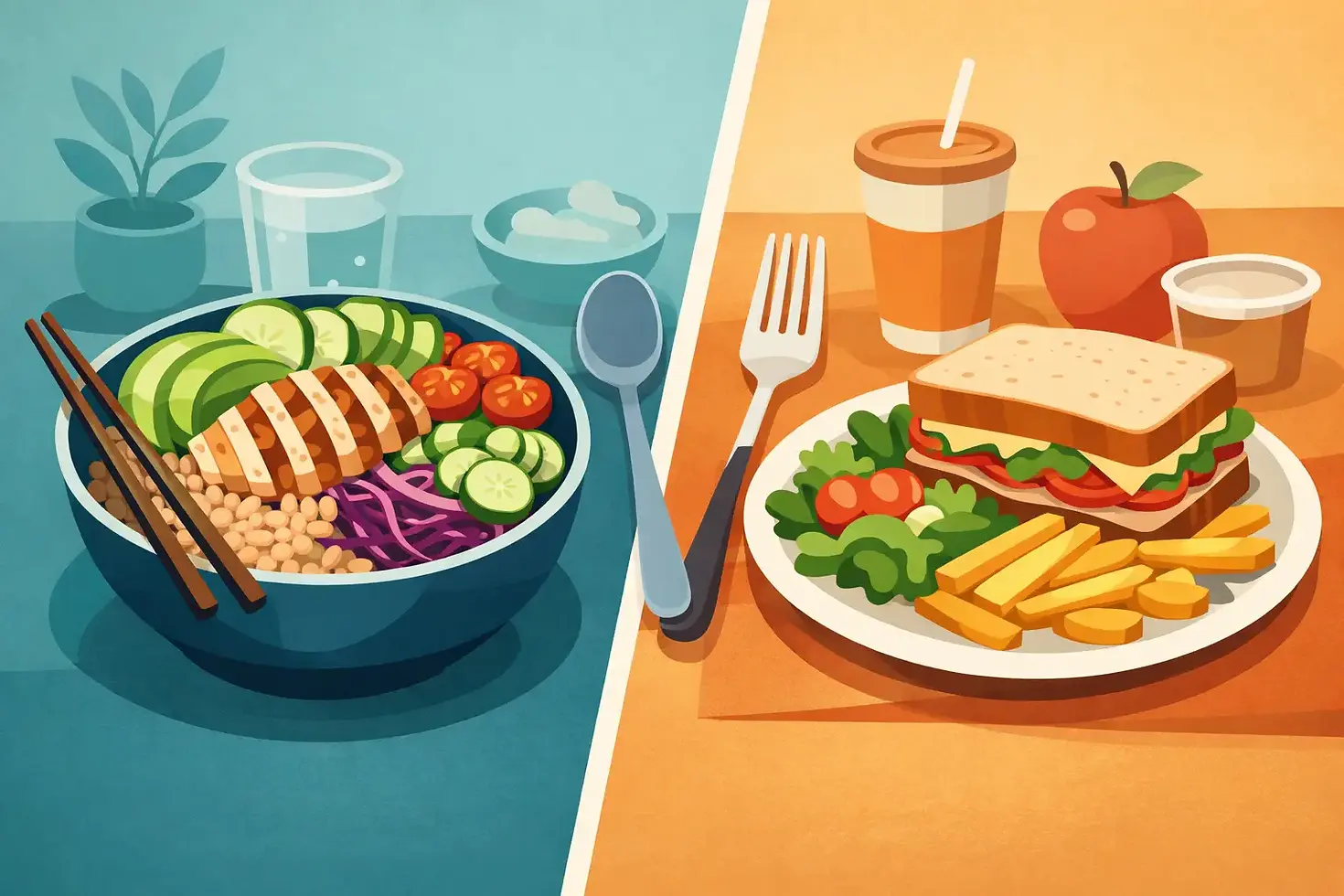
Bowls Versus Traditional Lunches: What Feels Right?
A lunch choice can quietly shape the rest of the day. Bowls versus traditional lunches is not simply a question of light or filling, modern or familiar. It is a question of mood: whether you want bright, layered freshness between meetings or the unhurried comfort of a dish that tastes like a family table.
In Cihangir, where a walk can lead from a gallery to a narrow street filled with the scent of simmering food, both belong. A carefully built bowl speaks to the rhythm of the city now. A traditional lunch carries the memory of kitchens where food was made to gather people close. The best choice is the one that meets the moment with generosity.
Bowls bring color, balance, and a lighter rhythm
A bowl is an invitation to taste several things at once. There may be roasted vegetables still warm from the kitchen, crisp greens, grains, legumes, a bright dressing, herbs, and a protein that gives the meal its center. Every forkful can be a little different. That variety is part of the appeal.
For guests who have a full afternoon ahead, bowls often feel especially right. They offer a satisfying meal without the sense of heaviness that can make a busy day slow down. A grain-based bowl, for example, can provide steadiness; fresh vegetables bring crunch and contrast; a lemony or yogurt-based sauce makes the whole plate feel alive.
There is also a visual pleasure to bowls. Their colors are open and expressive: ruby pomegranate, green herbs, golden grains, deep roasted eggplant, creamy tahini, bright pickles. For travelers and locals alike, a bowl can feel like the Istanbul table translated into a contemporary, personal format.
Still, lighter does not automatically mean better. A bowl can become forgettable when it is assembled without thought, or when its ingredients are more about appearance than flavor. The difference lies in balance. Good bowls need texture, seasoning, warmth, acidity, and enough substance to carry a person through the afternoon.
Traditional lunches hold a different kind of nourishment
A traditional lunch asks for a little more time, and gives something back in return. It may arrive as handmade mantı dressed with yogurt and a fragrant butter sauce, a slow-cooked Anatolian dish, a soup with the depth of a long-simmered broth, or a comforting plate centered on seasonal ingredients and careful preparation.
These meals do more than satisfy hunger. They carry technique, regional memory, and the quiet confidence of recipes refined across generations. A spoonful of yogurt, the scent of dried mint, the warmth of a tomato-rich sauce, the softness of dough made by hand: these details are not decorations. They are part of the story.
For a visitor, choosing a traditional lunch can be one of the most direct ways to understand a place. Turkish cuisine is often celebrated for breakfast and sweets, but its everyday lunch table deserves equal attention. It is generous without needing spectacle. It knows how to turn grains, vegetables, dough, dairy, and spices into dishes that feel both practical and deeply cared for.
Traditional does not always mean heavy, either. A vegetable-forward olive oil dish, a seasonal soup, or a plate built around legumes can be wonderfully balanced. The richer options are there when comfort is the point, but the cuisine has always understood the value of seasonality and restraint.
Bowls versus traditional lunches: the real difference
The most useful comparison is not about which lunch is healthier or more fashionable. Both can be nourishing. Both can be beautiful. The real difference is in the experience each creates.
A bowl often feels individual. It is designed around your appetite, your pace, and your preference for contrast. You can see nearly every component at a glance. It suits the person who wants choice, freshness, and a meal that moves with the day.
A traditional lunch often feels communal, even when ordered for one. It suggests shared bread, an extra spoon at the table, conversation that runs longer than planned. Its flavors tend to unfold more slowly, because they are built through cooking rather than assembly. The meal may be less customizable, but it offers a stronger sense of culinary identity.
Neither format should be reduced to a stereotype. A bowl can honor local ingredients and Turkish flavors with real depth. A traditional dish can feel light, elegant, and perfectly suited to a workday. What matters is whether the food has been made with attention - to ingredient, season, and the person sitting down to eat.
Choose for the day you are having
If lunch is a short pause between plans, a bowl can be a gracious answer. Choose one with a warm element, a satisfying grain or legume, and a dressing that brings the ingredients together rather than covering them. It should leave you refreshed, not searching for a snack an hour later.
If the afternoon is open, or you are meeting someone whose company deserves more than a quick bite, let lunch become an occasion. Order the dish that takes time, share something from the table, and allow the flavors to set the pace. Traditional food has a way of making a rushed day feel less rushed.
Weather matters, too. On a warm Istanbul afternoon, crisp vegetables, herbs, and a cool yogurt element can feel restorative. On a gray or windy day, the pull of a warm soup, tender dumplings, or a slowly cooked dish is difficult to resist. Appetite is not always nutritional math. Sometimes it is memory, season, and the need for comfort.
A table can hold both old and new
The most interesting lunch menus do not force diners to choose between heritage and modernity. They allow the two to speak to each other. A bowl can carry the brightness of Anatolian produce, pomegranate, bulgur, yogurt, and fresh herbs. A handmade traditional dish can be presented with the care and visual clarity that contemporary diners appreciate.
That meeting point feels especially natural in Istanbul. This is a city where old recipes and new habits have always shared the same streets. A lunch table can honor Ottoman-inspired flavors while making room for global influences, plant-forward choices, and the changing tastes of guests who come from many places.
At Dafne Cafe & Kitchen, that sense of welcome matters: food is not treated as a category to choose from, but as an experience to share. One guest may want a vivid bowl before continuing through Beyoğlu. Another may be drawn to the tenderness and ritual of a familiar Turkish dish. A good table makes room for both.
Let appetite lead, then let curiosity join it
There is no need to turn lunch into a test of discipline or authenticity. Choose a bowl when you want brightness, variety, and a lighter rhythm. Choose a traditional lunch when you want warmth, depth, and the feeling of being cared for by a recipe with roots.
And on the days when you cannot decide, let curiosity make the choice. Order the dish that gives you a flavor you have not yet met, take the extra minute to notice its details, and leave room at the table for the story behind the meal.
Yorumlar