
Where to Find Local Food in Beyoglu
- tolgaturktan
- 13 Tem
- 6 dakikada okunur
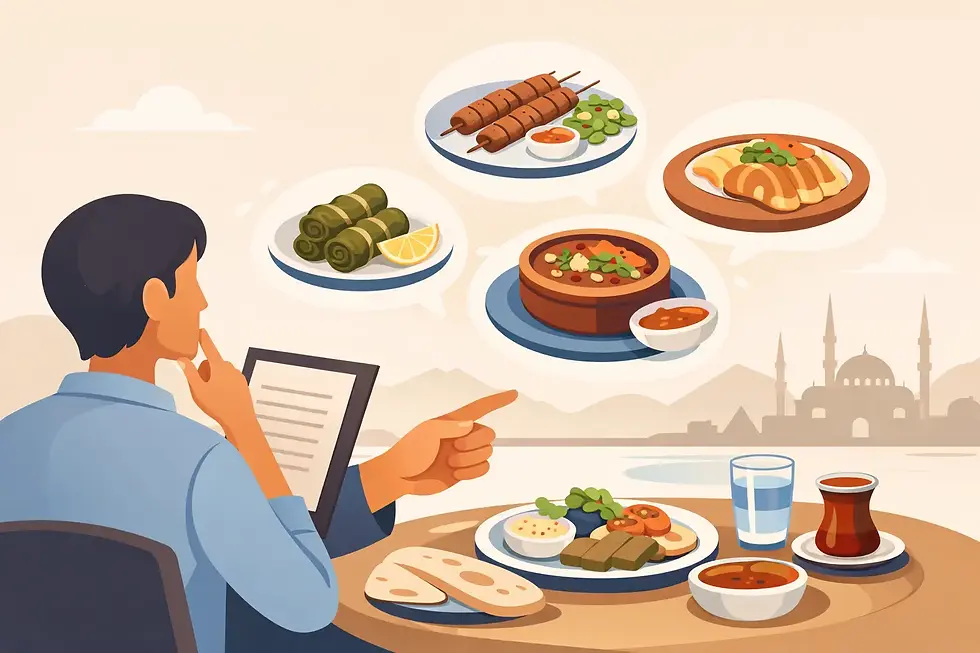
The best local food in Beyoglu rarely announces itself with a polished sign or a long speech. It arrives in the hiss of butter over a hot pan, in the perfume of simit at the corner bakery, in a plate set down with the ease of a place that has fed generations. Beyoglu is famous for movement, nightlife, and its layered history, but for people who care about food with memory, it offers something deeper - a chance to taste Istanbul as locals actually live it.
This is not a district to approach with a checklist alone. Beyoglu rewards appetite, curiosity, and a little patience. One street leans elegant and cosmopolitan, the next feels neighborhood-quiet, and between them sits a food culture shaped by migration, trade, home cooking, and the old habit of gathering around a table just a little longer than planned.
What local food in Beyoglu really means
When people search for local food in Beyoglu, they often expect a narrow answer, as if there were one single “authentic” plate that defines the district. In reality, Beyoglu reflects Istanbul itself: layered, hybrid, and deeply personal. Local food here includes classic Turkish breakfasts, humble esnaf meals, meze tables built for conversation, regional Anatolian dishes, sweets with Ottoman echoes, and street food that belongs as much to daily rhythm as to culinary tradition.
That variety matters. Beyoglu has long been a meeting point for artists, workers, students, travelers, minorities, and long-rooted families. Its food carries all of that. You might begin the day with tomatoes, olives, cheeses, eggs, honey, and fresh bread, then find yourself later sharing slow-cooked dishes, rice, pickles, stuffed vegetables, or handmade dough specialties that feel closer to someone’s family table than to a tourist menu.
The real question is not whether the food is local enough. It is whether the meal still feels connected to place, season, and hospitality.
Start with breakfast, because Istanbul does
If you want to understand Beyoglu through food, breakfast is the clearest place to begin. Turkish breakfast is not a quick transaction. It is a ritual of abundance, conversation, and pacing. In Beyoglu, especially around lived-in neighborhoods rather than the busiest visitor corridors, breakfast can tell you almost everything about a kitchen’s values.
A strong local breakfast is rarely complicated, but it should feel generous. Good white cheese and tulum, tomatoes that taste of sun, cucumbers with snap, olives with character, jams and honey that offer sweetness without excess, eggs cooked to order, and bread that deserves to be torn by hand rather than ignored on the side. Menemen matters here too. Some prefer it soft and spoonable, others want the eggs more set. That kind of difference is part of the pleasure. Local food is not only about ingredients. It is also about the small family arguments that surround them.
If you are choosing where to sit, look for signs of care rather than spectacle. A breakfast spread that feels balanced and rooted will usually say more about Beyoglu than one designed only for photos. The most memorable tables are often the ones where each small plate seems to have arrived with purpose.
The comfort of the lokanta
By midday, Beyoglu’s food story shifts from breakfast generosity to everyday comfort. The lokanta tradition remains one of the best ways to eat locally in Istanbul. These are places where prepared dishes wait behind glass or in warm trays, and the decision becomes not what is fashionable but what feels right that day.
This is where local food in Beyoglu becomes especially honest. A lentil soup made properly, stewed green beans in olive oil, rice pilaf, braised meat, stuffed peppers, beans, eggplant dishes, chicken, seasonal vegetables, and yogurt-based sides can say far more than an overworked tasting concept. The beauty of a lokanta meal is that it does not need to persuade you of its identity. It simply serves what people actually want to eat.
There is, of course, a trade-off. Some travelers chase only famous spots and miss these quieter meals. Others assume every simple dining room is exceptional just because it looks traditional. Neither instinct is fully reliable. The best approach is to notice turnover, freshness, and the confidence of the kitchen. A local place that regulars trust at lunch is worth your attention.
Street food has its own authority
Beyoglu would not be Beyoglu without food eaten standing up, walking, or between plans. Street food here is not a side note. It is woven into the district’s tempo. Simit in the morning, roasted chestnuts in cooler months, kokorec after dark, wet burgers in their own nostalgic category, and small bites grabbed on the move all belong to the experience.
Street food can be intensely local, but it also depends on mood and timing. A late-night snack may be exactly right after an evening out and completely wrong if you are looking for a slow, reflective meal. That is the thing about eating in Beyoglu: the district contains both appetite and occasion. Sometimes you want a table and a sequence of dishes. Sometimes you want one hot, satisfying bite and to keep walking.
Neither is more authentic than the other. They simply tell different truths about the city.
Regional dishes matter here too
One of the most beautiful things about Beyoglu is that it does not present Turkish food as a single uniform cuisine. The district gathers regional tastes from across the country. That means a meal here can open a path toward Anatolia, the Aegean, the Black Sea, or older Ottoman influences without ever feeling like a museum piece.
This is where dishes such as mantı, slow-cooked meat preparations, olive oil vegetables, soups, and layered pastries take on special meaning. They are not just plates ordered for novelty. They carry migration, family memory, and the habits people bring with them into the city. In the right kitchen, handmade food still tastes handmade. That difference is easy to spot once you know what to look for: dough with texture, yogurt with freshness, butter or spice used with restraint, fillings that taste seasoned rather than industrial.
For diners who want a meal with emotional depth, this regional richness is often the most rewarding side of Beyoglu. It invites you to taste beyond the obvious.
Where atmosphere changes the meal
Food in Beyoglu is inseparable from setting. A dish may be good on its own, but the room, the street, the sound level, and the style of welcome often determine whether a meal becomes memorable. Some guests want the pulse of central avenues, where the district feels theatrical and social. Others want the gentler intimacy of side streets and neighborhood corners, where the pace lets the table breathe.
This is especially true for culturally curious diners who are not only hungry but looking for a sense of place. In Beyoglu, atmosphere is not decoration. It is part of the meal’s meaning. A breakfast shared slowly in a neighborhood setting can feel more local than a trendier meal in a louder room. A well-presented table with genuine warmth can hold both refinement and familiarity.
That balance is part of what many people are seeking now. They do not want folklore performed at them. They want care, heritage, and style to exist in the same room.
How to choose well without overplanning
The temptation in Beyoglu is to plan every meal around popularity. Sometimes that works. Often it narrows the experience. The district is better enjoyed with a little structure and a little openness.
If you want breakfast, go where breakfast is treated as a serious part of the day, not an afterthought. If you want lunch, pay attention to places serving working locals and neighborhood regulars. If you want a longer dinner, look for kitchens that can carry both flavor and atmosphere without becoming stiff. And if you want to taste local food in Beyoglu in a more story-driven way, choose a place that treats Turkish cuisine as living culture rather than a fixed postcard.
In Cihangir, for example, some tables offer exactly that feeling - familiar, elegant, and rooted in dishes that carry both heritage and comfort. At Dafne Cafe & Kitchen, that spirit lives in the idea that every plate holds a story and every bite carries a culture. For the right diner, that is the real measure of a meal in Beyoglu.
Sweet endings and slow departures
Do not rush past dessert or tea. In Istanbul, the close of a meal often reveals as much as the beginning. Maybe it is a syrupy pastry, maybe a milk dessert, maybe just tea poured deep amber and served with enough time to sit back. Beyoglu has always understood that eating well is not only about flavor. It is about lingering.
That may be the most local lesson of all. The district can be fast, crowded, and full of distraction, yet its best meals still ask you to pause. Taste carefully. Share what is on the table. Order one more small thing if it feels right. Let the room settle around you.
If you are looking for local food in Beyoglu, follow the places that feed both appetite and memory. The dishes worth returning for are usually the ones that feel human from the first bite.


Yorumlar