
Turkish Breakfast vs Brunch: What Changes?
You can tell a lot about a city by how it begins its morning. In Istanbul, breakfast is rarely treated as a rushed obligation. It arrives with small plates, fresh bread, hot tea, conversation, and the quiet understanding that the table matters as much as the food. That is where the question of turkish breakfast vs brunch becomes more interesting than a simple menu comparison. It is not only about what is served. It is about how people gather, how time opens up, and what a meal is meant to hold.
Turkish breakfast vs brunch at the table
At first glance, Turkish breakfast and brunch can seem like close cousins. Both are social. Both stretch beyond strict breakfast hours. Both invite people to linger. But their character is different.
A classic brunch, especially in the American sense, often blends breakfast and lunch into one flexible meal. You might expect eggs, pastries, pancakes, salads, sandwiches, coffee, and perhaps cocktails. It can be indulgent, stylish, and leisurely, but it is usually built around choice from larger individual plates.
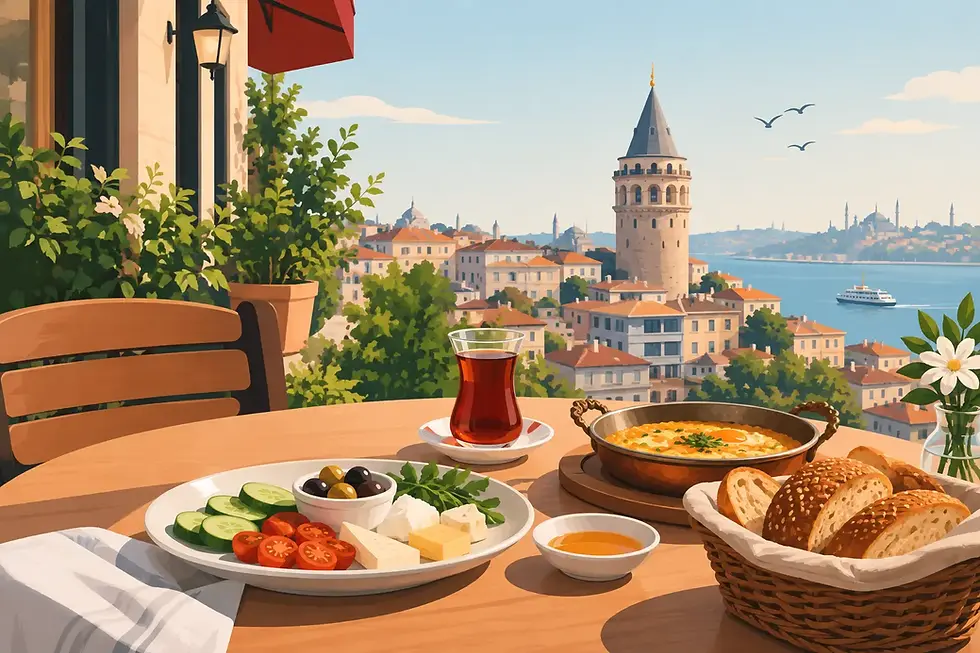
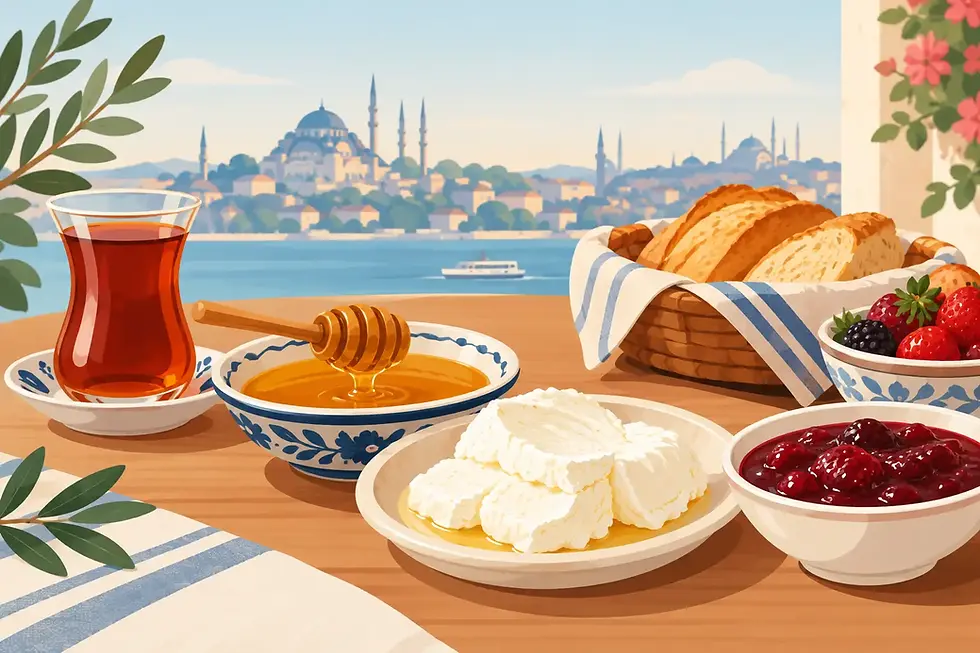
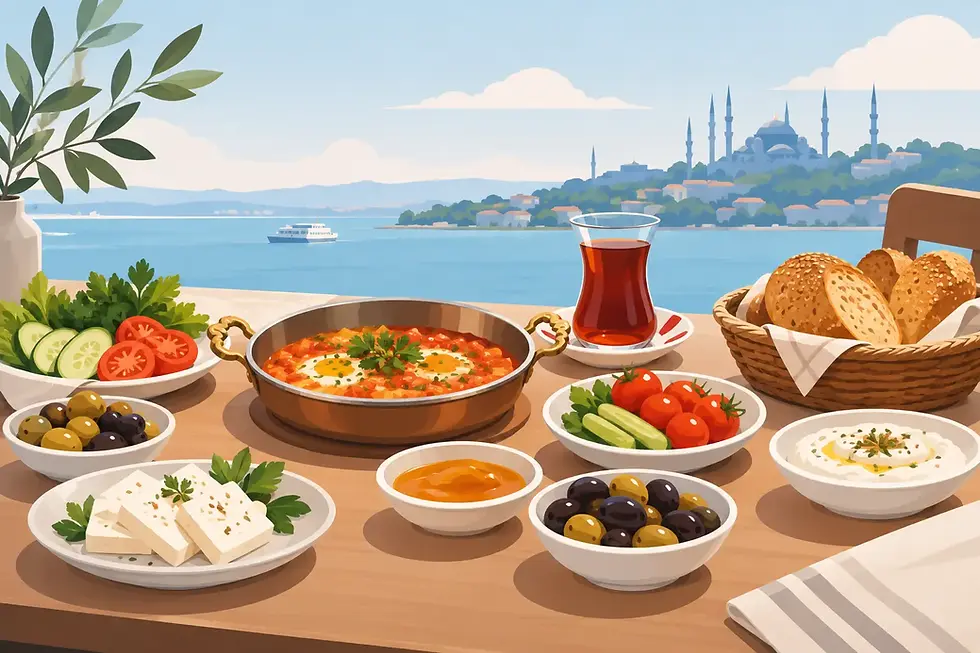
A Turkish breakfast, by contrast, is centered on abundance through variety. The pleasure comes from many small tastes set out together: cheeses, olives, tomatoes, cucumbers, jams, honey, clotted cream, eggs, bread, simit, börek, maybe menemen, maybe sucuk, and always tea arriving in clear tulip-shaped glasses. It is less about replacing breakfast with lunch and more about honoring breakfast as an event in its own right.
That distinction matters. Brunch often says, let us make the late morning fun. Turkish breakfast says, let us give the morning the respect it deserves.
The rhythm is different
One of the clearest differences in turkish breakfast vs brunch is pace. Brunch tends to follow weekend logic. People sleep in, meet around late morning, order what they want, and settle in for a relaxed but fairly defined service. It can feel celebratory, but it still often moves in courses or individual decisions.
Turkish breakfast unfolds more organically. The table fills gradually, and the meal can continue as long as the conversation does. Tea is refreshed. Bread is torn and shared. Someone reaches for the white cheese, someone else spoons jam onto a plate, another person insists you try the menemen while it is still hot. The meal is not just consumed. It is built communally, almost gently, over time.
That slower rhythm is part of its emotional pull. It leaves room for memory, family habits, neighborhood rituals, and the kind of unhurried hospitality that makes guests feel they are participating, not simply ordering.
Shared plates tell a different story
Brunch is often personal. Even at its most social, it usually begins with individual orders. One person gets avocado toast, another chooses eggs Benedict, another goes for a burger because brunch allows that kind of freedom. The table may share a pastry or two, but the structure remains personal.
Turkish breakfast begins with sharing. The meal is designed for the middle of the table. This is one reason it feels so intimate, even among friends or first-time visitors. Everyone reaches into the same generous landscape of flavors. The experience encourages conversation because the food itself is collective.
There is also something deeply cultural in that arrangement. Shared breakfast reflects a way of eating tied to home life, village traditions, regional ingredients, and family hospitality. Her Tabakta Bir Hikaye, Her Lokmada Bir Kültürdür is not just a beautiful phrase for this style of table. It is a real description of what happens when each small dish carries a place, a season, or a memory.
Flavor: contrast over heaviness
Another major difference in turkish breakfast vs brunch is how richness is built. American-style brunch often leans into large, satisfying combinations - buttery toast, creamy eggs, bacon, syrup, potatoes, baked dishes, stacked plates. It can be excellent, but it usually pursues comfort through weight and fullness.
Turkish breakfast creates pleasure through contrast. Salty cheeses meet sweet jam. Briny olives sit beside ripe tomatoes. Honey softens the edge of tahini or clotted cream. Eggs may arrive simply, or with peppers and tomatoes in menemen, while fresh herbs lift everything around them. The table feels full, but the flavors remain bright and distinct.
That balance is one reason Turkish breakfast can feel both generous and graceful. Even when the spread is lavish, it is not necessarily heavy. The meal invites you to move from bite to bite, creating your own pairings. A piece of bread with feta and tomato tastes different from bread with honey and kaymak. A sip of tea resets the palate. Nothing needs to dominate.
Tea and coffee play different roles
In brunch culture, coffee often takes center stage. Specialty espresso drinks, cold brew, and creative café menus shape the mood. In some settings, brunch is as much about the beverage ritual as the food.
In Turkish breakfast, tea is the thread that ties the table together. It is not an accessory. It is the pulse of the meal. Served hot and often replenished without fanfare, tea creates continuity. It gives the breakfast its cadence, inviting pauses, second helpings, and longer conversation.
Coffee certainly belongs in Turkish food culture, but not in the same way at this meal. Turkish coffee may appear after breakfast, almost like a final note. Tea belongs during it, moving quietly through every chapter of the table.
Brunch is flexible. Turkish breakfast is rooted.
Brunch has always been adaptable. That is part of its charm. It welcomes trends, fusion dishes, health-driven plates, dessert-like breakfasts, savory lunches, and almost any cuisine that suits the hour. Brunch is broad by design.
Turkish breakfast can also evolve, and many contemporary cafés present it with refined styling or modern additions. But even when the presentation changes, the heart of the meal remains rooted in recognizable traditions. Regional cheeses, village-style jams, egg dishes, breads, olive varieties, and breakfast preserves are not random components. They come from a culinary language shaped over generations.
This rooted quality is what many travelers and urban diners remember most. A good brunch can be delicious almost anywhere. A meaningful Turkish breakfast feels inseparable from its cultural setting. It carries a sense of place.
When one might suit you more than the other
This is where it depends on what kind of experience you want. If you are craving variety but still want the familiarity of individual ordering, brunch may feel easier. If your group includes different appetites or dietary preferences, brunch menus can offer more personal flexibility.
If, however, you want a meal that slows everyone down and creates a shared center for the table, Turkish breakfast usually goes deeper. It is especially memorable for couples, groups of friends, and visitors who want to feel local without needing to understand every dish in advance. The structure itself guides you.
There is also a mood difference. Brunch can be energetic, social, and scene-driven. Turkish breakfast is social too, but often in a warmer, more grounded way. It feels less like a trend and more like a tradition you are being welcomed into.
Why this matters in Istanbul
In a neighborhood like Cihangir, where mornings can unfold with equal parts city energy and local intimacy, this distinction becomes even more vivid. Visitors often search for brunch because it is the term they know. What they actually want, though, is often the pleasure that Turkish breakfast delivers better: a beautiful table, generous hospitality, a strong sense of place, and food that lingers in memory long after the plates are cleared.
That is why comparing turkish breakfast vs brunch is useful, but only up to a point. Once the tea arrives and the table begins to fill with cheeses, olives, eggs, breads, and preserves, the comparison starts to fall away. You are no longer choosing between formats. You are stepping into a ritual.
And that may be the real answer. Brunch is a meal. Turkish breakfast is also a mood, a welcome, and a small ceremony of togetherness. If you have time for only one, choose the one that lets the morning mean something.
Yorumlar