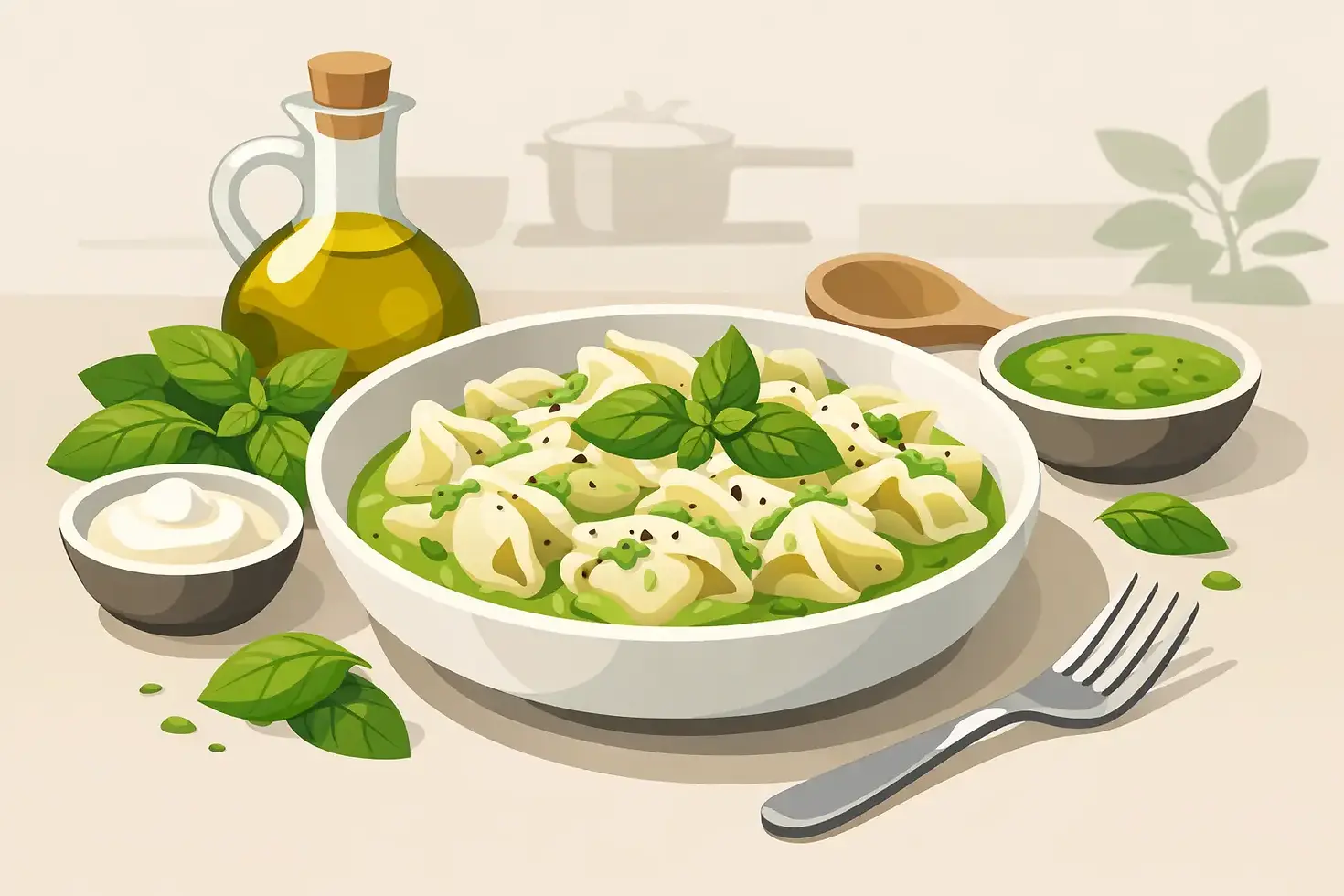
Creamy Basil Manti Recipe to Make at Home
- tolgaturktan
- 12 Haz
- 6 dakikada okunur
Some dishes ask for attention the moment they reach the table. A creamy basil manti recipe does exactly that - small, delicate dumplings tucked into a velvety sauce, lifted by basil’s fresh perfume and grounded by the comfort of a deeply familiar Turkish bite. It feels both rooted and slightly unexpected, which is often where the most memorable meals begin.
Mantı has always carried more than flavor. It carries patience, shared labor, and the quiet beauty of handmade food. In many homes, making mantı means flour on the counter, conversation moving easily across the kitchen, and a tray of tiny dumplings becoming the center of the day. Adding cream and basil does not erase that story. If anything, it offers a new chapter - one that keeps the soul of the dish intact while giving it a softer, more contemporary mood.
Why this creamy basil manti recipe works
The appeal of this creamy basil manti recipe is balance. Traditional mantı often leans on garlicky yogurt and a butter sauce with red pepper or tomato. That sharp, tangy structure is part of its identity. Here, cream rounds the edges, while basil introduces a green, slightly sweet brightness that cuts through the richness.
This is not a heavy pasta-in-cream situation. The best version still tastes like mantı first. The dough should be tender but not limp, the filling savory and restrained, and the sauce should coat rather than drown. That distinction matters. Too much cream and you lose the dumpling. Too much basil and the dish starts drifting away from its Anatolian heart.
That is also what makes this recipe appealing for home cooks in the US. It feels special enough for guests, but it is built from ingredients that are easy to find. If you already love Turkish flavors but want something a little different from the usual yogurt-and-chili finish, this version gives you that change without turning mantı into something unrecognizable.
Ingredients for creamy basil manti recipe
For the dough, you will need 2 cups all-purpose flour, 1 egg, 1/2 teaspoon salt, and about 1/2 cup water, added gradually.
For the filling, use 8 ounces ground beef or lamb, 1 small onion grated very finely, 1/2 teaspoon salt, 1/4 teaspoon black pepper, and a pinch of paprika.
For the sauce, you will need 1 tablespoon butter, 1 cup heavy cream, 1/2 cup plain whole-milk yogurt, 1 small garlic clove grated, 1/3 cup finely chopped fresh basil, salt to taste, and a spoonful of the pasta cooking water if needed.
For finishing, keep a little extra melted butter ready, along with a pinch of Aleppo pepper or mild red pepper flakes, more basil, and a dusting of sumac if you like a little tartness.
Making the dough and filling
Start with the dough because it benefits from a short rest. Place the flour and salt in a bowl, make a well, and add the egg. Begin mixing with your hand or a fork, adding water slowly until a firm dough comes together. Mantı dough should be more structured than regular pasta dough. You want it smooth and elastic, but not soft.
Knead for about 8 to 10 minutes until the surface is even and slightly springy. Cover the dough and let it rest for at least 30 minutes. That rest makes rolling easier and helps the dough relax without becoming sticky.
While the dough rests, make the filling. Combine the ground meat, grated onion, salt, pepper, and paprika in a bowl. Mix just until combined. Overmixing can make the filling dense, and with mantı, the beauty is in the contrast between a thin wrapper and a juicy center.
How to shape the mantı
Divide the dough into two pieces and keep one covered while you work with the other. Roll it out on a lightly floured surface until very thin - thin enough that it feels delicate, but not so thin it tears the moment you lift it. Cut into small squares, roughly 1 1/2 inches each.
Place a tiny amount of filling in the center of each square. Less is better here. Mantı is not meant to be overstuffed. Bring the corners together and pinch to seal, forming a small bundle. There are different regional styles, and perfection is not the point. What matters is that they are sealed well and reasonably uniform so they cook evenly.
Set the shaped dumplings on a floured tray and continue until all the dough is used. If this is your first time, the process will take a while. That is normal. Mantı rewards patience more than speed.
Cooking the dumplings and building the sauce
Bring a large pot of salted water to a gentle boil. Drop in the mantı and cook for 8 to 10 minutes, depending on their size and thickness. They should be tender, and the filling should be fully cooked.
While the dumplings boil, build the sauce in a wide pan. Melt the butter over low heat, then add the cream. Let it warm gently for a minute or two, never rushing it to a hard boil. Stir in the yogurt and garlic, whisking until smooth. Then add the chopped basil and a small pinch of salt.
This is where restraint matters. The sauce should be silky, not thick like Alfredo. If it tightens too much, add a spoonful of the mantı cooking water. If your yogurt is very tangy, you can lean slightly heavier on the cream. If your basil is especially fragrant, hold back a little and add more at the end. It depends on the ingredients in front of you, and that is part of cooking well.
Use a slotted spoon to transfer the cooked mantı directly into the sauce. Fold gently so the dumplings stay intact. Let them sit in the pan for a minute, just long enough to absorb some of the flavor.
The finish that makes it memorable
Spoon the mantı into shallow bowls while it is still hot. Drizzle with a little melted butter and scatter over Aleppo pepper or mild red pepper flakes. Add a few torn basil leaves on top.
That final layer matters more than it seems. Cream and basil can make the dish feel soft and mellow, so it benefits from a little contrast. Pepper brings warmth. Sumac, if you use it, adds brightness. Even an extra touch of garlic in the yogurt can sharpen the edges in a good way.
The result should feel generous but composed. Rich, yes, but still fresh. Comforting, but not sleepy.
A few trade-offs worth knowing
If you are tempted to use store-bought wonton wrappers, you can. They will save time, and for a busy home cook, that matters. But the texture will be different. Homemade mantı dough has a firmer bite and a more traditional character. Wonton wrappers create a softer, more slippery result.
You can also bake the shaped mantı briefly before boiling or sauce-finishing them, which some cooks do for structure and a slightly toastier flavor. That method gives the dumplings a little more resilience in the sauce, though it also changes the tenderness people often love in fresh mantı.
As for the filling, beef is easy and familiar, while lamb gives a deeper and more aromatic profile. Neither is wrong. If basil is the star of your sauce, beef tends to let it shine more clearly. Lamb creates a more assertive dish overall.
Serving creamy basil manti recipe with the right mood
This dish does not need a crowded table to feel special, but it does deserve a little care in how you serve it. A crisp salad with cucumber and herbs works well beside it. So does a simple plate of tomatoes with olive oil and a pinch of sea salt. You want freshness nearby, something that keeps the meal lively.
It also makes sense as a dinner for two, especially when you want something more intimate than dramatic. Mantı has that effect. It invites people to slow down. It asks to be eaten warm, with conversation close by and no reason to rush.
At Dafne Cafe & Kitchen, dishes that resonate most are often the ones that carry both memory and surprise. This version of mantı belongs in that spirit. It respects the language of the original while speaking in a slightly softer, more modern accent.
When to make it
A creamy basil manti recipe feels especially right in the in-between seasons. In spring, basil tastes brighter and the cream feels gentle rather than heavy. In fall, the warmth of the dumplings becomes the point. In summer, you can lighten the sauce slightly and let the herbs lead. In winter, serve it exactly as written and let it be comforting.
That flexibility is part of its charm. It is not trying to replace classic mantı, which needs no improvement. It simply offers another way to gather around the same idea - handmade food, shared generously, with tradition still visible in every fold.
If you make it, do not chase perfection on your first tray. Roll, fill, fold, and trust the rhythm. Some dishes become meaningful not because they are flawless, but because they ask you to spend time with them.


Yorumlar