
A Shared Dining Restaurant Concept Example
- tolgaturktan
- 23 Tem
- 5 dakikada okunur
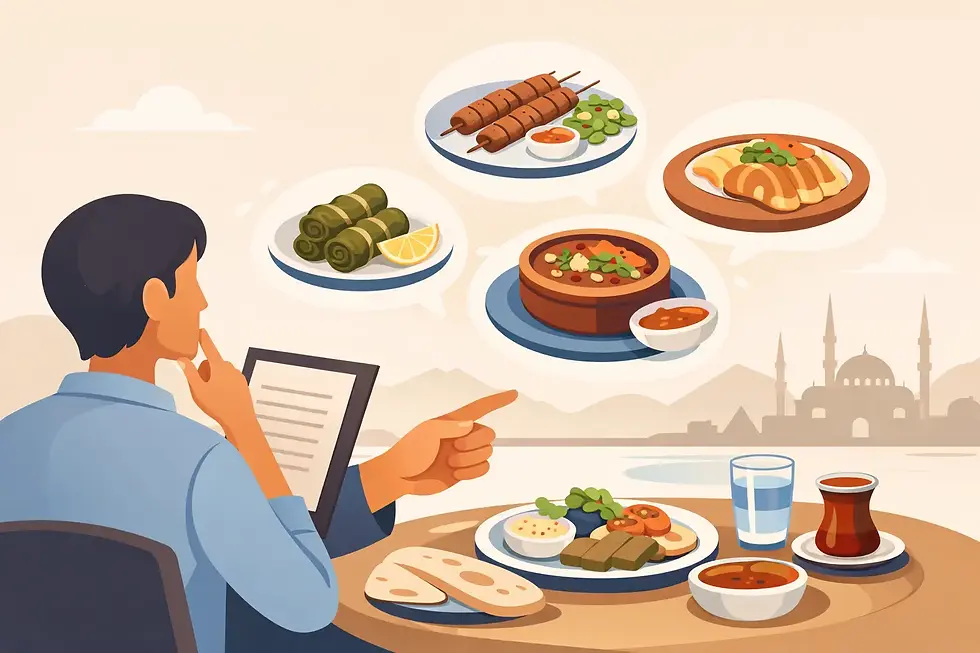
A memorable shared dining restaurant concept example does not begin with oversized plates. It begins with a table that invites people to slow down, reach across, ask questions, and remember that food tastes different when it arrives with a story. In Turkish culture, this instinct is familiar: breakfast unfolds gradually, a pot is placed at the center, bread is passed without ceremony, and no one is expected to leave without being offered one more bite.
For guests choosing where to eat in a neighborhood as lively as Cihangir, shared dining can turn a good menu into an experience worth gathering for. The difference lies in intention. A table full of food is not automatically communal. It becomes communal when every dish has a place in the conversation.
What Shared Dining Really Means
Shared dining is a restaurant approach built around dishes designed for the center of the table rather than one complete plate per person. Guests compose their own meal together, tasting a little of everything and allowing the pace of the table to shape the experience.
At its best, the format feels generous rather than complicated. A warm mezze arrives first, followed by a handmade specialty, a fragrant rice dish, seasonal vegetables, and bread still warm enough to tear by hand. Each arrival creates a small pause. Someone serves the first spoonful. Someone asks what is in the sauce. A familiar ingredient becomes a new discovery.
This is particularly natural for Anatolian and Ottoman-inspired cooking, where a meal has long been about abundance, hospitality, and the pleasure of feeding others. The goal is not spectacle for its own sake. It is to make guests feel that they have been welcomed into a table with history.
A Shared Dining Restaurant Concept Example in Practice
Imagine four friends meeting for a late lunch. They do not need to agree on one cuisine or commit to a rigid, three-course structure. Instead, they begin with a selection of small cold and warm dishes: silky yogurt, olive oil-rich vegetables, a bright seasonal salad, and bread for gathering every last bit from the plate.
The middle of the meal carries more weight. A serving of handmade mantı arrives with its cool yogurt and warming butter, offering a dish that feels both personal and deeply rooted in home kitchens. Alongside it, a slow-cooked Anatolian main or an Ottoman-inspired recipe gives the table something more substantial to share. One guest may prefer the comforting familiar flavors; another may be drawn to a contemporary bowl with global influences. Both choices can belong at the same table.
Dessert is not simply the final course. It is an excuse to remain seated. Shared sweets, Turkish tea, and coffee extend the conversation without demanding a formal ending. This is the strength of the concept: it gives every group a rhythm that feels relaxed, yet carefully held.
At Dafne Cafe & Kitchen, that rhythm can reflect the spirit of an aile lokantası while presenting heritage with a more curated touch. The setting may be modern, but the emotional message remains timeless: there is room at the table, and there is always another story behind the dish.
Why This Format Stays With Guests
Individual entrées are efficient. They are also predictable. Shared dining creates a different kind of memory because the meal is no longer divided into separate decisions. People compare bites, offer preferences, and encounter ingredients they might not have ordered alone.
For travelers, this matters even more. A visitor may recognize kebab or baklava but know little about the regional dishes, breakfast traditions, handmade doughs, or subtle uses of yogurt, herbs, and spices that make Turkish food so varied. A shared table makes exploration less intimidating. Rather than choosing one unfamiliar dish and hoping for the best, guests can taste across the menu.
For local diners and expats, the appeal is equally strong. Shared plates give a weekday catch-up, a birthday meal, or an unplanned Sunday breakfast a sense of occasion. The format feels social without becoming overly formal. It works because it gives people something to do together besides look at their phones.
There is also a visual pleasure to it. A table layered with colorful small plates, copper-toned details, fresh herbs, and handmade food has an immediate presence. Still, a shareable table should never be designed only for a photograph. Its beauty should come from generosity, freshness, and the evidence that people are meant to eat from it.
The Details That Make the Concept Feel Thoughtful
A successful shared menu needs balance. If every dish is rich, guests tire quickly. If every plate is light, the meal can feel incomplete. A thoughtful progression moves from cool and bright to warm and comforting, then lands on something satisfying enough to anchor the table.
Portion language matters, too. Menus should make it easy to understand whether a dish is best for two people, three to four people, or simply added as a taste for the table. Guests enjoy choice more when they are not worried about ordering too much or too little.
Service plays an equally important role. Staff do not need to deliver a lecture with every plate, but a few well-chosen words can change the experience. Explaining that mantı is handmade, identifying a regional influence, or suggesting which dishes complement each other helps the menu feel approachable. Knowledge becomes hospitality when it is offered warmly, not performed.
The table itself should support the meal. Enough space for serving dishes, water, bread, and personal plates is not a minor operational detail. It is part of the welcome. A crowded table can feel festive, but it should never force guests to move plates just to make room for the next course.
Shared Does Not Have to Mean Fixed
The most inviting shared dining concepts leave room for different appetites, dietary needs, and dining styles. Not every guest eats meat. Not every group wants a long dinner. Some may come for a generous Turkish breakfast, while others arrive after a walk through Beyoğlu looking for a few plates and tea.
That flexibility is a real advantage when it is planned well. Vegetarian dishes should feel like desirable choices, not substitutions. Gluten-aware or lighter options should be part of the menu’s natural range. A guest who prefers an individual bowl should not feel as though they have misunderstood the restaurant.
There is a trade-off, of course. Too much flexibility can weaken the concept if the menu becomes a collection of unrelated items. The answer is not to limit guests unnecessarily. It is to create a clear culinary point of view. The dishes can travel across regions and influences, but they should still feel connected by flavor, care, and the restaurant’s sense of identity.
From a Meal to a Cultural Memory
The deepest value of shared dining is not that it lets a group sample more dishes. It is that it restores the social meaning of eating. A recipe becomes more than a recipe when someone explains that it recalls a family kitchen, a city, a season, or a tradition of welcoming guests.
That is why Turkish breakfast remains such a powerful expression of shared dining. It is not rushed fuel for the day. It is a small ceremony made from cheese, olives, eggs, preserves, pastries, tea, and the unspoken permission to take your time. The same feeling can carry into lunch and dinner when a restaurant treats the center of the table as a place of connection rather than simply a place to set plates.
A restaurant can offer beautiful interiors and excellent food, but guests remember how a table made them feel. They remember the spoon passed between friends, the last piece of bread shared without asking, the dish they had never tried before, and the conversation that lasted longer than planned. Build the meal around those moments, and every gathering has the chance to become its own story.


Yorumlar